
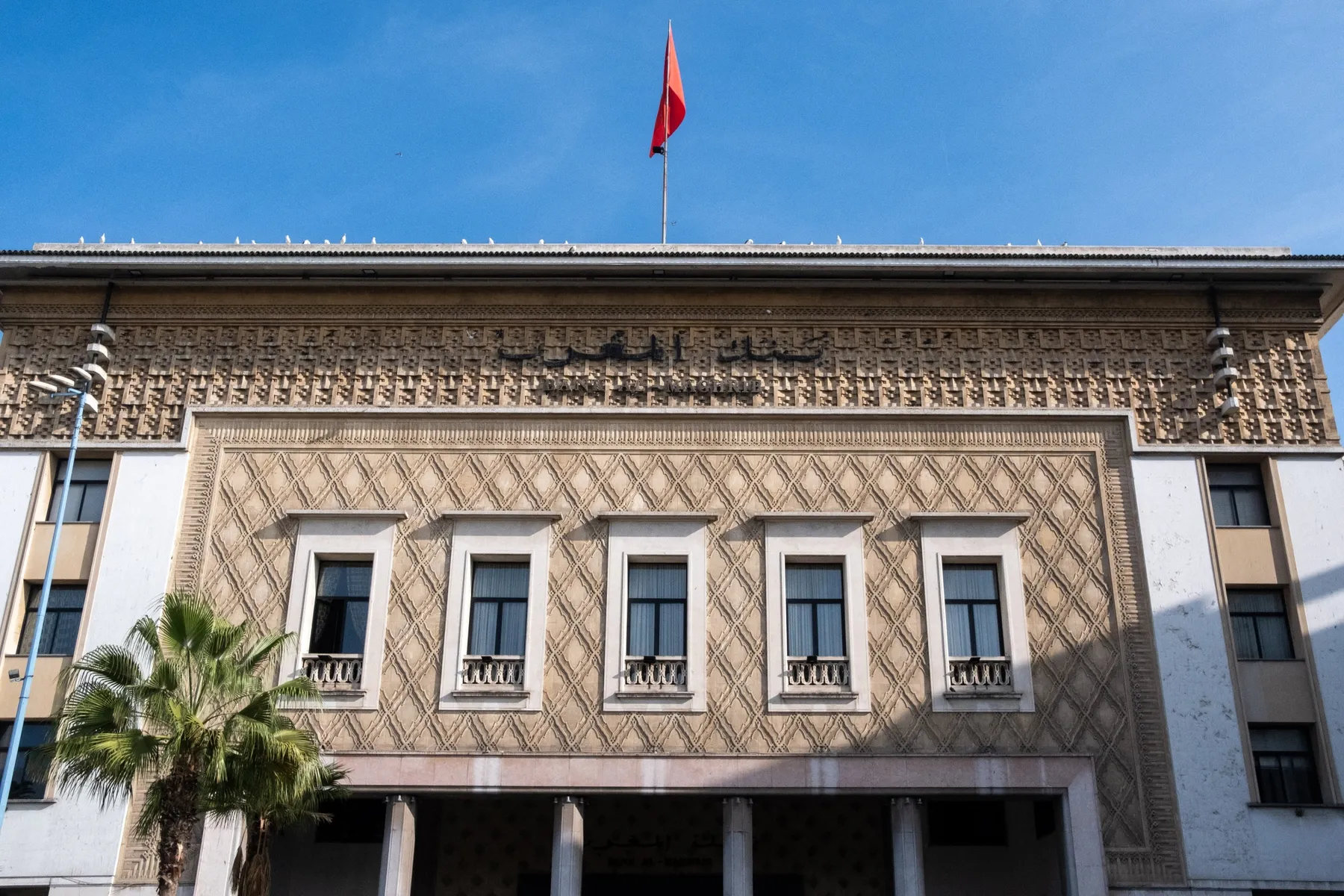
RABAT, July 2 – Morocco’s banking network contracted in 2025, with lenders recording a net reduction of 151 branches as conventional banks accelerated branch rationalisation in response to changing customer behaviour and the continued adoption of digital banking services.
According to the latest Bank Branch Network Report published by Bank Al-Maghrib’s Directorate of Statistics and Data Management, banks closed 180 branches during the year while opening just 29 new outlets, reducing the country’s total banking network from 5,701 branches in 2024 to 5,550 by the end of 2025.
The decline was driven almost entirely by conventional banks, whose branch network fell from 5,486 to 5,331 after recording 180 closures and only 25 openings. In contrast, offshore banks maintained a stable presence with nine branches, recording no changes during the year.
Morocco’s participative, or Islamic, banking sector continued to expand despite the broader contraction. The segment increased its branch network from 206 to 210 outlets, with Bank Al Yousr, Dar Al-Amane, and Al Akhdar Bank collectively opening four new branches without any closures.
Among conventional lenders, Crédit Populaire du Maroc recorded the largest reduction, closing 66 branches while opening one new outlet to end the year with 1,269 branches nationwide. Bank of Africa reduced its network by 43 branches, bringing its total to 593, while Attijariwafa Bank closed 27 branches and opened two, ending the year with 904 outlets.
Other banks also streamlined their physical presence. Société Générale Marocaine de Banques (Saham Bank) closed 16 branches, reducing its network to 248, while Banque Marocaine pour le Commerce et l’Industrie (BMCI) shut 14 branches to finish with 236. Crédit Agricole du Maroc recorded a net decline after closing 12 branches and opening two, leaving it with 480 outlets.
Not all lenders reduced their branch networks. Al Barid Bank expanded by opening seven new branches, increasing its nationwide network to 950, making it the country’s second-largest banking network. Crédit Immobilier et Hôtelier (CIH) also expanded, opening 13 branches to reach a total of 346 outlets.
Regionally, Casablanca-Settat experienced the largest decline in branch numbers, falling from 1,612 to 1,559 after 59 closures and six openings. Rabat-Salé-Kénitra followed, with its network declining from 854 to 829 as banks closed 30 branches while opening five.
Other regions also recorded contractions. Fès-Meknès lost 20 branches, while both Tanger-Tétouan-Al Hoceïma and Marrakech-Safi each recorded net declines of 17 branches. The Oriental region ended the year with 493 branches, down by 14.
Only two regions registered growth. Laâyoune-Sakia El Hamra increased its banking network from 73 to 74 branches, while Dakhla-Oued Ed Dahab maintained 32 branches after one new opening offset a closure.
The report also assessed banking accessibility using branch density, measured by the number of adults served by each branch. Based on High Commission for Planning (HCP) population projections for 2025, Morocco recorded a national average of 4,862 adults per branch.
Coverage varied considerably across the country. Drâa-Tafilalet recorded the lowest banking density, with 7,870 adults per branch, followed by Marrakech-Safi at 7,201 and Beni Mellal-Khénifra at 6,567. By comparison, Casablanca-Settat maintained one of the country’s most accessible banking networks, while the Oriental region also recorded relatively high branch density.
The latest figures suggest Morocco’s banking sector is continuing to consolidate its physical network as financial institutions respond to rising digital adoption, cost pressures and evolving customer preferences. While conventional banks increasingly optimise their branch footprints, participative banks continue to gradually expand from a smaller base, reflecting sustained growth in the country’s Islamic finance industry.
