
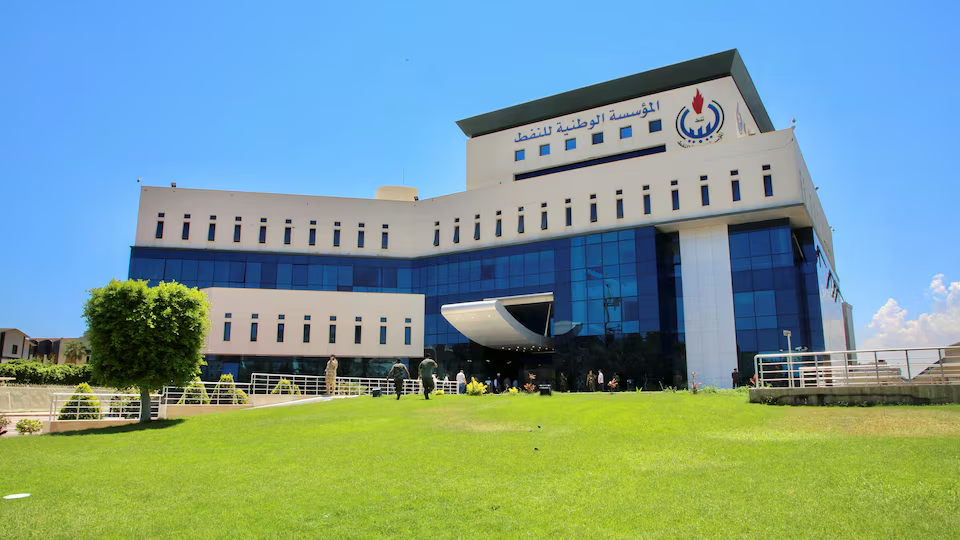
TRIPOLI, June 15 – Libya’s National Oil Corporation (NOC) has signed a series of production-sharing agreements with major international energy companies following its first oil and gas licensing round in nearly two decades, marking a significant step in efforts to expand exploration and increase crude production.
According to Massoud Suleman, Chairman of the National Oil Corporation (NOC), the agreements were concluded between Libya’s National Oil Corporation and a number of global energy firms that secured exploration acreage during the country’s 2025 bid round.
The deals include partnerships with Repsol, Türkiye Petrolleri, Eni and QatarEnergy. A separate consortium involving MOL Group, Türkiye Petrolleri and Repsol also signed exploration agreements.
The agreements follow Libya’s 2025 licensing round, the first such exercise since 2007, through which the country awarded new exploration blocks to international investors as it seeks to revitalize its hydrocarbons sector.
Libya, a member of Organization of the Petroleum Exporting Countries, is aiming to increase oil production capacity to 2 million barrels per day, up from current output of approximately 1.4 million barrels per day.
Suleman said the agreements demonstrate growing international confidence in Libya’s energy sector despite the country’s ongoing political divisions and governance challenges.
He noted that the new partnerships are expected to support increased exploration activity, accelerate field development and contribute to long-term production growth.
The February licensing round attracted strong interest from international energy companies, with exploration blocks awarded to firms including Chevron, Eni, QatarEnergy and Repsol.
The renewed investment comes as Libya seeks to leverage its vast oil and gas reserves to strengthen economic growth, increase export revenues and restore its position as one of Africa’s leading hydrocarbon producers.
Industry observers view the agreements as an important milestone for the country’s energy sector, signaling that international investors remain willing to commit capital to Libya’s upstream industry despite persistent political uncertainty between rival administrations in the country’s eastern and western regions.
If successfully implemented, the projects could help unlock new reserves, increase production capacity and strengthen Libya’s role in global energy markets over the coming years.
