
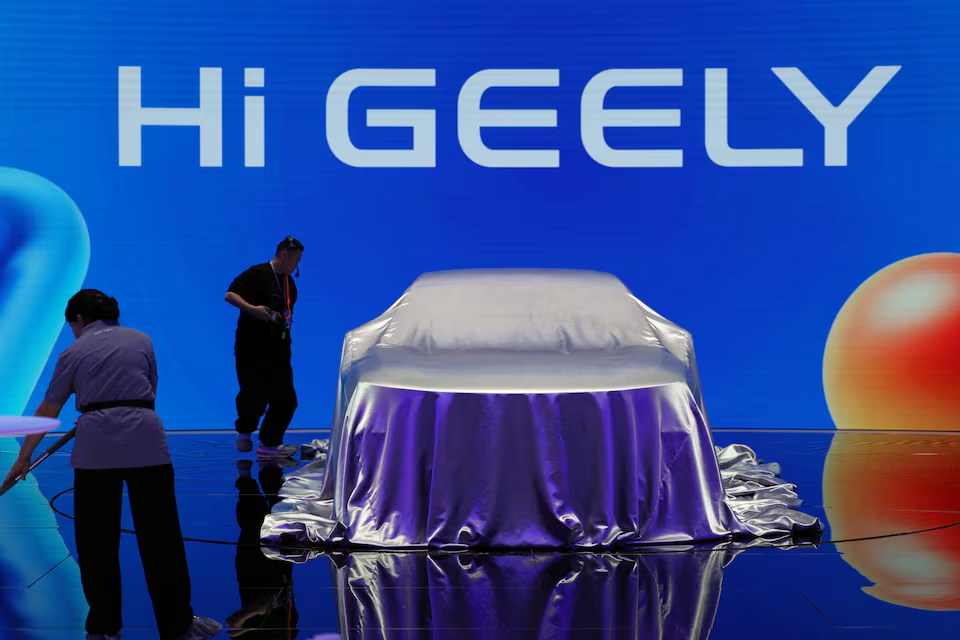
JOHANNESBURG, May 20 – China’s Geely plans to introduce its first petrol-powered vehicle in South Africa as the Chinese automaker accelerates efforts to expand its presence in Africa’s largest automotive market.
The launch marks a strategic shift for the company, which entered the South African market late last year with battery-electric and plug-in hybrid vehicles targeting early adopters of new energy vehicles.
Geely now plans to expand its first internal combustion engine (ICE) vehicle in South African lineup to about 10 models by the end of 2026 from three currently.
Quentin Oppermann, general manager of Geely South Africa’s Galaxy brand, said the company decided to introduce an internal combustion engine model to compete more directly with dominant mainstream brands.
“We thought it necessary for us to bring in an ICE model,” Quentin Oppermann, the general manager of Geely South Africa’s Galaxy brand said.
He said Geely aims to challenge established automakers including Toyota, Volkswagen, Suzuki and Chery, which continue to generate most of their South African sales from petrol-powered vehicles.
South Africa’s automotive market remains heavily dependent on conventional vehicles because of relatively high electric vehicle prices and limited charging infrastructure outside major urban centers.
Despite those constraints, Geely said demand for its electric models has exceeded expectations.
The company’s E2 model, launched in April as South Africa’s lowest-priced electric vehicle, sold out its first shipment within two weeks, while the second allocation has already been fully booked.
The strong early demand reflects growing consumer interest in electric mobility as fuel prices rise and charging infrastructure gradually improves.
The company is also rapidly growing its retail footprint, with 33 dealerships already operating nationwide.
That number is expected to increase to roughly 50 dealerships before the end of the year as Geely deepens its market presence.
Chinese automakers have been rapidly increasing their market share in South Africa, leveraging competitive pricing, advanced technology features and longer warranties to attract consumers.
Industry data released earlier this year showed Chinese brands accounted for a growing share of South Africa’s passenger vehicle market as affordability pressures reshape consumer purchasing decisions.
