
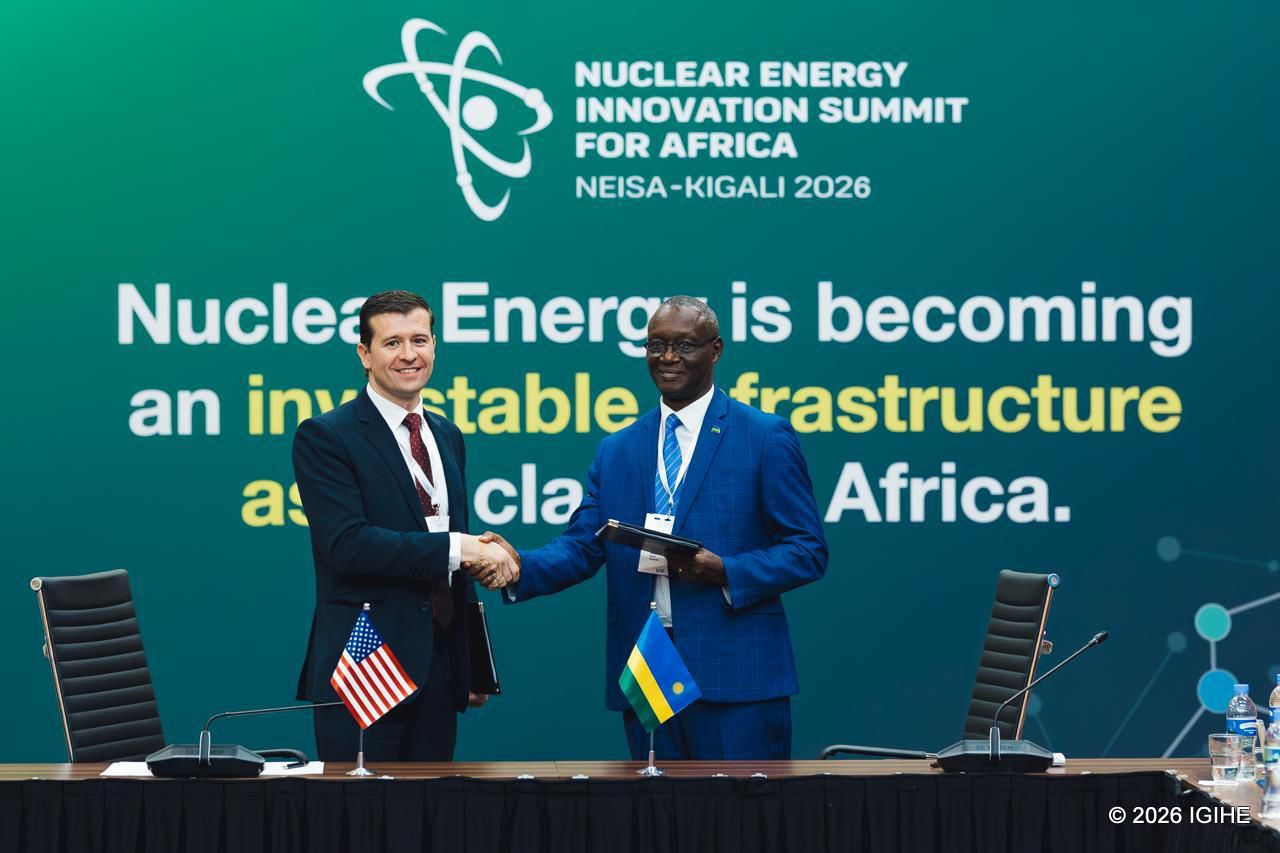
KIGALI, May 20 – Rwanda signed civil nuclear cooperation agreements with the United States and Holtec International on Tuesday as the East African nation explores the deployment of small modular nuclear reactors to expand electricity generation and support long-term economic growth.
The agreements form part of broader efforts by the United States to deepen international civil nuclear partnerships and promote the export of American nuclear technology.
Renee Sonderman, a US official in the Bureau of Arms Control and Nonproliferation, said Washington aims to position American firms to supply advanced nuclear technology to strategic global partners.
Under the agreement, Holtec International will work with Rwanda on assessing the potential deployment of its SMR-300 small modular reactor technology.
Small Modular Reactors, commonly known as SMRs, are designed to be smaller and more flexible than conventional nuclear reactors, with lower construction costs and faster deployment timelines.
Governments and energy companies globally are increasingly exploring SMRs as countries seek cleaner and more reliable electricity generation sources amid rising energy demand and decarbonization efforts.
However, questions remain over the commercial scalability and long-term viability of the technology, as relatively few SMR projects have reached full operational deployment globally.
Fidele Ndahayo, chief executive officer of the Rwanda Atomic Energy Board, said Rwanda aims to have its first nuclear reactor operational in the early 2030s.
Ndahayo said the partnership with Holtec will initially focus on evaluating possible sites and determining whether the SMR-300 technology would be suitable for Rwanda’s future energy needs once the technology matures.
Rwanda has been seeking to diversify its energy mix as it targets faster industrialization, digital infrastructure expansion and stronger economic growth.
South Africa currently operates Africa’s only commercial nuclear power plant, while Rosatom is constructing a nuclear facility in Egypt.
The agreements highlight growing international competition around nuclear technology partnerships in Africa as countries seek long-term solutions to energy shortages and rising electricity demand.
