
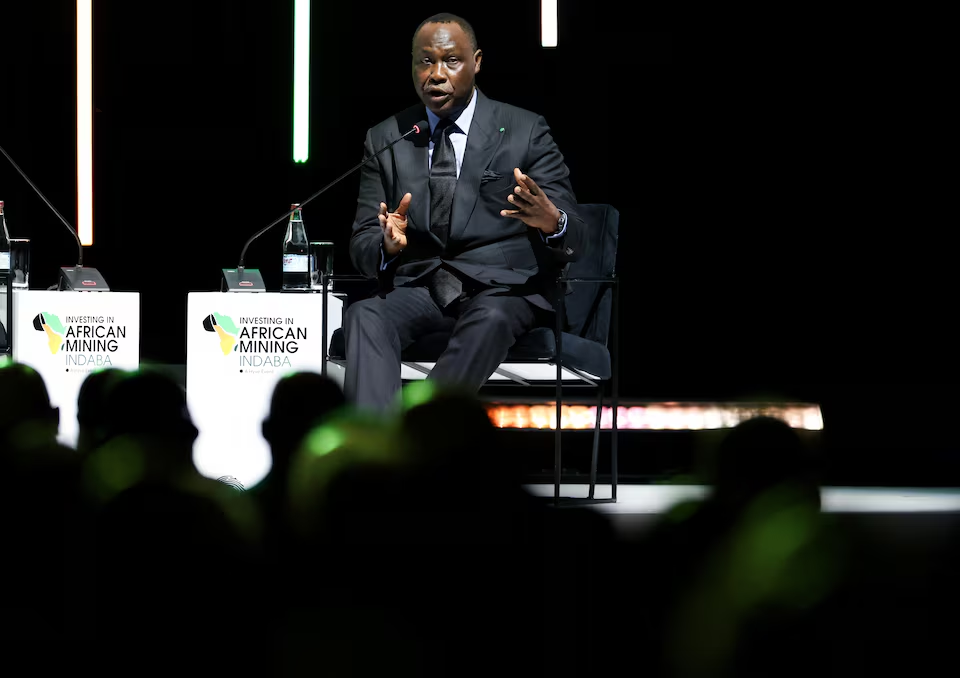
NAIROBI, April 23 – Africa’s infrastructure challenge is no longer primarily about raising money, but about effectively deploying capital into projects that drive trade, industrialization and long-term growth, according to Africa Finance Corporation.
The lender estimates that domestic financial institutions across the continent, including banks, pension funds and insurers, now hold about $4 trillion in capital. Despite this, investment has not translated into the level of infrastructure or industrial growth needed to sustain economic transformation.
AFC Chief Executive Officer Samaila Zubairu noted that while Africa has significant savings, it lacks the systems to channel that capital efficiently into large-scale infrastructure and industry.
According to the African Development Bank, the continent invests only about4% of its GDP in infrastructure, far below levels seen in countries like China. The bank estimates Africa faces an annual infrastructure financing gap of up to $170 billion, with improved investment potentially boosting economic growth by as much as two percentage points each year.
Experts say future infrastructure development must align with the goals of the African Continental Free Trade Area, ensuring projects are integrated across borders to support efficient trade corridors rather than fragmented national systems.
Lerato Mataboge, the African Union’s commissioner for infrastructure and energy, emphasized the need for coordinated policies to ensure infrastructure functions as a unified network capable of moving goods reliably across the continent.
The AFC report also highlights aviation as a key opportunity for rapid integration, particularly for high-value and time-sensitive sectors such as agriculture, pharmaceuticals and e-commerce, where faster logistics could unlock immediate trade benefits.
Since its establishment nearly two decades ago, AFC has invested more than $19 billion across 36 African countries, positioning itself as a key player in bridging the continent’s infrastructure gap.
