
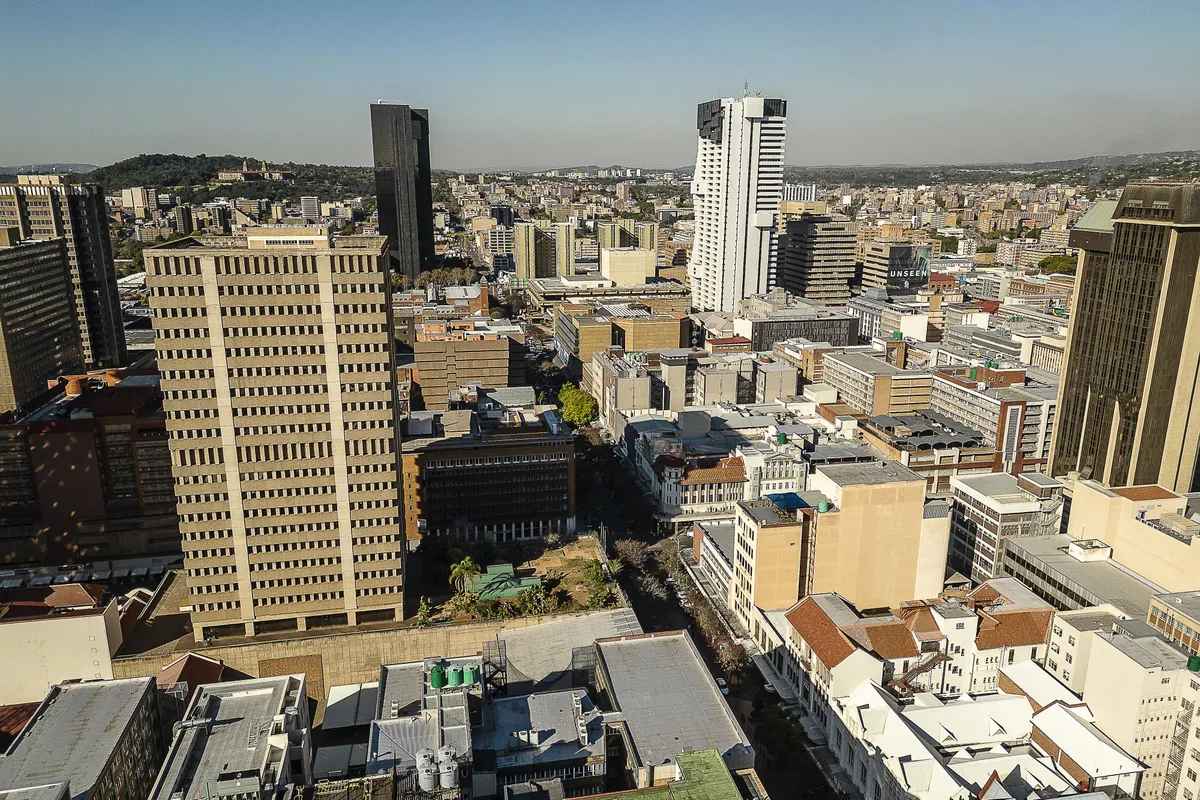
LAGOS, April 22 – Africa’s five largest economies now account for more than $1.7 trillion in combined GDP, according to the International Monetary Fund, underscoring how economic power remains concentrated in a handful of countries.
Leading the pack is South Africa with an estimated $479 billion economy, followed by Egypt at $429 billion and Nigeria at $377 billion. Algeria and Morocco round out the top five with $317 billion and $194 billion respectively.
While these economies dominate total output, a second tier of countries is steadily rising. Angola ($152.35 billion), Kenya ($147.26 billion), Ethiopia ($121.53 billion), Ghana ($118.29 billion) and Tanzania ($94.89 billion) are emerging as important contributors to continental growth.
Despite the dominance of the largest economies, growth trends tell a different story. Sub-Saharan Africa is projected to expand by 4.3% in 2026, driven largely by faster-growing smaller and mid-sized economies.
Ethiopia is expected to lead with 9.2% growth, followed by strong performances from countries like Guinea and Uganda. In contrast, larger economies are expanding more slowly, with Nigeria projected at 4.1% and South Africa lagging at just 1.0%.
This divergence highlights a key structural shift: while capital and output remain concentrated in major markets, growth momentum is increasingly coming from reform-driven and investment-led economies across East and West Africa.
The result is a more complex economic landscape where scale no longer guarantees speed, and smaller economies are playing a growing role in shaping Africa’s future growth trajectory.
