
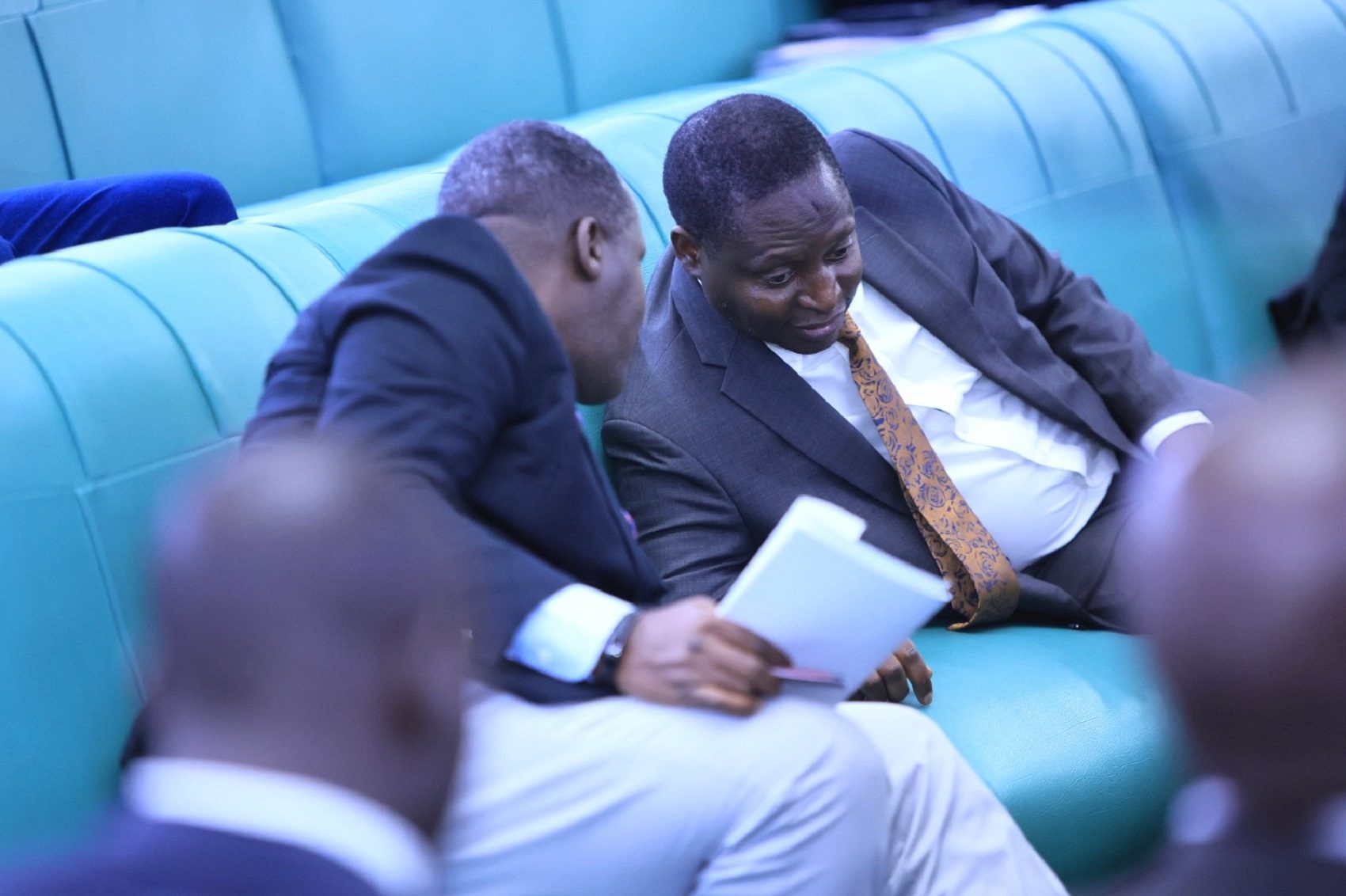
KAMPALA, April 16 — Uganda’s Parliament has raised concerns over a proposed FY 2026/27 budget structure that would channel the majority of funding for the Ministry of Trade, Industry and Cooperatives into a single state-owned entity, the Uganda Development Corporation (UDC), leaving several supporting institutions with comparatively limited resources.
Under the proposal, UDC is allocated Shs422.35 billion, representing about 82 percent of the ministry’s total Shs514.96 billion budget. The remaining Shs92.6 billion is expected to cover the ministry headquarters and agencies including the Uganda National Bureau of Standards (UNBS), the Uganda Industrial Research Institute (UIRI) and the Uganda Free Zones and Export Promotion Authority (UFZEPA).
The Committee on Tourism, Trade and Industry said the structure risks limiting the effectiveness of institutions that support industrial development, standards enforcement and export promotion. Boniface Okot, the committee’s Deputy Chairperson, told Parliament that the rise in the ministry’s allocation is largely driven by the capitalisation of UDC.
Parliament also heard that key agencies are already operating under financial pressure. The Uganda Industrial Research Institute, mandated to support innovation and value addition, remains constrained by a shortage of machinery worth about Shs6.2 billion at its Namanve facility, limiting its operational capacity.
The Uganda National Bureau of Standards continues to face funding constraints affecting regulatory oversight and public awareness activities. UFZEPA has also reported rising operational costs, including increased legal expenses, according to the committee findings.
The ministry headquarters, which coordinates trade, cooperatives and industrial policy, is similarly reported to be operating under tight resource conditions despite its central role in sector management.
Debate also emerged over the structure of UDC itself. Speaker Anita Annet Among questioned whether the corporation should continue operating as a subvention under the ministry, suggesting it may require greater institutional independence given the scale of its investment mandate. Lawmakers also raised questions about its performance and returns on government capital.
Outside the industrial vote, Parliament flagged wider budget constraints across the sector. The tourism development programme is projected to receive about 71 percent of its planned allocation under the National Development Plan, a shortfall lawmakers said could affect expansion of a key foreign exchange-earning industry.
The committee further pointed to uneven and insufficient funding for local government trade and tourism initiatives, alongside implementation challenges such as procurement delays, weak planning processes and limited follow-up on previous audit recommendations.
The report has been submitted to the Budget Committee for further review as Parliament prepares to deliberate on Uganda’s national budget for the 2026/27 financial year.
