
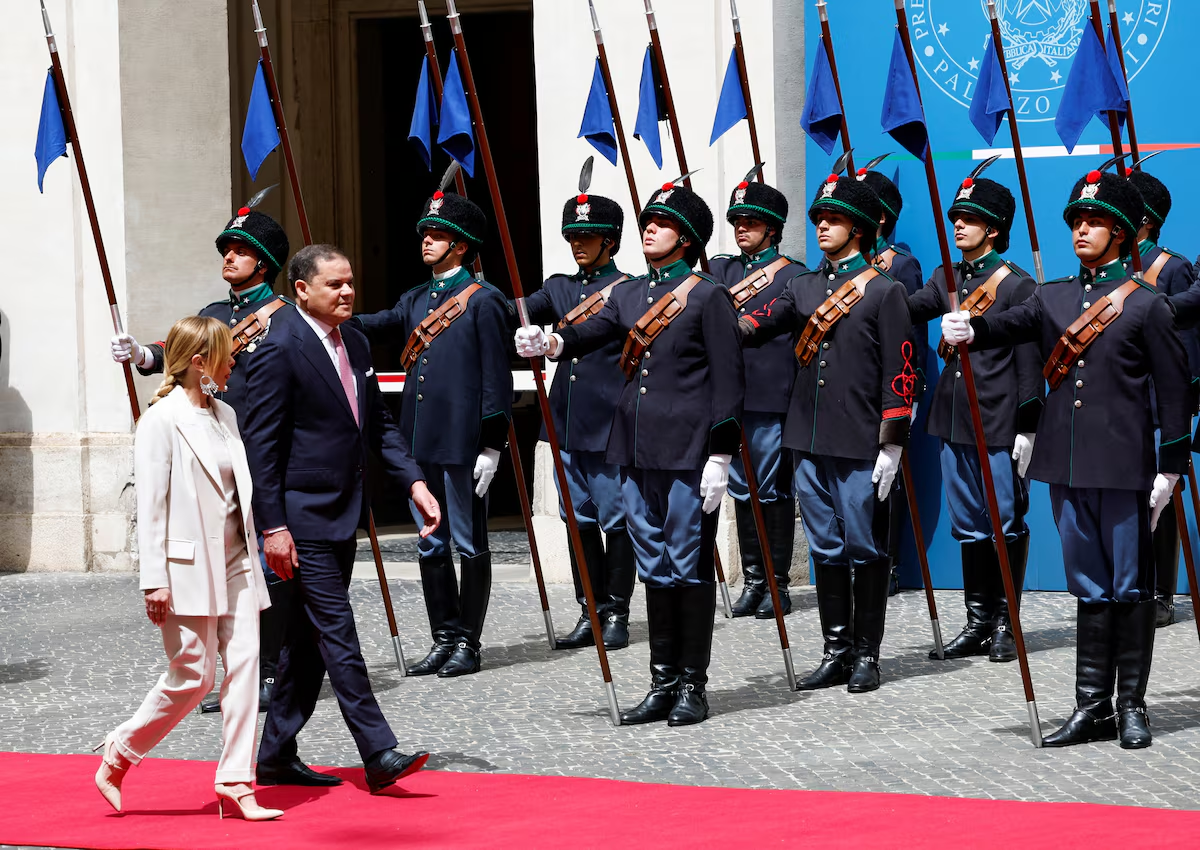
ROME, May 7 – Energy cooperation between Italy and Libya is set to deepen after Prime Minister Giorgia Meloni and Prime Minister Abdulhamid Dbeibah discussed expanding ties during talks in Rome, as Italy moves to strengthen supply security amid rising tensions in the Middle East.
Italy, which depends heavily on imported energy, has been exposed to higher global fuel costs following disruptions linked to the conflict involving Iran and instability around the Strait of Hormuz, a key route for global oil shipments.
According to a statement from Meloni’s office, the two leaders explored ways to deepen bilateral economic cooperation, with a particular focus on investment in the energy sector. They also reaffirmed their commitment to cooperation on migration management.
Libya remains Italy’s largest crude oil supplier, accounting for nearly one-fifth of Italy’s total crude imports. However, Libyan gas exports to Italy declined to around 1 billion cubic metres in 2025 from 1.4 billion cubic metres a year earlier.
The decline has been linked to rising domestic gas demand in Libya, infrastructure disruptions and persistent political instability, which have kept the Greenstream pipeline operating below capacity.
Italian lawmakers from the country’s parliamentary security committee visited Libya in late April and discussed the need for greater investment to increase Libyan gas production and exports to Italy.
Eni, Italy’s state-controlled energy company, has operated in Libya since 1959 and remains the country’s largest international energy operator. The company produced about 162,000 barrels of oil equivalent per day in Libya during 2025 and currently has three development projects underway, two of which are expected to begin operations in 2026.
The renewed focus on Libya highlights Europe’s broader efforts to diversify energy sources as geopolitical tensions continue to disrupt traditional supply routes and raise concerns over global fuel availability.
