
– Business, Finance, Markets & Economic News
  • Home
  • Economy
  • Business
  • Markets
  • Finance
  • Credit Ratings
  • Policy
  • Tech
– Business, Finance, Markets & Economic News
  • Home
  • Economy
  • Business
  • Markets
  • Finance
  • Credit Ratings
  • Policy
  • Tech
Top News
Dangote Explores Cross-Border Share Trading as Refinery IPO Attracts $4.77 Billion in Orders
OPay Suspends $304 Million US IPO Following Chinese Regulatory Inquiry
Egypt Raises $500 Million Through International Bond Market Reopening
Ramaphosa Sees Opportunity to Reset South Africa-US Relations After Midterm Elections
Ghana Inflation Rises for Third Consecutive Month to 5.5% in October 2026
Dangote Unveils $2.5 Billion Namibia Fuel Storage and Regional Pipeline Project
World Bank Flags Corruption Risks from Kenya’s Growing Taxes and Business Levies
Chinese Refiners Buy Up to 10 Million Barrels of West African Crude for December Delivery
South Africa’s Grindrod Secures Transnet Rail Access to Transport Coal to Mozambique
World Bank Urges African Cities to Issue More Debt to Finance Urban Infrastructure
JPMorgan and HSBC Target New Business in $1.5 Trillion MDB Securitization Market
African Guarantee Fund Unlocks $7.4 Billion in SME Financing Across 44 African Countries
Senegal Parliament Rejects Revised Budget as $2.2 Billion IMF Deal Faces Uncertainty
South Africa Expects Limited Economic Impact from AGOA Exclusion, but Jobs at Risk
Africa Credit Rating Agency Targets First Sovereign Ratings by March as It Engages 15 Governments
SUBSCRIBE
– Business, Finance, Markets & Economic News
Subscribe
– Business, Finance, Markets & Economic News
  • Home
  • Economy
  • Business
  • Markets
  • Finance
  • Credit Ratings
  • Policy
  • Tech
Copyright 2026 - All Right Reserved
Home » Credit Ratings » Nigeria’s Tinubu Calls for Africa-Owned Credit Rating Agency to Challenge Global Risk Mispricing
Credit Ratings

Nigeria’s Tinubu Calls for Africa-Owned Credit Rating Agency to Challenge Global Risk Mispricing

by Emmanuel Ebube February 17, 2026
written by Emmanuel Ebube February 17, 2026
Nigerian President
FacebookTwitterLinkedinEmail
217

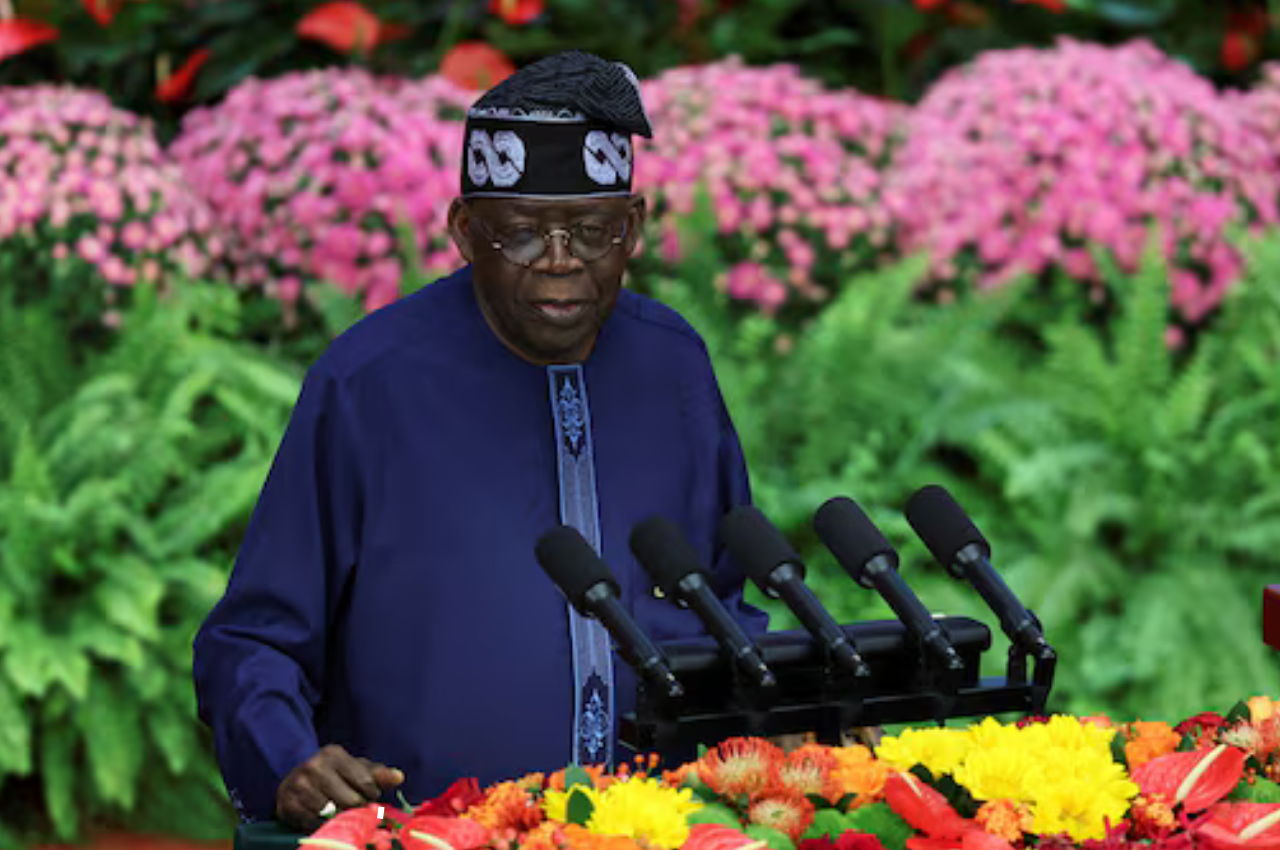
LAGOS, Feb 17 – President Bola Ahmed Tinubu has called for the establishment of a continentally owned credit rating agency, warning that Africa continues to face excessive borrowing costs due to persistent misjudgment of its economic risk by global financial markets.

Writing in an opinion article published by the Financial Times, the Nigerian leader argued that the so-called “Africa premium”, the persistent gap between perceived and actual risk, is driving up financing costs for African economies and limiting access to international capital.

According to Tinubu, global investor perception of Africa remains heavily shaped by the three dominant rating institutions, Fitch Ratings, Moody’s, and S&P Global Ratings. While their assessments influence global capital allocation, he said their evaluations often fail to fully capture local economic realities and reform progress across African countries.

The president noted that only three African nations currently hold investment-grade ratings, despite projections from the International Monetary Fund indicating that Africa is set to become the fastest-growing region globally. This disconnect, he argued, reflects deeper structural weaknesses in how sovereign credit risk on the continent is measured.

You Might Be Interested In
  • Fitch Cuts Afreximbank to Junk After Lender Ends Rating Relationship

He cited findings from the United Nations Development Programme, which estimated that inconsistencies and structural biases in credit ratings cost African economies approximately $75 billion annually in higher borrowing costs and reduced access to financing. Tinubu said this stems partly from limited regional presence and reliance on subjective judgments regarding political stability, institutional strength, and policy credibility.

Such external assessments, he warned, can amplify global market volatility. Commodity-dependent African economies are often downgraded quickly during periods of global uncertainty, even when their underlying fiscal and external fundamentals remain relatively stable. These downgrades increase borrowing costs and weaken public finances, reinforcing negative investor sentiment.

Tinubu pointed to Nigeria’s recent reform programme as evidence that meaningful policy adjustments and improved transparency can strengthen investor confidence. Measures such as expanding economic data coverage, integrating previously undisclosed central bank liabilities into official debt records, rebasing gross domestic product, and improving fiscal disclosure have helped improve economic credibility.

He also highlighted major structural reforms, including fuel subsidy removal and exchange rate liberalisation, which have supported economic diversification and reduced reliance on oil-linked currency dynamics. Despite these steps, he said Nigeria’s sovereign rating has yet to fully reflect improved fundamentals. Strong investor demand for Nigeria’s recent dollar-denominated bond issuance, which was oversubscribed by more than five times, suggests investor confidence may be stronger than formal ratings indicate.

Tinubu emphasized that an African credit rating agency should function alongside, not in place of, existing global institutions. By providing regionally informed analysis and recognizing reform progress more quickly, such an agency could improve market efficiency and ensure fairer access to capital.

He added that delayed rating upgrades impose tangible costs, particularly on smaller African economies that lack global visibility. A continental agency could help bridge this gap by offering more timely and context-specific assessments, strengthening Africa’s financial credibility and supporting long-term economic growth.

Read Next

  • Moody’s Revises Republic of Congo Outlook to Positive on Improved Market Access

    May 28, 2026
  • AfCFTA Pushes Nigeria’s Intra-African Trade to $9.02 Billion in 2025

    July 1, 2026
  • Afreximbank Terminates Credit Rating Relationship With Fitch Ratings

    January 23, 2026
  • Ghana Moves Ahead With New Sliding-Scale Gold Royalty System

    March 9, 2026
  • South Africa’s Economy Revised 4.9% Higher After GDP Rebasing Exercise

    October 29, 2026

Newsletter

Subscribe to our newsletter for trusted insights on Africa’s economies, markets, and business.

African Economy Inc. Logo

About Us

We are a business and economic intelligence platform delivering in-depth reporting, analysis, and insights on markets, companies and economic developments across Africa.

Our Company

  • AEI Intelligence
  • About
  • Editorial Standard
  • Partnerships
  • Advertise With Us
  • Careers
  • Ownership

News

  • Economy
  • Business
  • Markets
  • Finance
  • Credit Ratings
  • Policy
  • Tech

Useful Links

  • Privacy Policy
  • Terms of Use
  • Closed Captioning Policy
  • Accessibility Statement
  • Personal Information
  • Data Tracking
  • Register New Account

Subscribe Newsletter

Subscribe to our newsletter for trusted insights on Africa’s economies, markets, and business.

©2026 Majons Media Inc. All Rights Reserved.

Facebook Twitter Instagram Linkedin
Manage Consent
To provide the best experiences, we use technologies like cookies to store and/or access device information. Consenting to these technologies will allow us to process data such as browsing behavior or unique IDs on this site. Not consenting or withdrawing consent, may adversely affect certain features and functions.
Functional Always active
The technical storage or access is strictly necessary for the legitimate purpose of enabling the use of a specific service explicitly requested by the subscriber or user, or for the sole purpose of carrying out the transmission of a communication over an electronic communications network.
Preferences
The technical storage or access is necessary for the legitimate purpose of storing preferences that are not requested by the subscriber or user.
Statistics
The technical storage or access that is used exclusively for statistical purposes. The technical storage or access that is used exclusively for anonymous statistical purposes. Without a subpoena, voluntary compliance on the part of your Internet Service Provider, or additional records from a third party, information stored or retrieved for this purpose alone cannot usually be used to identify you.
Marketing
The technical storage or access is required to create user profiles to send advertising, or to track the user on a website or across several websites for similar marketing purposes.
  • Manage options
  • Manage services
  • Manage {vendor_count} vendors
  • Read more about these purposes
View preferences
  • {title}
  • {title}
  • {title}
– Business, Finance, Markets & Economic News
  • Economy
  • Business
  • Markets
  • Banking & Finance
  • Energy
  • Tech
  • Policy
  • African Economy Inc.