
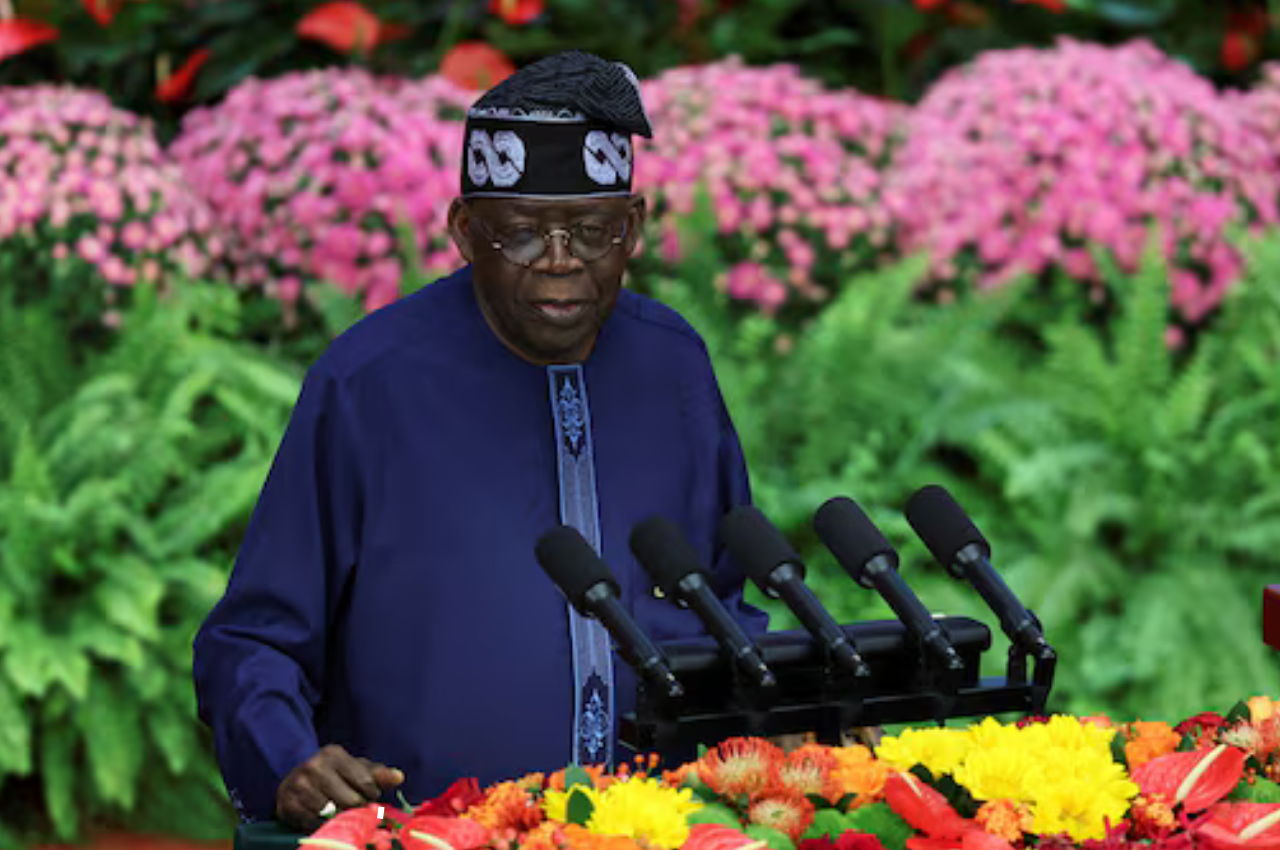
LAGOS, Nov 25 – Nigeria’s President Bola Tinubu has asked the National Assembly to reduce the 2026 federal budget to ₦65.176 trillion ($48 billion) from the ₦68.323 trillion approved earlier this year, proposing a ₦3.15 trillion reduction in government spending while keeping the fiscal deficit unchanged.
In a letter dated November 20, 2026, addressed to the Speaker of the House of Representatives, Tajudeen Abbas, Tinubu said the revised spending plan was intended to align the budget with “existing obligations and available resources”. The request was read during plenary on Tuesday.
The proposed adjustments would regularise certain expenditures incurred by the Nigerian National Petroleum Company Limited (NNPCL) on behalf of the Federation, address underprovided debt-service obligations and recognise previously issued capital warrants and supplementation commitments.
The revised framework projects federal government revenue, including receipts from government-owned enterprises, at ₦33.720 trillion ($24.83 billion). Aggregate capital expenditure is set at ₦26.232 trillion ($18.82 billion).
Despite the reduction in planned expenditure, the fiscal deficit, including project-tied loans, would remain at ₦31.457 trillion, equivalent to 5.64% of gross domestic product.
The proposal therefore changes the composition and scale of the approved budget without reducing the government’s projected financing gap.
NNPCL expenditure and debt obligations feature in revision
The proposed revision includes provisions to regularise some spending undertaken by NNPCL on behalf of the government, alongside adjustments to debt-service obligations that were insufficiently provided for in the original budget.
It also seeks to recognise issued capital warrants and supplementation commitments, while providing for refunds to ministries, departments and agencies (MDAs) and special accounts.
These adjustments are intended to bring existing government commitments into the revised budget framework and improve the alignment between approved allocations and expenditure obligations.
Tinubu said the changes would also improve the credibility and execution of the capital budget by prioritising commitments already made.
Capital spending prioritises roads and agriculture
Under the revised proposal, capital provisions for MDAs would consist mainly of amounts that had already been warranted, although some additional capital and overhead allocations would be introduced for priority interventions.
The president identified the completion of critical road projects, protection of agricultural production, lower production costs, improved farm yields and better market access among the areas targeted for additional allocations.
The revised provisions would also address water vulnerability, according to the letter.
The emphasis on existing commitments suggests that the government intends to concentrate available capital resources on projects and interventions already under way, while limiting the scope for new spending.
Deficit remains at ₦31.46 trillion
The revised budget retains a fiscal deficit of ₦31.457 trillion, despite the proposed reduction in aggregate expenditure from ₦68.323 trillion to ₦65.176 trillion.
The deficit is equivalent to 5.64% of GDP and includes project-tied loans. Projected federal government revenue, including government-owned enterprises, stands at ₦33.720 trillion.
The figures indicate that the proposed spending reduction is not accompanied by a corresponding adjustment to the government’s overall deficit target. Instead, the revision focuses on aligning expenditure with existing obligations, recognising outstanding commitments and prioritising selected capital projects.
The National Assembly must consider the president’s request before the revised expenditure framework can take effect.
2027 budget preparations approach
The proposed changes come ahead of the federal government’s next budget cycle. Finance Minister Wale Edun is expected to present the 2027 budget next month, according to the supplied report.
The budget process will take place ahead of Nigeria’s national election scheduled for January 16.
For the government, the immediate challenge is to reconcile existing spending commitments with available resources while maintaining its stated fiscal framework. The proposed revision provides a narrower expenditure envelope, but leaves the deficit target intact, placing continued importance on revenue performance and budget execution.
