
– Business, Finance, Markets & Economic News
  • Home
  • Economy
  • Business
  • Markets
  • Finance
  • Credit Ratings
  • Policy
  • Tech
– Business, Finance, Markets & Economic News
  • Home
  • Economy
  • Business
  • Markets
  • Finance
  • Credit Ratings
  • Policy
  • Tech
Top News
Ethiopia’s New Gold Refinery Seeks Regional Gold Supplies From East African Markets
Angola’s Fuel Subsidy Bill Could Nearly Double to $4.16 Billion as Oil Prices Rise
MDBs Launch Critical Minerals Framework to Boost Local Processing and Investment
Transnet Signs $400 Million Wabtec Deal to Improve Freight Locomotive Reliability
Dangote Plans to List at Least 10% of Ethiopian Fertilizer Business on Local Exchange
World Bank Group Targets $5.79 Billion in Private Financing for Nigeria in 2026
Pickalbatros Secures $250 Million IFC-Backed Financing for Morocco Hotel Expansion
Kenya’s Economy Grows 5.1% in Second Quarter as Transport and Services Expand
Africa50 CEO Calls for Domestic Capital and Local Processing to Scale Investment Across Africa
South Africa Inflation Forecast at 4.4% in 2026, Target Return Delayed Until 2028
Africa Finance Corporation Targets Iron Ore and Uranium Investments in Africa
World Bank Targets $19 Billion in Critical Minerals Financing by 2030
Senegal Raises $582 Million in Second Regional Bond Sale of 2026
Eni Targets 2028 Start for Mozambique’s LNG Project as Drilling Begins in November
Egyptian Exchange Explores Listing Dangote Group Shares Through Depositary Receipts
SUBSCRIBE
– Business, Finance, Markets & Economic News
Subscribe
– Business, Finance, Markets & Economic News
  • Home
  • Economy
  • Business
  • Markets
  • Finance
  • Credit Ratings
  • Policy
  • Tech
Copyright 2026 - All Right Reserved
Home » Energy » Nigeria’s Power Sector Decreases 10.63% as Contraction Continues
Energy

Nigeria’s Power Sector Decreases 10.63% as Contraction Continues

by Oluebube Elechi September 1, 2026
written by Oluebube Elechi September 1, 2026
FacebookTwitterLinkedinEmail
57

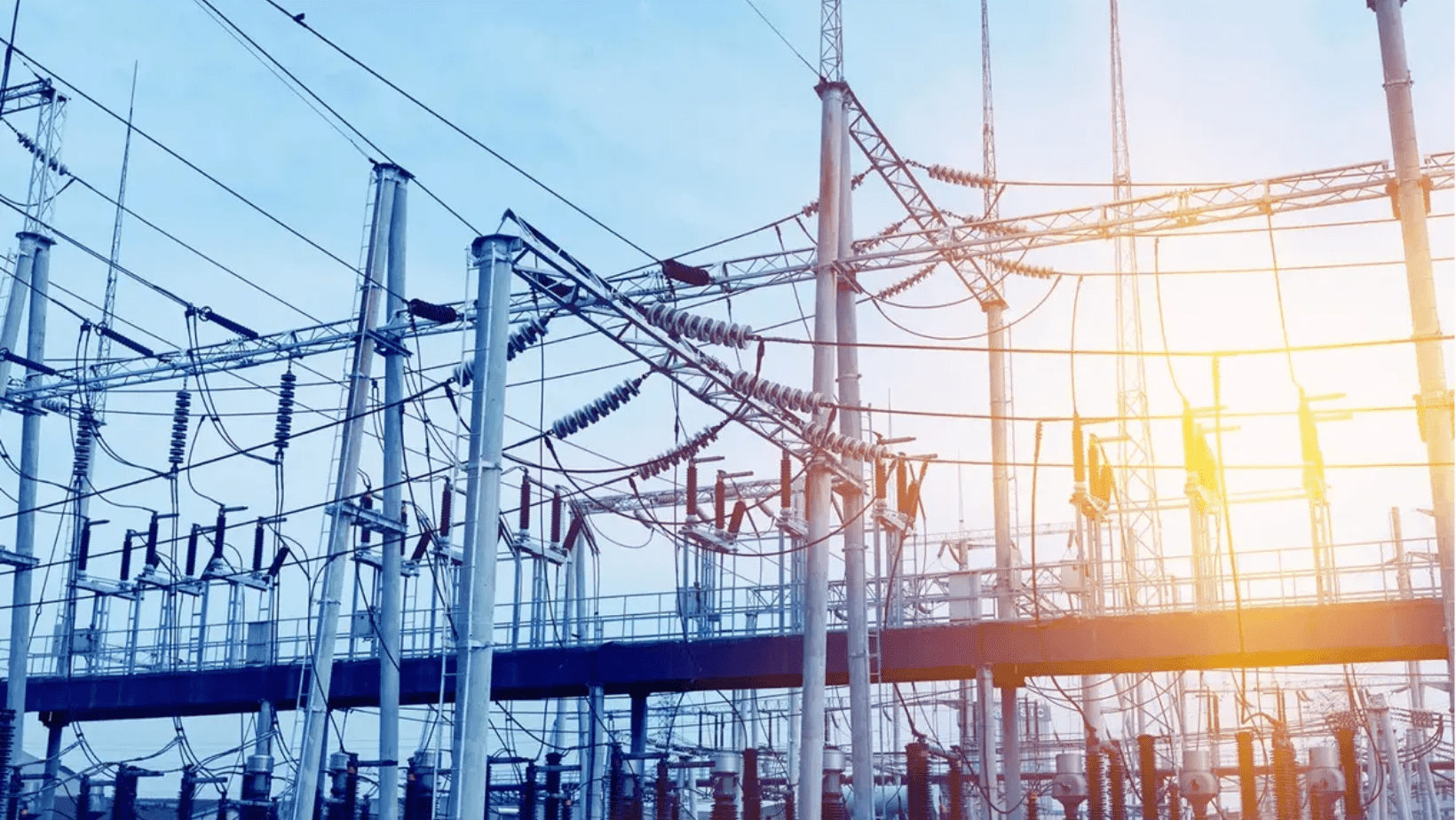
ABUJA, Sept 1 – Nigeria’s power sector contracted by 10.63% year-on-year in real terms in the second quarter of 2026, marking its second consecutive quarterly decline, according to the latest Gross Domestic Product (GDP) report from the National Bureau of Statistics (NBS).

The decline was an improvement from the 15.30% contraction recorded in the first quarter, but it shows that the electricity, gas, steam and air-conditioning supply sector remains under pressure despite growth across the wider economy.

Nigeria’s economy grew by 4.43% in real terms in Q2 2026, up from 4.23% in the same period of 2025. The power sector, however, continued to record weaker real output.

In nominal terms, the sector grew by 0.87% year-on-year in Q2, compared with 4.98% in Q1. Its nominal value also increased from N324.83 billion in the first quarter to N1.26 trillion in the second quarter, highlighting the difference between the sector’s monetary value and its actual output.

You Might Be Interested In
  • Uganda Targets February 2027 Investment Decision for $4 Billion Oil Refinery

The continued decline in real output points to ongoing problems across Nigeria’s electricity value chain. Electricity generation and transmission capacity remain limited, while gas supply constraints, ageing infrastructure and liquidity problems continue to affect operators across the market.

For manufacturers, businesses and households, unreliable electricity supply means continued dependence on the national grid alongside diesel and petrol-powered generators. This can raise operating costs, restrict industrial activity and affect productivity.

The latest figures also reverse some of the improvement recorded in 2025. Electricity generation rose by 10.92% in the first quarter of 2025, supported by better availability and operating performance from thermal and hydropower plants. Thermal plants accounted for most of the increase, with 16 of the 23 thermal plants connected to the national grid recording higher average hourly output than in the previous quarter.

The more recent GDP figures suggest those gains have not translated into sustained real growth in the power sector.

Despite its challenges, the sector remains economically significant, generating N62.12 billion in Company Income Tax in 2025.

Nigeria’s broader economic outlook remains positive, with the World Bank maintaining its 4.4% growth forecast for 2027. S&P Global Ratings has also upgraded Nigeria’s long-term foreign and local currency credit ratings to ‘B’ from ‘B-’.

You may also like

Egypt Energy Bill Swells to $1.65bn Amid War Uncertainty

Read Next

  • Congo Bans Copper and Cobalt Concentrate Exports to Boost Domestic Mineral Processing

    August 6, 2026
  • Sierra Leone Signs Permit With Shell to Advance Offshore Oil Exploration

    April 22, 2026
  • Senegal Bonds Fall to Record Lows Ahead of Expected IMF Statement on Debt Restructuring

    September 1, 2026
  • Kenya’s Private Sector Contracts as PMI Drops Below 50 in March

    April 7, 2026
  • BP’s Egypt Gas Assets Attract Interest from Dragon Oil, Carlyle, Energean and Artemis

    July 29, 2026

Newsletter

Subscribe to our newsletter for trusted insights on Africa’s economies, markets, and business.

African Economy Inc. Logo

About Us

We are a business and economic intelligence platform delivering in-depth reporting, analysis, and insights on markets, companies and economic developments across Africa.

Our Company

  • AEI Intelligence
  • About
  • Editorial Standard
  • Partnerships
  • Advertise With Us
  • Careers
  • Ownership

News

  • Economy
  • Business
  • Markets
  • Finance
  • Credit Ratings
  • Policy
  • Tech

Useful Links

  • Privacy Policy
  • Terms of Use
  • Closed Captioning Policy
  • Accessibility Statement
  • Personal Information
  • Data Tracking
  • Register New Account

Subscribe Newsletter

Subscribe to our newsletter for trusted insights on Africa’s economies, markets, and business.

©2026 Majons Media Inc. All Rights Reserved.

Facebook Twitter Instagram Linkedin
Manage Consent
To provide the best experiences, we use technologies like cookies to store and/or access device information. Consenting to these technologies will allow us to process data such as browsing behavior or unique IDs on this site. Not consenting or withdrawing consent, may adversely affect certain features and functions.
Functional Always active
The technical storage or access is strictly necessary for the legitimate purpose of enabling the use of a specific service explicitly requested by the subscriber or user, or for the sole purpose of carrying out the transmission of a communication over an electronic communications network.
Preferences
The technical storage or access is necessary for the legitimate purpose of storing preferences that are not requested by the subscriber or user.
Statistics
The technical storage or access that is used exclusively for statistical purposes. The technical storage or access that is used exclusively for anonymous statistical purposes. Without a subpoena, voluntary compliance on the part of your Internet Service Provider, or additional records from a third party, information stored or retrieved for this purpose alone cannot usually be used to identify you.
Marketing
The technical storage or access is required to create user profiles to send advertising, or to track the user on a website or across several websites for similar marketing purposes.
  • Manage options
  • Manage services
  • Manage {vendor_count} vendors
  • Read more about these purposes
View preferences
  • {title}
  • {title}
  • {title}
– Business, Finance, Markets & Economic News
  • Economy
  • Business
  • Markets
  • Banking & Finance
  • Energy
  • Tech
  • Policy
  • African Economy Inc.