
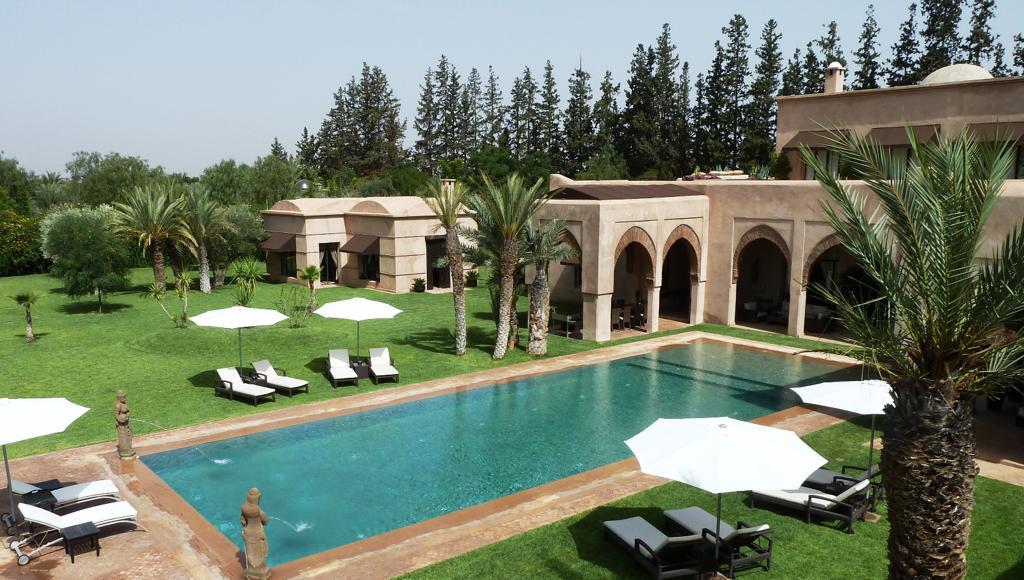
MARRAKECH, May 30 – Marrakech is attracting a growing mix of international property buyers as its luxury residential market expands beyond its traditional base of retirees and second-home owners.
According to a new report by Knight Frank, the Moroccan city has emerged as one of North Africa’s most active high-end residential destinations, supported by strong international demand, competitive pricing and major infrastructure investments.
While buyers from France, Belgium and the United Kingdom continue to account for a significant share of transactions, demand is increasingly coming from Moroccan expatriates, particularly professionals based in the United States, as well as investors and lifestyle buyers from the Middle East.
The report highlights a noticeable shift in buyer demographics, with growing interest from individuals in their 40s and 50s seeking family residences, relocation opportunities or second homes.
This contrasts with previous years when retirees represented the dominant buyer group in the city’s prime housing segment.
Luxury residential properties in Marrakech generally trade between €5,500 and €7,000 per square meter, although premium villas in sought-after locations command significantly higher valuations.
Areas such as Amelkis, Royal Palm, Palmeraie and selected neighborhoods within the Medina continue to experience upward pricing pressure due to limited inventory and sustained international demand.
Knight Frank estimates that values for top-tier properties in these areas have increased by between 10% and 15% over the past two years despite a broader stabilization in the wider housing market.
Official figures cited in the report show that residential property transactions across all segments increased by 12% during 2024.
Despite recent appreciation, Marrakech remains considerably more affordable than many established luxury property destinations across Europe.
Prime residential prices in the city average roughly €6,000 per square meter, significantly below major international markets such as Paris, London, Geneva, Milan, Lisbon and Marbella.
The relative pricing advantage continues to attract buyers searching for lifestyle investments, holiday homes and long-term wealth preservation opportunities.
One of the most significant trends identified by Knight Frank is the growing preference among affluent buyers to rent before purchasing.
Many prospective homeowners now spend between six and twelve months leasing properties before committing to acquisitions, using the period to evaluate neighborhoods, schools, amenities and overall living conditions.
The report describes this “rental-first” approach as an increasingly important pathway to property ownership and a major contributor to future transaction activity.
Infrastructure investments are also supporting market growth.
Morocco’s preparations for co-hosting the 2030 FIFA World Cup are expected to enhance connectivity and improve accessibility across key cities.
Among the flagship projects is the planned extension of the country’s high-speed rail network linking Casablanca and Marrakech, which is expected to reduce travel times to approximately 90 minutes.
Meanwhile, the expansion of Marrakech Menara Airport will increase passenger capacity to around 16 million travelers annually.
Tourism growth continues to strengthen the city’s investment appeal.
According to figures referenced in the report, international tourist arrivals to Morocco increased from 12.9 million in 2019 to 19.8 million in 2025, boosting demand for short-term accommodation and hospitality-linked real estate investments.
Knight Frank estimates that short-term rental yields ranging between 7% and 10% are achievable in parts of Marrakech, particularly among investors targeting seasonal tourism demand.
Looking ahead, the consultancy forecasts that prime residential property values in Marrakech could rise by approximately 6% during 2026, supported by continued international demand, infrastructure development and the city’s growing profile as a global lifestyle destination.
