
KAMPALA, May 28 – Uganda has closed its border with the Democratic Republic of the Congo as authorities escalate containment measures against the spreading Bundibugyo Ebola outbreak.
The decision was announced by Uganda’s National Task Force on Ebola Response following growing concerns about cross-border transmission linked to the worsening outbreak in eastern Congo.
Health officials said the move is aimed at limiting further infections as the virus continues to spread across affected regions.
Uganda confirmed its first case less than two weeks ago after a Congolese patient entered the country seeking treatment and later died in intensive care in Kampala after developing hemorrhagic symptoms associated with Ebola.
Authorities said the patient’s body was later returned to Congo, highlighting concerns around the movement of infected individuals and human remains across borders.
Uganda has since confirmed multiple Ebola infections, including cases involving healthcare workers exposed while treating infected patients.
Under the new restrictions, only approved Ebola response personnel, humanitarian workers, security officials and essential cargo transporters will be permitted to cross the border.
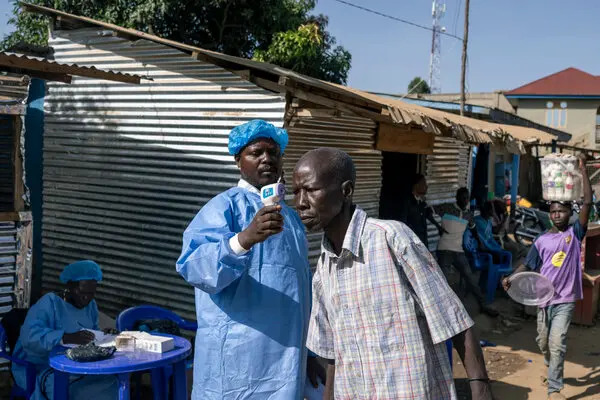
Officials said all authorized entrants will face enhanced health screening procedures, documentation checks and continuous monitoring at designated entry points.
The government has also introduced mandatory 21-day self-isolation requirements for individuals returning from Congo, supervised by district surveillance and health teams.
Schools in border regions will remain operational but must implement stricter health protocols, including temperature screening for students arriving from affected areas.
Authorities additionally directed media organizations to increase public awareness campaigns focused on Ebola prevention and response measures.
Uganda remains particularly vulnerable because of extensive movement of people and goods along its shared border with Congo, where insecurity and displacement continue to complicate containment operations.
The current outbreak involving the rare Bundibugyo strain has already become one of the deadliest Ebola outbreaks recorded in the region in recent years.
World Health Organization has declared the outbreak a global public health emergency, warning that insecurity, weak infrastructure and population movement are accelerating transmission risks in eastern Congo.
Despite the escalating outbreak, the WHO has continued advising against broad border closures, arguing that such measures could encourage unofficial crossings that are harder for authorities to monitor.
