
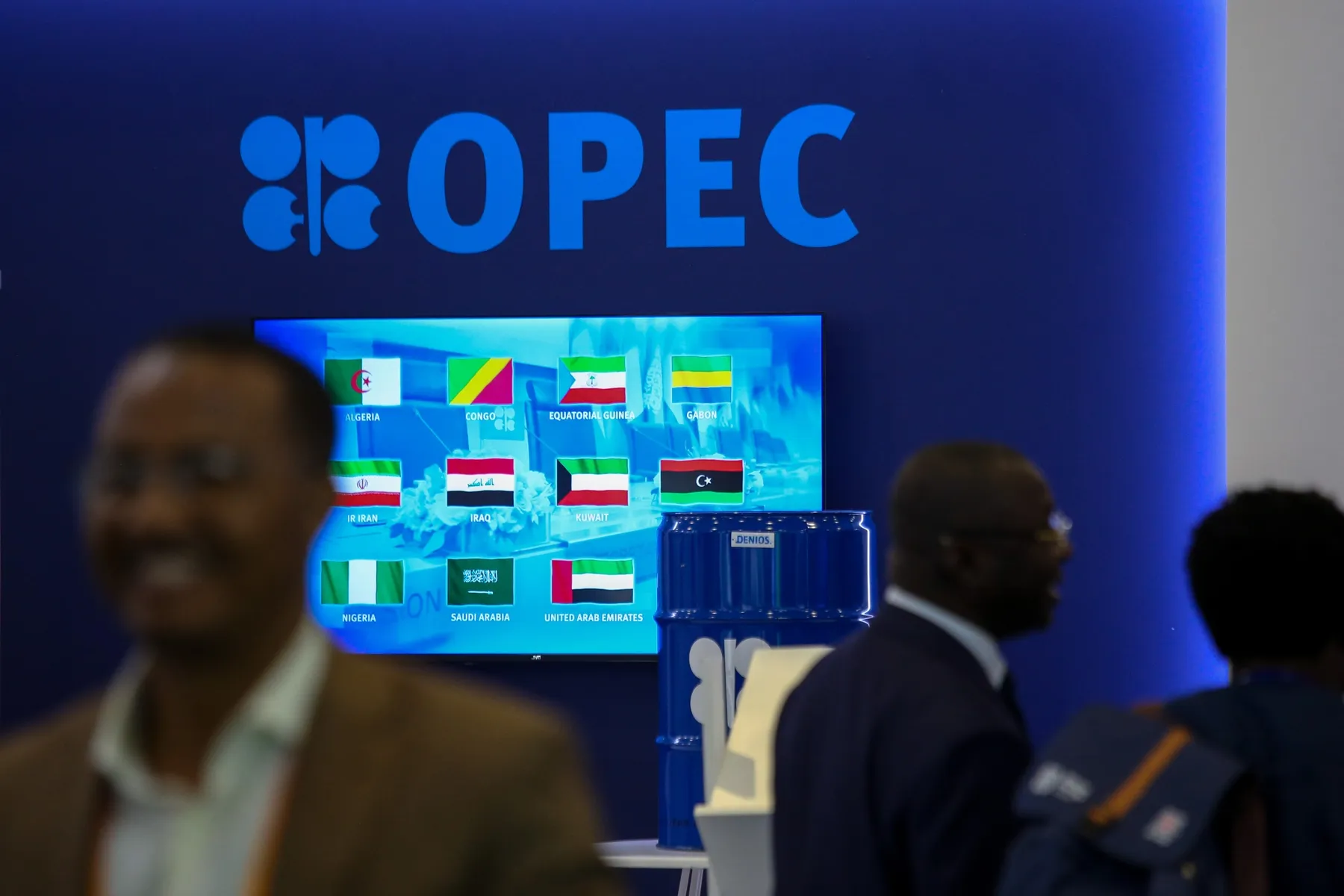
LAGOS, Oct 5 – OPEC+ will keep oil production requirements unchanged in November, extending a pause in output increases after four consecutive months of higher production.
Saudi Arabia, Russia, Iraq, Kuwait, Kazakhstan, Algeria and Oman agreed during a virtual meeting on October 4 to maintain their September 2026 required production levels for November. Their combined requirement remains at 31.01 million barrels per day.
The seven producers said the decision followed a review of global oil market conditions and the outlook. They also reaffirmed their commitment to full compliance with the broader Declaration of Cooperation.
Under the November arrangement, Saudi Arabia’s required production remains at 10.478 million bpd, followed by Russia at 9.949 million bpd and Iraq at 4.431 million bpd.
Kuwait’s requirement stands at 2.676 million bpd, while Kazakhstan is set at 1.628 million bpd, Algeria at 1.007 million bpd and Oman at 841,000 bpd. The group is scheduled to meet again on November 1 to review market conditions.
Pause Follows Four Monthly Increases
The decision extends a pause that began in October after OPEC+ approved four consecutive monthly production increases as part of a phased unwinding of supply restrictions introduced in previous years.
The group had approved an additional 188,000 bpd for September, following equivalent increases for June, July and August. Together, the four increases represented a planned restoration of 752,000 bpd.
Actual production added to the market has been lower than the headline quota increases in some cases, reflecting differences in members’ production capacity and compensation requirements for previous overproduction.
The decision to maintain November output requirements gives producers additional time to assess the effect of supply already restored to the market before considering another increase.
Nigeria Watches OPEC+ Supply Policy
Although Nigeria is not among the seven producers covered by the additional voluntary adjustments reviewed at the October 4 meeting, OPEC+ production policy remains important for Africa’s largest oil producer because crude exports are a major source of foreign-exchange earnings and government revenue.
Nigeria’s production has strengthened in recent months. According to the Nigerian Upstream Petroleum Regulatory Commission (NUPRC), the country produced an average of 1.678 million barrels per day of crude oil and condensate in August, up 0.4% from July. Strict crude oil production, excluding condensates, reached 1.500 million bpd, allowing Nigeria to meet its OPEC quota for the fourth consecutive month.
The improvement reflects efforts to address operational constraints and restore production capacity across several assets. NUPRC said the resolution of Single Buoy Mooring operational challenges at the Erha field contributed to the August increase.
For Nigeria, sustained improvements in upstream output could strengthen oil revenues and provide greater flexibility as OPEC+ continues to manage the pace at which previously restricted supply returns to the international market.
