
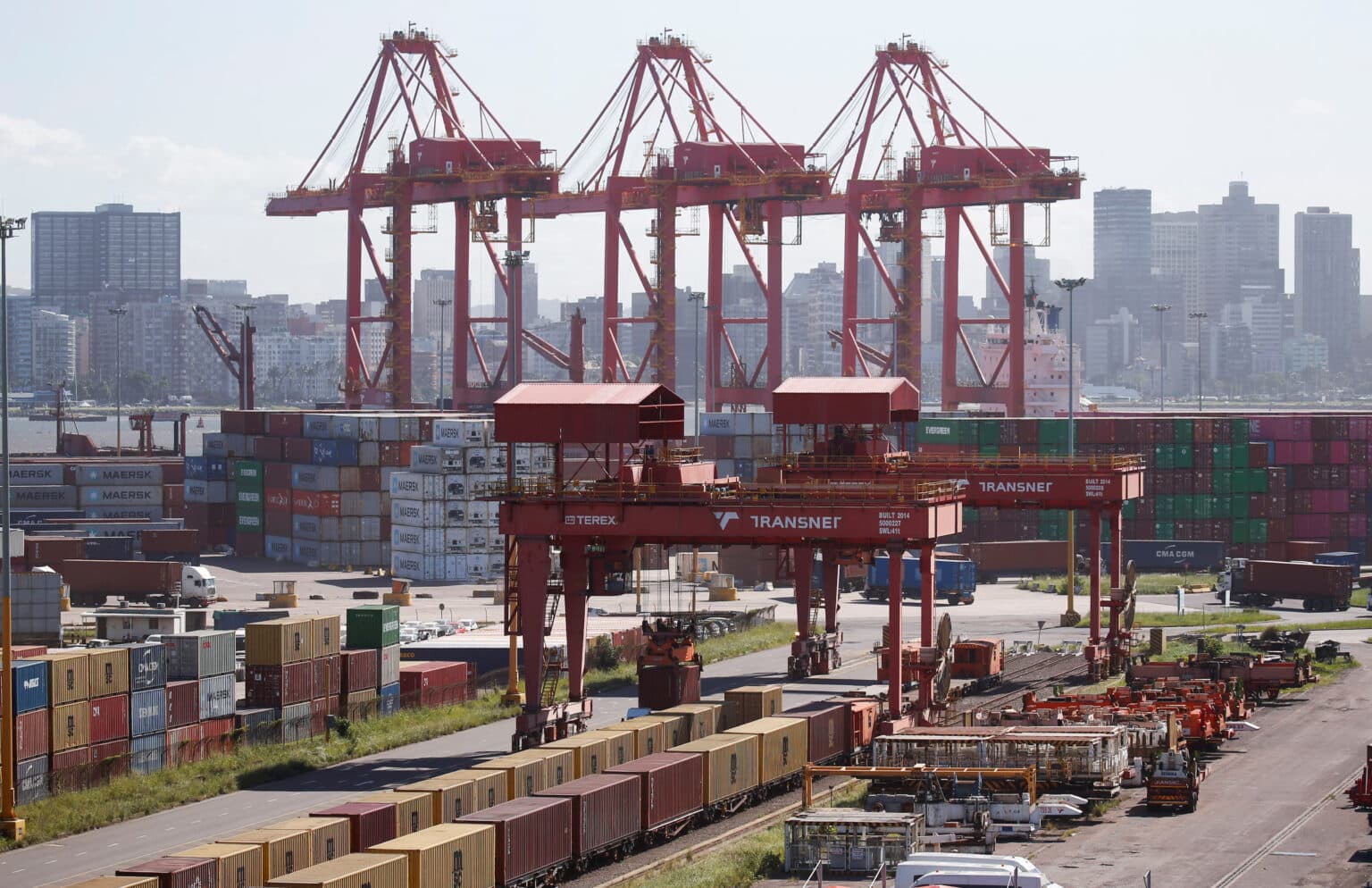
JOHANNESBURG, Oct 5 – South Africa’s Transport Minister Barbara Creecy has met with officials of International Container Terminal Services Inc. (ICTSI) to address worsening delays at the Durban Gateway Terminal, the country’s largest container gateway.
The terminal, also known as Durban Container Terminal Pier 2, handles roughly 46% of South Africa’s container traffic and is operated by ICTSI through a 25-year partnership with state-owned Transnet SOC Ltd.
Creecy said vessels using the terminal were spending nearly six days at anchorage on average, roughly twice the level recorded before ICTSI assumed operations. The delays have raised concerns among shipping lines, importers and exporters over the reliability of South Africa’s principal container gateway.
The transport minister attributed much of the disruption to the implementation of the Navis terminal operating system, alongside delays in refurbishing or replacing some cargo-handling equipment.
“In the long term, this is what’s going to give us the volumes that we want. But the real issue is, in the meantime, when you’re dealing with the teething problems, how are you responding to your customers?” Creecy said.
She also called for stronger communication between the terminal operator and its customers as efforts continue to clear the operational backlog.
The transition to the new system has affected cargo flows, truck bookings and vessel movements. South African media reported that some vessels had faced waiting periods of as much as 12 days during the disruption.
The Cape Chamber of Commerce has also said the delays have resulted in some vessels bypassing Durban, creating knock-on effects for other port operations.
ICTSI Partnership Under Pressure
ICTSI was selected to operate Pier 2 in partnership with Transnet following a competitive tender. The agreement was delayed by legal proceedings brought by A.P. Moller-Maersk, which challenged the bidding process. The partnership ultimately took effect in January 2026.
The concession is central to Transnet’s strategy of using private-sector participation to modernise South Africa’s ports and improve logistics performance.
The partnership targets an increase in annual terminal capacity from approximately 2 million to 2.8 million TEUs, alongside improvements in crane productivity and ship-working hours.
ICTSI did not immediately respond to requests for comment on the latest delays.
R737 Million Upgrade Programme
Creecy said the Durban Gateway Terminal is beginning with an investment of approximately R737 million to upgrade equipment, with the aim of increasing capacity by 40% to 2.8 million TEUs by 2030.
More recently, terminal management has outlined additional investment plans, including R1.2 billion over the following two years, focused on infrastructure, equipment reliability and future capacity expansion.
The immediate challenge, however, is restoring predictable cargo movement while the longer-term modernisation programme is implemented.
For Transnet, the performance of Durban Gateway Terminal is particularly important because disruptions at the facility can affect manufacturers, agricultural exporters, retailers and other businesses dependent on South Africa’s maritime trade infrastructure.
The government is therefore monitoring the transition closely as it seeks to determine whether the public-private partnership can deliver the productivity improvements and capacity expansion envisaged when ICTSI was brought into the operation.
