
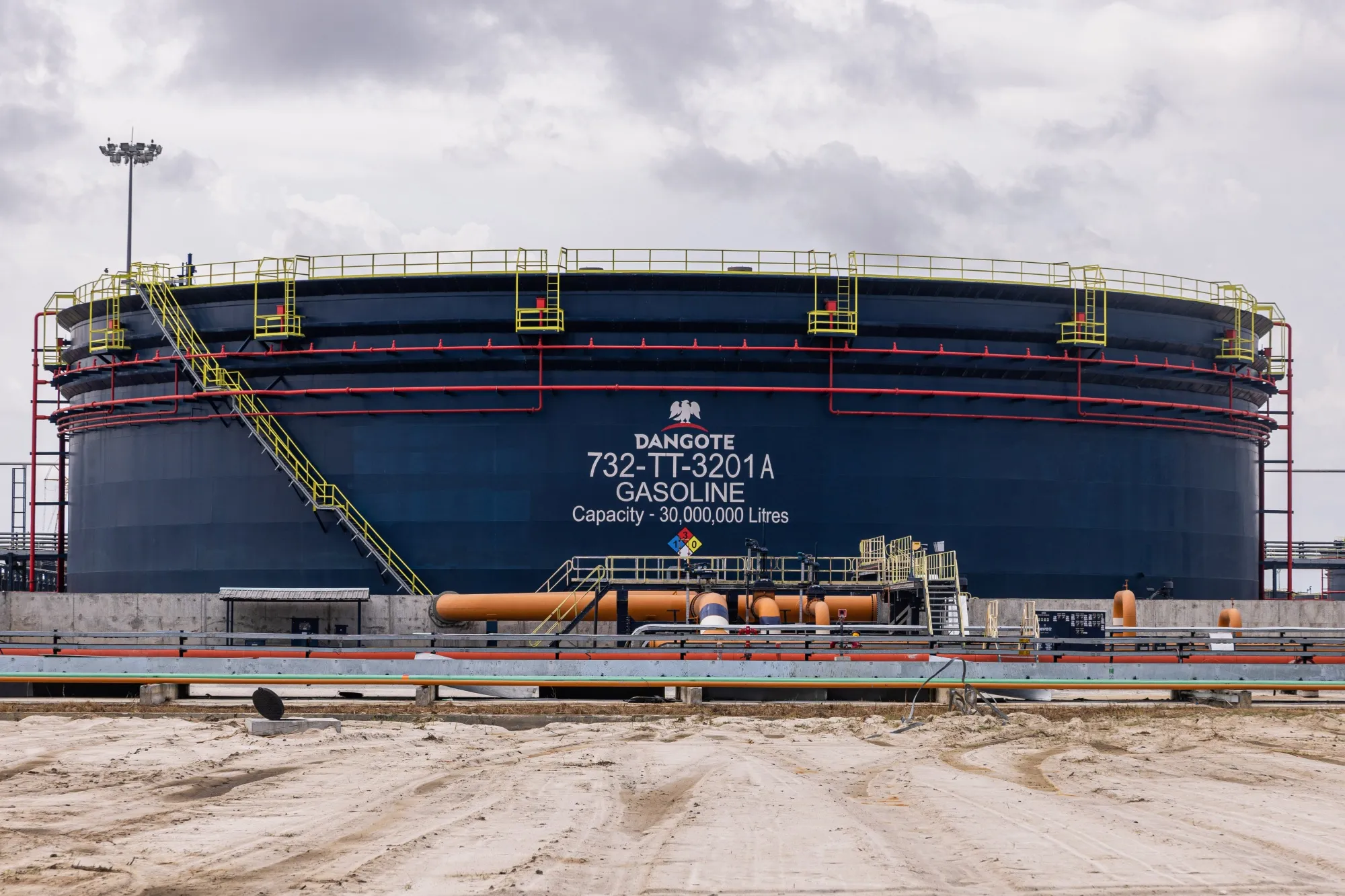
LAGOS, Aug 24 – Nigeria’s seaborne petroleum product exports have surged sevenfold since 2023, with rising output from the Dangote refinery strengthening the country’s position as a supplier of refined fuels to Europe and other African markets, according to the U.S. Energy Information Administration.
Seaborne petroleum product shipments from Nigeria averaged 561,000 barrels per day in the second quarter of 2026, compared with an annual average of 79,000 barrels per day in 2023, according to data from Vortexa. Exports accounted for about 350,000 barrels per day during the quarter, up from an annual average of 46,000 barrels per day in 2023.
The increase has been closely linked to the expansion of domestic refining capacity following the commissioning of the Dangote refinery in January 2024. As domestic supplies of refined products have increased, Nigeria has reduced imports while sending a growing volume of fuels to international markets.
The transformation has accelerated in two stages. The first followed the start of operations at the Dangote refinery, while the second came after maintenance and expansion work was completed in February 2026. The latter coincided with disruptions to petroleum product flows through the Strait of Hormuz, creating additional opportunities for Nigerian supplies in international markets.
The refinery’s February expansion increased its crude oil distillation capacity from 650,000 barrels per day to 700,000 barrels per day. Higher refinery runs subsequently increased the volume of petroleum products available for both domestic distribution and exports.
Domestic seaborne shipments within Nigeria also increased substantially, reaching 211,000 barrels per day in the second quarter of 2026, compared with 81,000 barrels per day in 2025 and 33,000 barrels per day in 2023. The expansion of domestic distribution has helped reduce the country’s dependence on imported refined fuels.
Nigeria imported almost 400,000 barrels per day of petroleum products in 2023. By the second quarter of 2026, seaborne imports had fallen to less than 130,000 barrels per day, highlighting the shift in the country’s refined-product balance.
Europe has emerged as an important destination for Nigeria’s growing fuel exports. Shipments to European markets averaged 130,000 barrels per day in the second quarter of 2026, compared with 40,000 barrels per day in 2025 and just 15,000 barrels per day in 2023.
Exports to other African countries have also increased. Nigerian shipments to African destinations outside the domestic market reached nearly 120,000 barrels per day during the second quarter, compared with 89,000 barrels per day in 2025.
The shift marks a significant change for Nigeria, historically one of the world’s largest crude oil producers but heavily dependent on imported refined petroleum products because of inadequate domestic refining capacity. The Dangote refinery is increasingly allowing the country to retain more value from its crude resources while establishing a larger role in regional refined-fuel trade.
The expansion of Nigerian exports also comes as global petroleum markets remain sensitive to disruptions in major shipping routes. With the Strait of Hormuz facing periods of disruption, increased Nigerian refining output has provided additional supplies to markets in Europe and Africa.
