
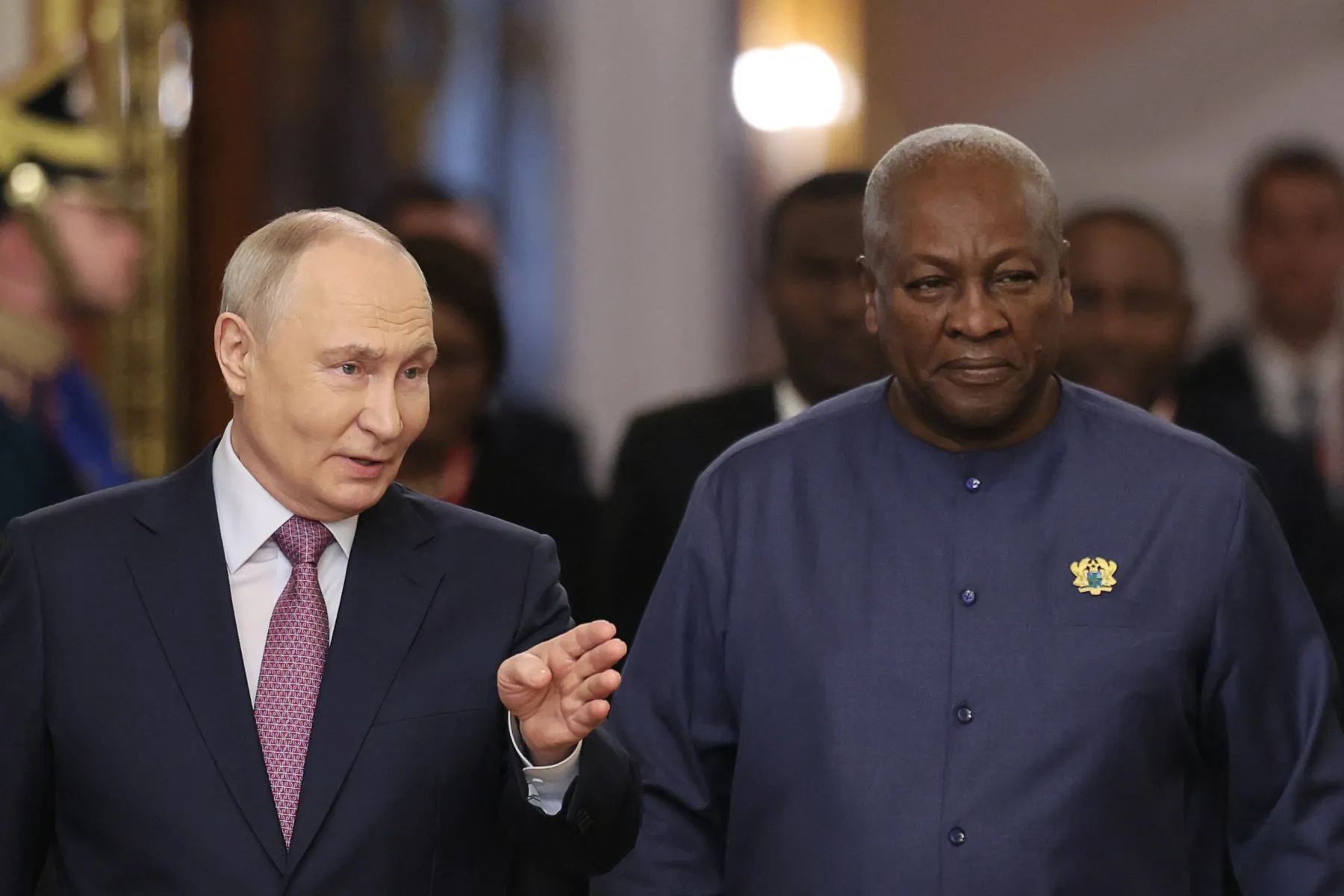
ACCRA, Nov 2 – Ghana and Russia have agreed to cooperate on the development of a 2,000-megawatt nuclear power plant, as the two countries seek to strengthen energy security and expand industrial capacity.
Ghanaian Foreign Affairs Minister Samuel Okudzeto Ablakwa announced the agreement on Saturday following discussions with Russian officials at the Russia-Africa Summit.
The proposed project is intended to expand Ghana’s electricity generation capacity and support its broader industrialisation objectives. However, the countries have not disclosed the project’s estimated cost, construction timeline, financing structure or proposed location.
The announcement came a day after Russia’s state-owned nuclear corporation, Rosatom, confirmed that it was holding discussions with four African countries, including Ghana, over large-scale nuclear power projects.
The agreement adds Ghana to a growing list of African countries exploring nuclear energy cooperation with Russia as governments seek to diversify electricity generation sources and meet rising power demand.
First held in 2019, the Russia-Africa Summit forms part of Moscow’s efforts to strengthen economic and diplomatic relations with African countries, with energy cooperation emerging as a key area of engagement.
Beyond nuclear energy, Ghana and Russia also agreed to deepen defence cooperation through a new arrangement covering military assets for Ghana’s armed forces.
Ablakwa further said Russian President Vladimir Putin had agreed to prevent Ghanaians from participating in Russia’s war in Ukraine, including through irregular recruitment or voluntary enlistment.
The commitment followed concerns raised by Ghanaian President John Mahama over the recruitment of Ghanaian nationals into the conflict. Ablakwa said Putin gave the assurance during discussions connected to the summit.
The two countries also discussed cooperation in agriculture and education, including increased scholarship opportunities for Ghanaian students seeking to study in Russia.
The proposed nuclear power project represents a significant element of the broader bilateral engagement. If implemented, its planned 2,000MW capacity would provide a substantial addition to Ghana’s electricity generation infrastructure.
However, the project remains at the cooperation and development stage, with further details on its technical structure, financing and implementation expected to determine the pace of progress.
