
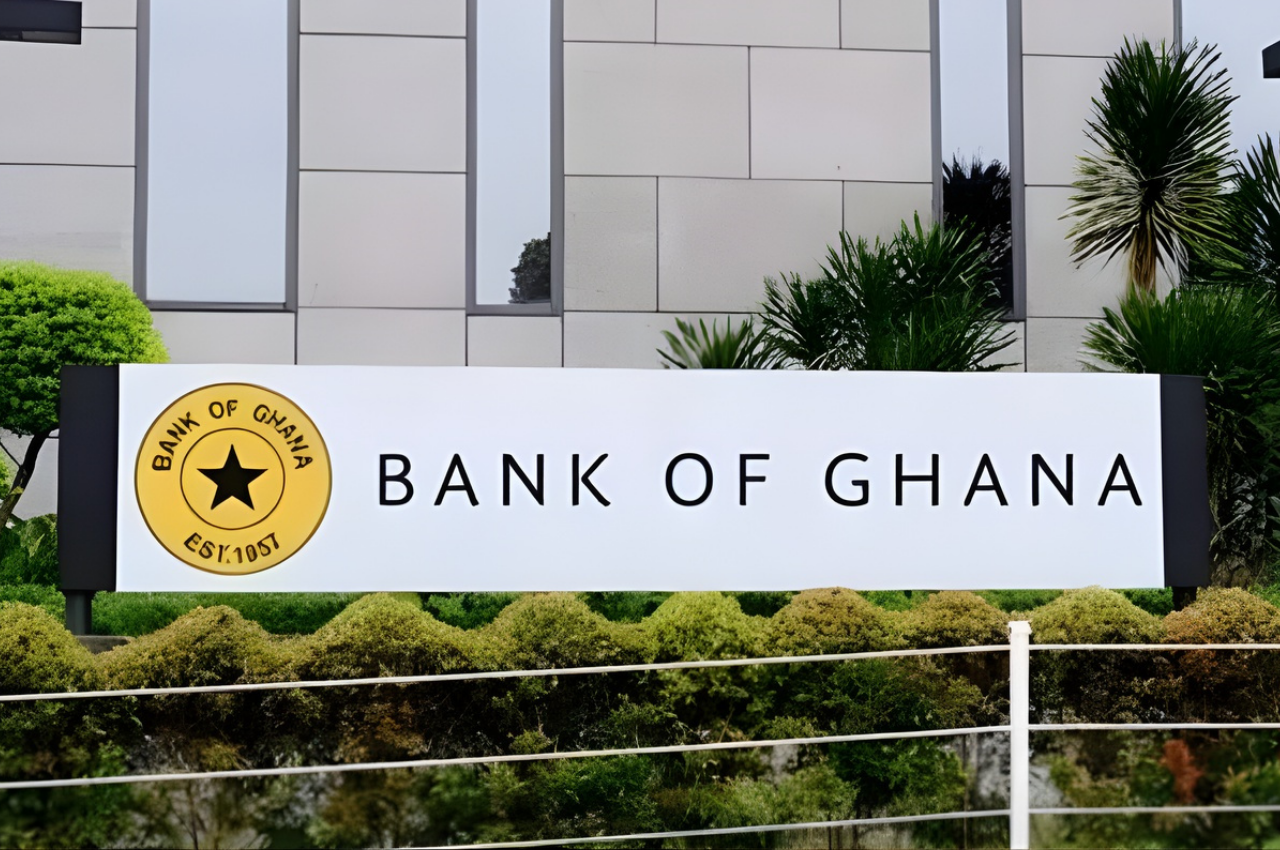
ACCRA, May 21 – The Bank of Ghana (BoG) kept its benchmark interest rate unchanged at 14% on Wednesday, pausing an aggressive easing cycle as policymakers flagged renewed inflation risks linked to global tensions and domestic price pressures.
The decision matched expectations from analysts and comes after the Bank of Ghana cut rates sharply from 28% in May 2025, following a sustained slowdown in inflation.
Governor Johnson Asiama said rising geopolitical tensions in the Middle East had increased uncertainty for the domestic economy through trade and financial channels, while also raising concerns over inflation.
The country’s economy, which relies heavily on gold, cocoa and oil exports, is gradually recovering from its worst economic crisis in decades after years of currency weakness, high debt levels and surging consumer prices.
Consumer inflation rose to 3.4% year-on-year in April from 3.2% in March, marking the first increase since December 2024. The central bank said inflation expectations among households, businesses and financial institutions had edged higher, though they remained broadly within the medium-term target range of 8%, with a tolerance margin of two percentage points on either side.
According to Asiama, the bank’s latest forecasts show inflation could continue trending upward in the coming months due to exchange-rate effects, food supply conditions and transport fare adjustments.
Earlier this week, the governor also warned that persistently high global energy prices could unsettle inflation expectations before they become firmly anchored.
The rate hold signals a temporary pause in Ghana’s monetary easing path as policymakers assess external risks and domestic price developments.
