
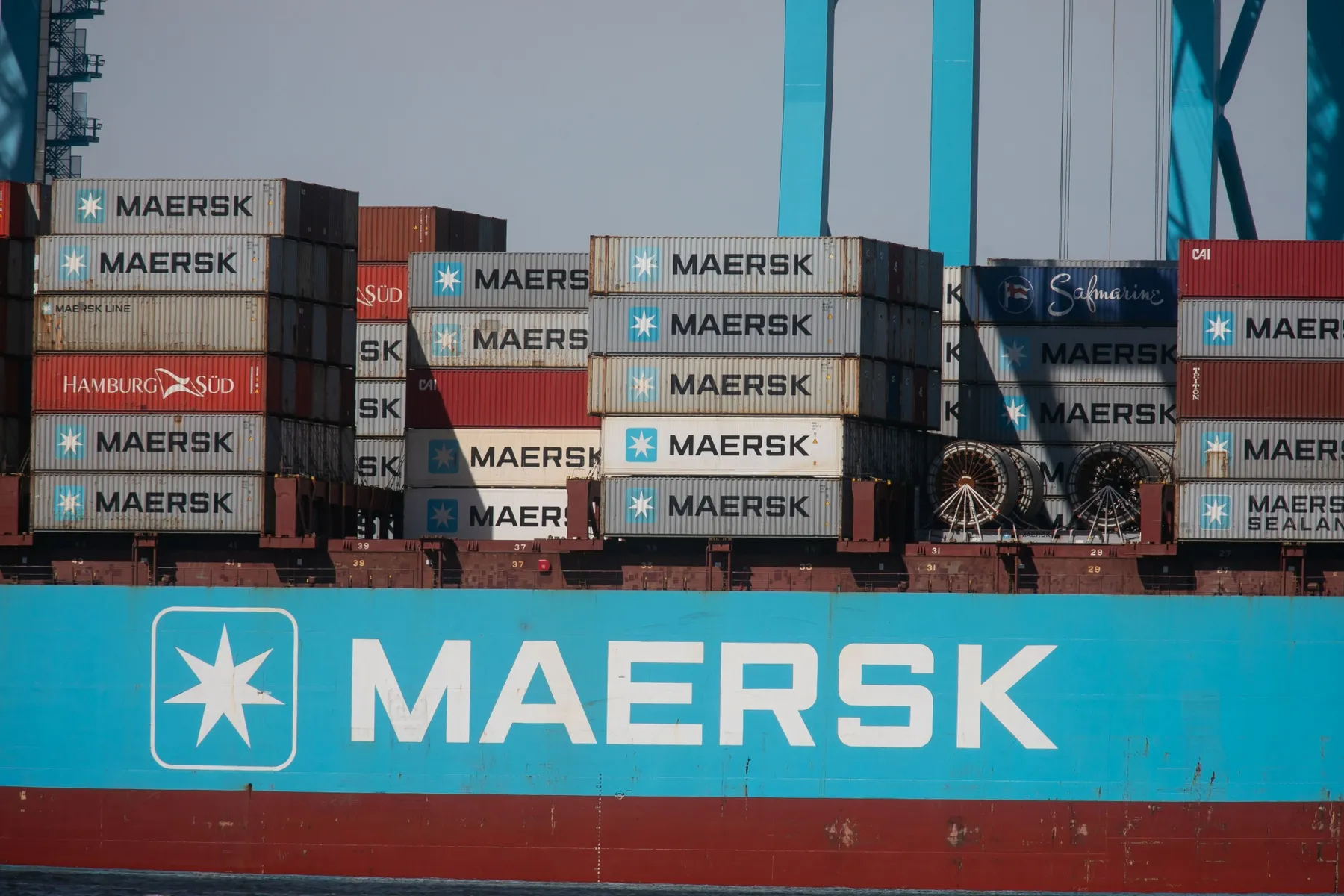
CASABLANCA, Aug 19 – Danish shipping group Maersk is expanding a logistics corridor between Morocco’s ports of Tangier and Casablanca as rising cargo volumes and congestion increase pressure on the country’s largest commercial gateway.
The Port of Casablanca handled 17 million tons of cargo during the first half of 2026, while 3.53 million tons passed through the port in June alone, representing a 32% increase from the same month a year earlier, according to the National Ports Agency (ANP).
Casablanca accounts for roughly 35% of Morocco’s total port traffic, making it a critical entry point for the country’s industrial and commercial economy. However, growing volumes have also created congestion and reduced flexibility for shippers seeking predictable cargo flows.
Maersk is seeking to address those constraints by positioning the Port of Tangier as a principal maritime gateway for cargo bound for Morocco, before moving shipments inland to Casablanca by rail.
The rail connection between the two ports is fully operational this August, with regular departures and scheduled transit times designed to provide greater predictability for companies managing inventories and supply chains.
The strategy combines Tangier’s extensive international maritime connections with Casablanca’s role as Morocco’s main industrial and commercial centre. Rather than treating the two ports as separate logistics points, Maersk is integrating them into a single transport solution spanning ocean freight, rail, customs clearance, storage and final-mile delivery.
For businesses, the approach could provide an alternative to routing cargo directly through Casablanca, particularly as increasing volumes place additional pressure on the port’s infrastructure.
Ruben Moratinos, Maersk’s Head of Sales for the Maghreb, said the initiative responds to an issue the company regularly hears from customers, describing it as a solution that “addresses a challenge we hear from customers every day.”
He said integrating the two gateways creates “a simpler way to move cargo into Morocco’s main commercial center,” while giving companies “broader access to global trade flows” and greater flexibility as their supply requirements change.
The corridor also has implications for Morocco’s trade links with Europe and other international markets. By combining maritime connectivity through Tangier with rail transportation to Casablanca, companies can diversify their logistics routes and reduce their dependence on a single gateway or transport mode.
Tangier has developed into one of the Mediterranean and African region’s most connected maritime hubs, with direct links to major global shipping routes. Casablanca, meanwhile, remains closely tied to Morocco’s manufacturing, industrial and commercial activity.
Maersk’s expanded corridor therefore reflects a broader shift in logistics strategy as Morocco’s trade volumes grow and companies seek greater control over the movement of goods from international ports to domestic markets.
With cargo volumes continuing to rise, the Tangier-Casablanca connection could become increasingly important to Morocco’s supply-chain infrastructure, providing businesses with an alternative route into the country’s largest commercial centre while helping distribute pressure across its port network.