
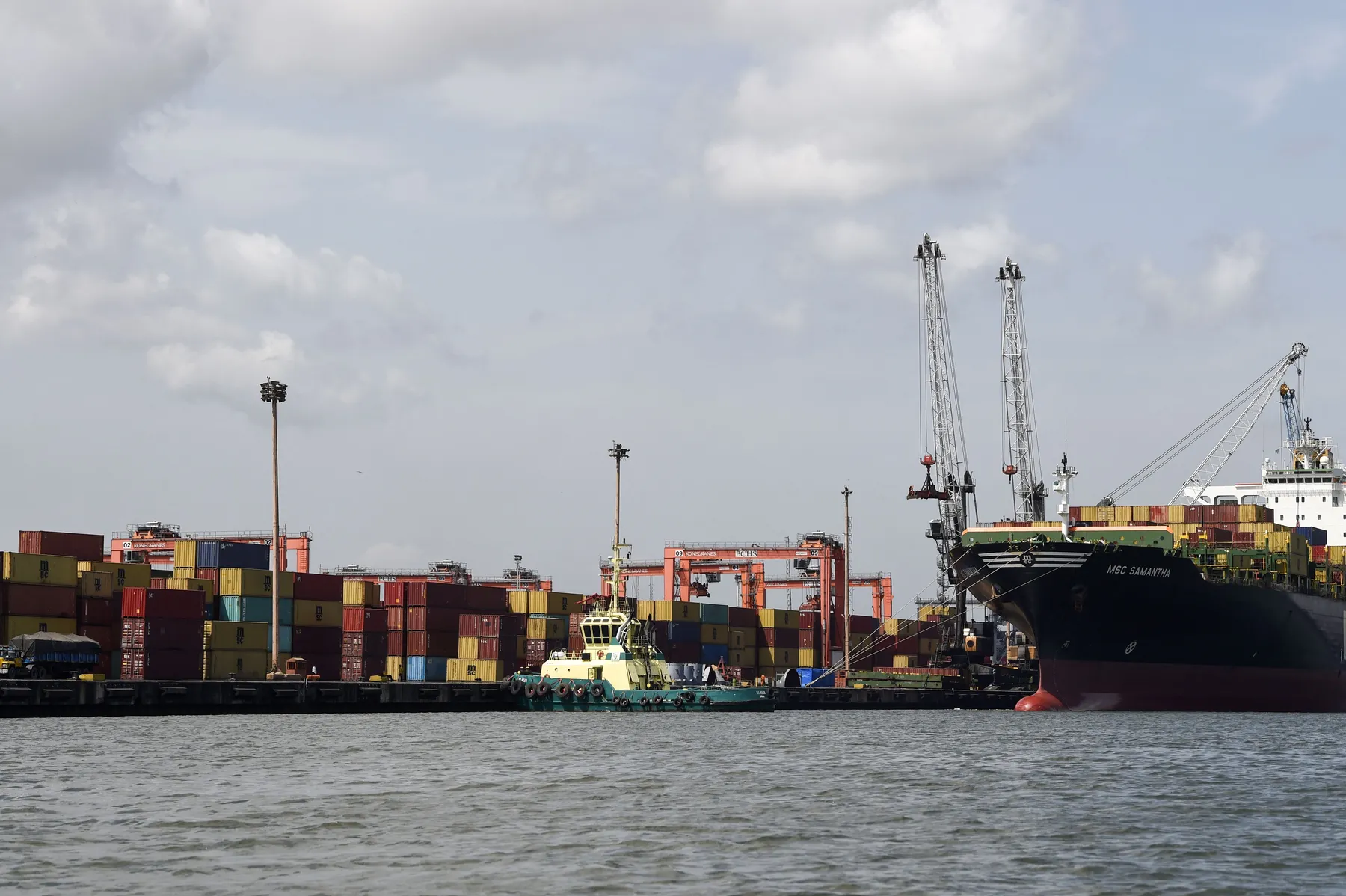
LAGOS, Aug 18 – The United States has lifted a 12-year Condition of Entry imposed on vessels arriving at US ports from Nigeria, removing a longstanding maritime restriction that had imposed additional security requirements on affected ships.
Nigeria’s Minister of Marine and Blue Economy, Adegboyega Oyetola, announced the development, according to a statement published by the Nigerian Maritime Administration and Safety Agency (NIMASA). The decision follows years of efforts by the Federal Ministry of Marine and Blue Economy, NIMASA and other stakeholders to strengthen maritime security and bring Nigerian port facilities into compliance with international standards.
Oyetola described the decision as an important development for the sector. “A major milestone for Nigeria’s maritime sector as the United States Coast Guard (USCG) lifts the Condition of Entry (CoE) imposed on vessels arriving in the US from Nigeria since June 2014.”
The minister added that the development followed sustained work to improve maritime security and compliance with the International Ship and Port Facility Security Code, or ISPS Code. According to the statement, “The development follows sustained efforts by the Federal Ministry of Marine and Blue Economy, NIMASA and stakeholders to strengthen maritime security and ensure compliance with the ISPS Code.”
The US Coast Guard introduced the restriction in June 2014 after identifying shortcomings in Nigeria’s maritime security framework. Its assessment cited deficiencies relating to the country’s legal regime, oversight by designated authorities, access controls and cargo security.
The Condition of Entry came into effect on June 26, 2014, and applied to vessels that had called at a non-exempt Nigerian port during their previous five port visits. Affected vessels were required to operate under enhanced security measures equivalent to Security Level 2 while in Nigerian ports, including guarding every access point to the vessel.
Ships were also required to attempt to complete a Declaration of Security, document the security measures implemented and report those actions to the relevant US Coast Guard Captain of the Port before entering US waters.
Several Nigerian facilities were excluded from the original restriction, including specified terminals in Apapa, Bonny, Escravos, Forcados, Onne and Tin Can Island.
The removal of the restriction is expected to reduce some of the additional security-related requirements and costs previously associated with vessels operating between Nigeria and the United States. It could also improve schedule reliability and vessel turnaround times, strengthening Nigeria’s position in international shipping and trade.
The timing comes as activity across Nigeria’s ports has been expanding. Cargo throughput reached 32.38 million metric tonnes in the first quarter of 2026, an increase of 11.6% from a year earlier. Ocean-going vessel gross registered tonnage rose 19.5% to 46.75 million tonnes.
Outward cargo increased 23.7% to 14.13 million tonnes, while outward laden container volumes jumped 67.6% to 102,803 twenty-foot equivalent units. Vehicle traffic also increased 67% to 58,870 units.
For the full year 2025, Nigeria’s total cargo throughput rose 24.8% to 129.3 million metric tonnes, while container traffic increased 25.7% to more than 2.1 million TEUs.
The Nigerian Ports Authority has linked the stronger performance to improvements in cargo-handling efficiency, greater confidence among international shipping operators and the deployment of larger vessels, particularly in connection with operations at Lekki Deep Sea Port.
The lifting of the US restriction also comes as Nigeria pursues a broader expansion of port infrastructure. MSC Group signed a 45-year concession with Nigerdock in March to develop a container terminal at Snake Island Port in Lagos, with plans for a 910-metre quay, deep-sea vessel handling capabilities and a 30-hectare container yard.
Separately, a UK-backed financing package of £746 million, equivalent to about $1 billion, is supporting planned upgrades at Apapa and Tin Can Island ports. The improvements are expected to include greater automation, shorter cargo dwell times, expanded quay capacity and modern cargo-handling systems.
Together, the removal of the US maritime restriction and ongoing investment in port infrastructure could strengthen Nigeria’s ability to compete for international shipping and logistics activity. For exporters and importers, improved vessel reliability and lower compliance-related costs could also support more efficient trade flows between Nigeria and global markets.
The broader significance will depend on Nigeria’s ability to sustain maritime security standards and translate the regulatory improvement into faster port operations, lower logistics costs and greater confidence among international shipping operators.
