
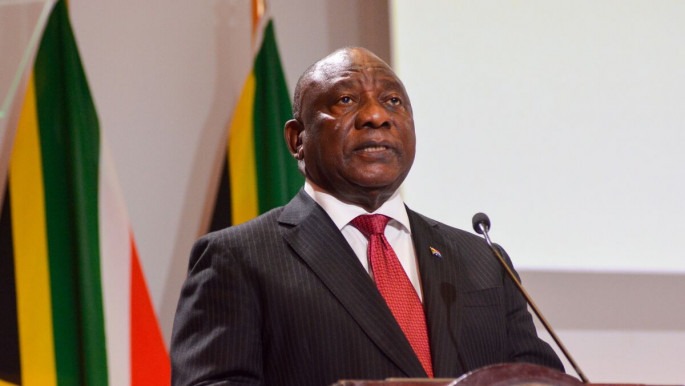
JOHANNESBURG, Aug 29 – President Cyril Ramaphosa has placed infrastructure investment at the centre of South Africa’s strategy to accelerate economic growth, create jobs and strengthen regional integration, while warning that inadequate project preparation remains a major constraint on investment.
Addressing the Sustainable Infrastructure Development Symposium South Africa (SIDSSA) 2026, Ramaphosa said infrastructure networks must connect economies across Southern Africa and the wider continent, linking production centres, markets and consumers.
“We need roads, bridges, rail lines, ports, power lines, data cables and gas pipelines that cross our region and continent,” President Ramaphosa said.
He said South Africa’s economic performance depends on reliable electricity, adequate water supplies, efficient ports and rail networks, functional roads, digital connectivity and well-performing urban centres.
“It is for this reason that South Africa has placed infrastructure investment at the centre of our drive for inclusive growth and job creation,” Ramaphosa said.
The president also highlighted the wider social impact of infrastructure, saying the quality of public infrastructure directly affects access to essential services and economic opportunities.
“Infrastructure affects the daily lives of South Africans. It determines whether a household has clean water, whether a community has functioning sanitation, whether a learner has a safe and suitable school, whether a commuter can travel safely and affordably, and whether a business can rely on the basic services it needs to operate,” he said.
South Africa has sought to improve the coordination and delivery of infrastructure through the Infrastructure Development Act and Infrastructure South Africa, which is responsible for advancing the country’s strategic infrastructure pipeline.
“When we embarked on the infrastructure investment drive, we were clear that South Africa needed to fundamentally change the way infrastructure is planned, prepared, financed and delivered. We recognised that our infrastructure system was too fragmented,” Ramaphosa said.
The president said Infrastructure South Africa is expected to ensure that projects progress through the pipeline, receive adequate preparation and funding, and move into procurement on schedule.
However, he acknowledged that the country’s infrastructure investment remains below the level required to generate faster and more sustained economic growth.
“South Africa’s level of investment remains far below what is required to achieve faster and more sustained economic growth,” he said.
The scale of the country’s infrastructure pipeline has nevertheless expanded significantly. Ramaphosa said the estimated capital value of Strategic Integrated Projects has increased from about R340 billion in 2020 to more than R1.67 trillion.
The current portfolio contains 195 public- and private-led projects across priority sectors. Of these, 32 projects with an estimated combined value of approximately R48 billion have been completed, while 55 projects worth more than R407 billion are currently under construction, according to the president.
Ramaphosa said the priority now is to convert the growing pipeline into investable and executable projects.
“South Africa does not suffer from a shortage of infrastructure proposals. Our constraint is that too many of these projects are not adequately prepared,” he said.
Project preparation has therefore become a key focus of the government’s infrastructure strategy. Through Infrastructure South Africa’s R600 million project preparation facility, 26 projects have received or are receiving support to advance their development.
The facility is particularly relevant as the government increases its focus on municipal infrastructure, which Ramaphosa described as both a test of state capacity and a foundation for broader economic inclusion.
“This kind of support is particularly important as we shift our focus towards municipal infrastructure delivery. Municipal infrastructure is not only where the effectiveness of the state is most directly tested; it is also the foundation of inclusive economic growth,” he said.
The emphasis on infrastructure also extends beyond South Africa’s borders. Ramaphosa said integrated transport, energy, digital and industrial networks are essential to connecting African economies and strengthening regional trade and investment.
