
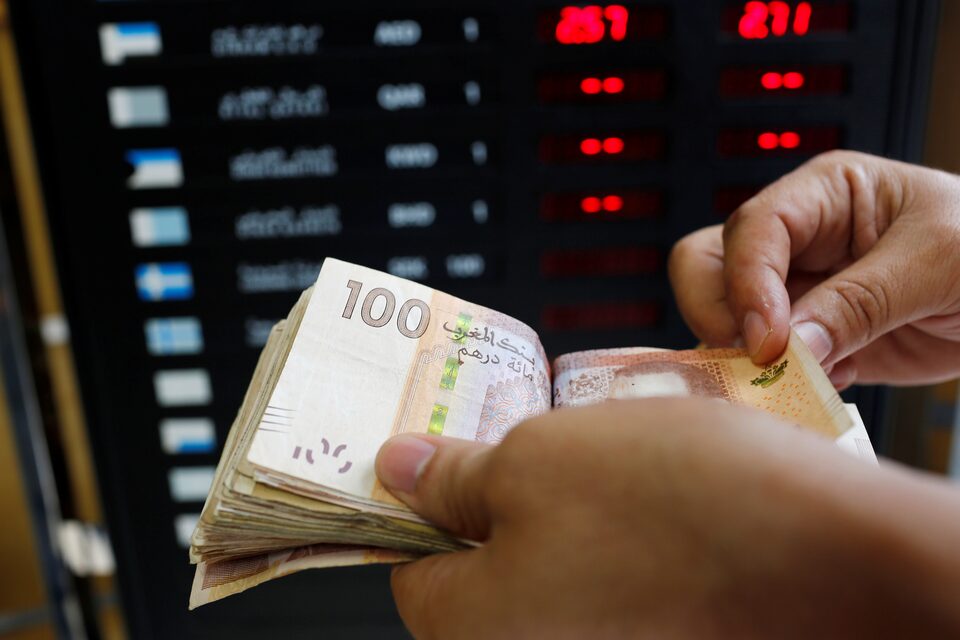
RABAT, July 3 – Remittances from Moroccans living abroad rose to MAD 50.22 billion ($5.36 billion) during the first five months of 2026, highlighting the continued importance of diaspora inflows to the country’s economy.
According to Morocco’s Foreign Exchange Office, remittance inflows increased by 8.8% year-on-year, compared with MAD 46.16 billion ($4.93 billion) recorded during the same period in 2025.
The latest figures reinforce Morocco’s position as one of the largest recipients of remittances in the Middle East and North Africa (MENA) region, with transfers from its diaspora continuing to serve as a vital source of foreign exchange and household income.
The report also pointed to a strong improvement in the country’s travel balance, which recorded a surplus of nearly MAD 40 billion ($4.27 billion), representing a 19.4% increase from a year earlier.
According to the Foreign Exchange Office, the stronger travel balance was driven by a significant rise in tourism receipts, which increased by 14.6% to MAD 53.76 billion ($5.74 billion). By comparison, travel-related expenditure grew at a much slower pace of 2.7%, reaching MAD 13.77 billion ($1.47 billion).
Morocco has introduced a series of institutional, regulatory and banking reforms aimed at strengthening the contribution of its diaspora to national economic development. In June, Bank Al-Maghrib announced measures to improve financial inclusion for remittance recipients by expanding digital financial services, enhancing the efficiency and transparency of money transfer systems, and lowering transaction costs.
The central bank also highlighted its decision to eliminate exclusivity agreements that international money transfer operators had previously imposed on local partners, a move intended to increase competition and improve access to remittance services.
Moroccan authorities have increasingly prioritised policies that encourage greater diaspora engagement, recognising remittances as a critical source of investment, consumption and economic resilience.
Speaking on the importance of diaspora transfers in 2023, Morocco’s Minister of Foreign Affairs, Nasser Bourita, described reducing the cost of remittance transfers as a key priority for the continent.
According to Bourita, the high cost of sending money across Africa remains a major challenge, stating that it is “critical” for African economies. He added that facilitating remittance transfers and reducing associated fees is “fundamental” given the significant role diaspora inflows play in supporting economic development across the continent.
With remittance inflows continuing to grow alongside a strengthening tourism sector, Morocco is reinforcing two of its most important sources of foreign exchange earnings, providing additional support for economic stability and external accounts.
