
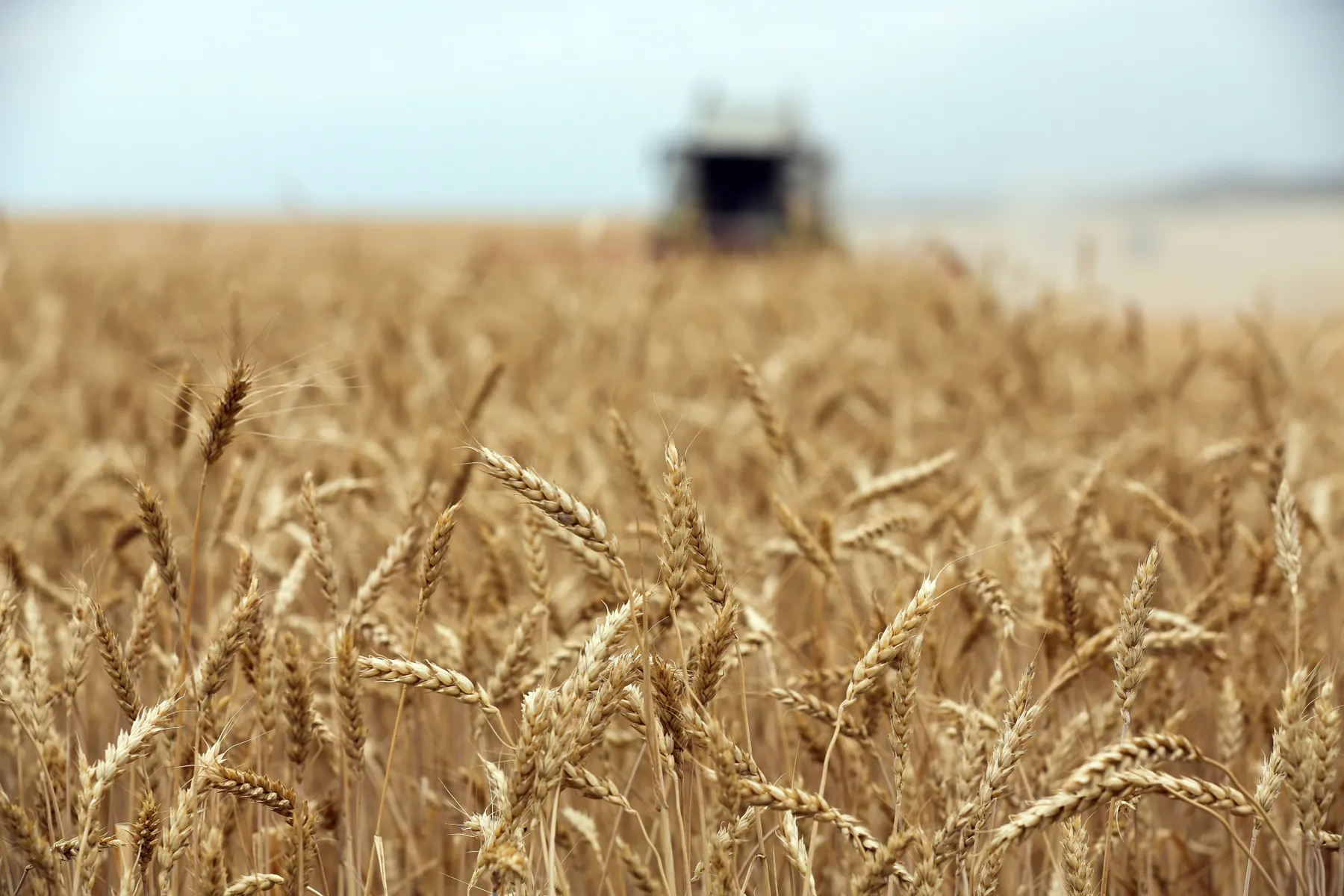
CAIRO, Egypt June 12, 2026 Egypt has purchased a record 4.6 million metric tons of wheat from local farmers during the current procurement season, putting the country on course to reach its target of acquiring 5 million tons as the government works to increase domestic production and reduce reliance on imported grain.
The record procurement volume has already exceeded the total amount of wheat purchased from Egyptian farmers during the entire previous season, according to official figures.
Egyptian Prime Minister Mostafa Madbouly described the current procurement level as the highest recorded in the country’s history.
The development comes as Egypt continues efforts to strengthen food security, increase domestic wheat production and reduce the country’s exposure to international grain markets and foreign currency pressures.
Egypt Targets 5 Million Tons of Locally Produced Wheat
Egypt’s wheat procurement season began in mid-April 2026 and is scheduled to continue until mid-August.
With approximately 4.6 million tons already purchased, authorities are seeking to reach their target of 5 million tons of domestically produced wheat by the end of the procurement period.
The volume represents a significant increase in the amount of wheat being collected from Egyptian farmers.
The government’s procurement programme is designed to encourage farmers to sell their harvest through official channels while strengthening national wheat stocks.
Higher domestic procurement also provides the government with greater access to locally produced grain for strategic food programmes, including the subsidised bread system.
Egypt Remains a Major Wheat Importer
Despite the record domestic procurement, Egypt remains one of the world’s largest wheat importers.
The country typically purchases around 10 million metric tons of wheat annually from international markets to meet domestic requirements.
Approximately half of these imports are used to support Egypt’s bread subsidy programme, which serves around 70 million people.
The large scale of Egypt’s wheat imports makes international grain prices, shipping costs, exchange rates and global supply conditions important factors for the country’s food security and public finances.
Increasing domestic production therefore forms an important part of Egypt’s strategy to reduce its dependence on international wheat supplies.
Government Raises Wheat Procurement Price to Encourage Farmers
The increase in domestic wheat purchases has followed a series of government measures designed to make wheat cultivation more attractive to Egyptian farmers.
Authorities increased the guaranteed procurement price for wheat by 7% in August 2025 and introduced another increase in March 2026.
The latest procurement price is approximately $320 per metric ton.
The government-set price is significantly higher than recent international market prices.
Black Sea wheat has recently traded at approximately $234 to $240 per ton, meaning Egypt’s domestic procurement price provides a substantial incentive for farmers to sell their wheat to the government.
Industry participants have pointed to the pricing policy as one of the factors supporting increased domestic production.
Wheat Cultivation Area Reaches Record Level
The increase in government procurement has been accompanied by an expansion in the amount of land dedicated to wheat production.
Agricultural officials reported that approximately 3.7 million feddans were cultivated with wheat during the current season.
That compares with approximately 3.1 million feddans during the previous year.
The increase represents the highest wheat planting level recorded in Egypt, according to agricultural officials.
Expansion of cultivated wheat acreage is important for Egypt because increasing domestic production can help reduce the volume of grain that needs to be purchased from international markets.
It also provides the government with a larger domestic supply base for building strategic grain reserves.
Better Seeds and Weather Support Wheat Yields
In addition to the expansion in cultivated area, improvements in agricultural productivity have contributed to stronger wheat output.
Officials have cited improved weather conditions and enhanced seed varieties as factors supporting higher yields during the current season.
Improved seed varieties can help farmers increase output from existing farmland, while favourable growing conditions can further support crop productivity.
Some farmers have reportedly recorded harvests exceeding those achieved during previous seasons.
Higher yields are particularly important for Egypt because agricultural land and water resources are constrained, making productivity improvements an important component of efforts to expand domestic food production.
Government Works to Reduce Wheat Post-Harvest Losses
Egypt’s strategy is not limited to increasing the amount of wheat grown on farms.
Authorities are also working to improve logistics and reduce post-harvest losses so that a greater proportion of harvested wheat reaches government storage facilities.
Reducing losses between harvesting and storage can increase the amount of grain available for domestic consumption without requiring an equivalent increase in cultivated land.
Improved transportation, collection systems and storage infrastructure can therefore play an important role in strengthening Egypt’s wheat supply chain.
The combination of increased production, improved logistics and reduced losses has contributed to the larger volume of wheat reaching government procurement centres this season.
Future of Egypt Delivers More Wheat to Government Stocks
A significant contribution to this year’s procurement has come from the Future of Egypt for Sustainable Development, a state-backed organisation involved in large-scale agricultural land reclamation and development projects.
The agency has delivered approximately 530,000 tons of wheat during the current season.
That is more than twice its contribution during the previous year.
The increase highlights the growing role of large-scale agricultural development projects in Egypt’s efforts to expand domestic food production.
Land reclamation and agricultural development projects are intended to bring additional land into production and support national food-security objectives.
Stronger Domestic Harvest Could Reduce Import Needs
The larger domestic wheat harvest could have implications for Egypt’s import requirements during the second half of 2026.
Market participants expect the combination of stronger local procurement and improved domestic stock levels to potentially reduce the amount of wheat Egypt needs to purchase from international markets.
However, the country’s import requirements will continue to depend on several factors, including domestic consumption, government stock levels, international wheat prices and developments in the food subsidy system.
Egypt’s large population and extensive subsidised bread programme mean that wheat demand remains substantial even when domestic production increases.
Food Subsidy Reform Could Affect Future Wheat Demand
Another factor that could influence Egypt’s future wheat procurement and import requirements is the government’s planned reform of its food subsidy system.
Egypt is considering a transition from in-kind food subsidies to a cash-based support mechanism.
The proposed change could affect how subsidised food is distributed and how much wheat the government needs to procure for the bread programme.
Because the subsidy system supports bread consumption for millions of Egyptians, changes to the programme could have implications for national wheat demand.
The relationship between subsidy reform and wheat procurement will therefore remain an important factor for Egypt’s agricultural and food-security policies.
Why Wheat Matters to Egypt’s Food Security
Wheat occupies a central position in Egypt’s food system.
Bread is a major staple in the country, while the government has historically maintained a large subsidy programme to keep bread affordable for millions of citizens.
This makes wheat procurement more than an agricultural issue. It is also closely connected to food security, public spending, household welfare and national economic policy.
Increasing domestic wheat production can help diversify Egypt’s sources of supply and potentially reduce the amount of foreign currency required to purchase grain abroad.
However, domestic production is unlikely to eliminate the country’s need for imports entirely given the scale of national consumption.
Domestic Wheat Production Could Ease Foreign Currency Pressure
Egypt’s dependence on imported wheat means that international grain purchases require significant foreign currency expenditure.
Increasing domestic procurement can reduce the quantity of wheat that needs to be purchased from overseas suppliers, potentially helping to reduce pressure on foreign currency reserves.
This is particularly significant amid Egypt’s broader economic challenges.
The government’s agricultural strategy is therefore connected not only to food security but also to macroeconomic considerations.
Higher local production could help reduce exposure to international commodity price fluctuations while supporting domestic farmers.
Egypt’s Wheat Strategy Combines Production and Procurement
The latest record procurement figures reflect a broader strategy that combines several policy measures.
Together, these measures are intended to increase the amount of wheat available domestically and strengthen Egypt’s resilience to international food-market disruptions.
What the Record Wheat Procurement Means for Egyptian Farmers
The government’s higher procurement price provides farmers with a stronger financial incentive to cultivate wheat and sell their harvest through official procurement channels.
The expansion in cultivated area suggests that more agricultural land has been allocated to wheat production this season.
Higher yields could also improve farm-level output, allowing farmers to produce more wheat from cultivated land.
However, the long-term impact on farmers will depend on production costs, input prices, weather conditions, access to irrigation and machinery, and future government procurement policies.
Egypt’s Push Toward Greater Agricultural Self-Sufficiency
The record wheat procurement forms part of Egypt’s wider efforts to strengthen agricultural self-sufficiency.
The country faces structural challenges, including limited arable land, water constraints and high food demand.
As a result, increasing agricultural productivity is an important part of efforts to improve domestic food availability.
Large-scale agricultural development projects, improved crop varieties and incentives for farmers are among the approaches being used to expand production.
Wheat is particularly important because of its role in the national food system and the country’s substantial dependence on imported grain.
Key Wheat Figures for Egypt in 2026
| Indicator | 2026 Figure |
| Wheat purchased from local farmers | 4.6 million metric tons |
| Government procurement target | 5 million metric tons |
| Typical annual wheat imports | Around 10 million metric tons |
| Population served by subsidised bread programme | Approximately 70 million people |
| Current government procurement price | About $320 per ton |
| Recent Black Sea wheat price | About 234–240 per ton |
| Wheat cultivation area | Approximately 3.7 million feddans |
| Previous wheat cultivation area | Approximately 3.1 million feddans |
| Future of Egypt wheat deliveries | Approximately 530,000 tons |
| Procurement season | Mid-April to mid-August 2026 |
Outlook for Egypt’s Wheat Market
Egypt’s record domestic wheat procurement marks a significant development in the country’s efforts to strengthen food security and reduce its reliance on imported grain.
With 4.6 million tons already purchased, the government is approaching its 5-million-ton procurement target for the 2026 season.
The increase has been supported by a combination of higher government procurement prices, expanded cultivation, improved seed varieties, favourable growing conditions and efforts to improve agricultural logistics.
The contribution of large-scale agricultural development projects has also increased the volume of wheat entering government stocks.
At the same time, Egypt is expected to remain dependent on international wheat markets because domestic production does not currently meet total national demand.
Future wheat import requirements will depend on domestic harvests, stock levels, international prices, consumption patterns and potential changes to the country’s food subsidy system.
The latest procurement figures nevertheless underline Egypt’s continuing efforts to strengthen domestic wheat production, agricultural self-sufficiency and national food security while reducing exposure to international grain markets and foreign currency pressures.
