
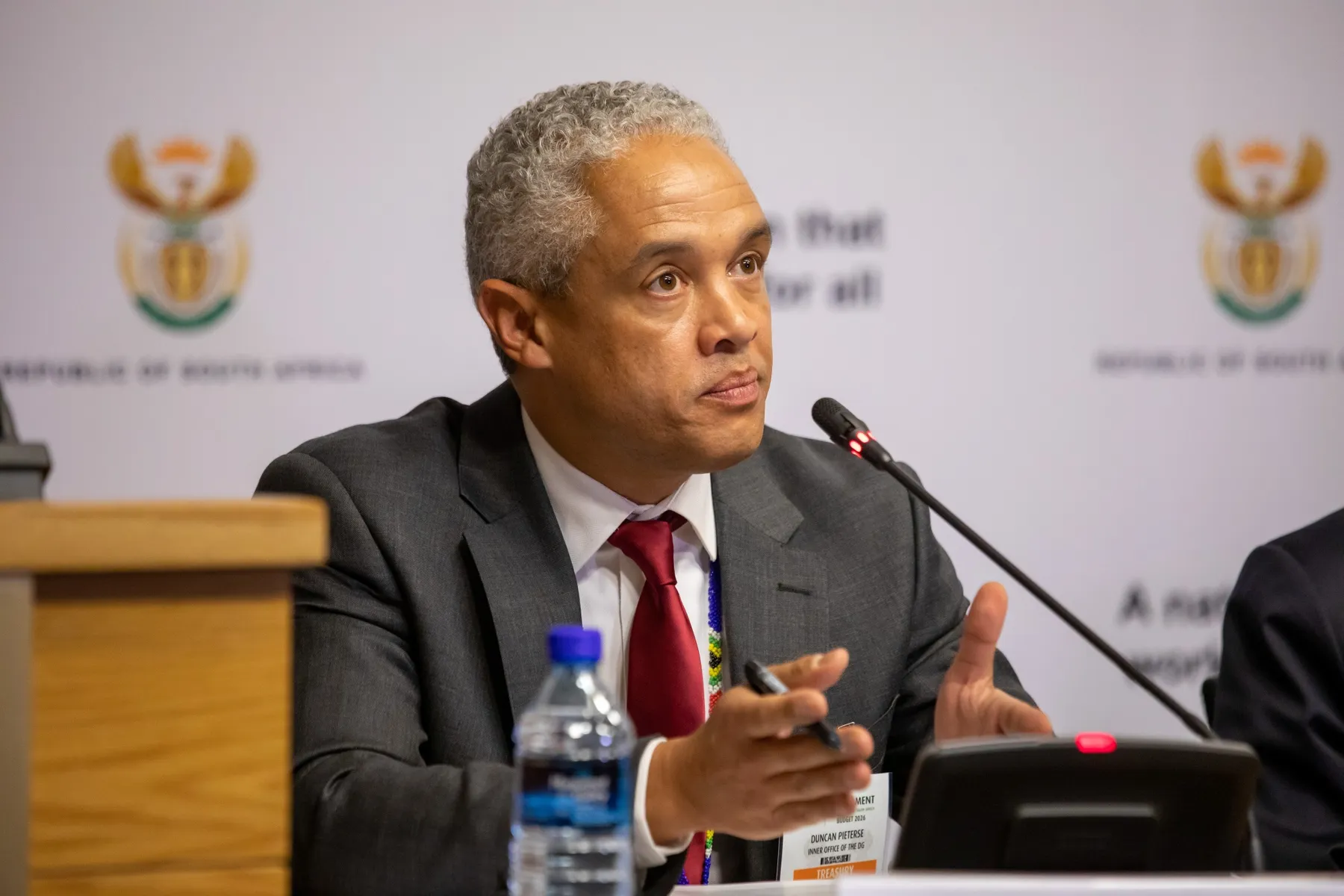
JOHANNESBURG, June 12 – South Africa’s recent credit rating upgrades and positive outlook revisions from major global rating agencies represent a significant endorsement of the country’s fiscal management and could ultimately pave the way for a return to investment-grade status, according to National Treasury Director-General Duncan Pieterse.
Writing in an opinion article published on News24, Pieterse described the recent ratings actions as a major shift following more than a decade of largely negative credit assessments.
“This is a clear change of direction in our ratings trajectory after more than a decade of negative ratings news,” Pieterse said. “It could ultimately see South Africa regain its investment grade status if it continues to do the right things on fiscal and economic policy.”
The positive momentum follows a series of favorable decisions from the world’s three leading credit rating agencies over the past month.
In May, Moody’s Ratings revised South Africa’s outlook to positive, signaling the possibility of a future rating upgrade.
Meanwhile, S&P Global Ratings maintained its positive outlook after becoming the first major agency in 16 years to upgrade South Africa’s sovereign rating in late 2025.
Most notably, Fitch Ratings unexpectedly upgraded South Africa’s sovereign credit rating by one notch without first assigning a positive outlook, a move viewed by analysts as a particularly strong vote of confidence.
The ratings improvements come despite heightened uncertainty in the global economy and ongoing disruptions linked to geopolitical tensions in the Middle East.
According to Pieterse, the decisions reflect confidence in the government’s commitment to fiscal discipline and public finance reforms.
He noted that South Africa is currently one of only a handful of G20 economies receiving positive assessments from major rating agencies.
“South Africa is only the second G20 country to be upgraded by Fitch this year. It is one of only two G20 countries on positive outlook at S&P and the only one at Moody’s,” he said.
The developments are particularly significant in historical context.
The last time Moody’s assigned South Africa a positive outlook was in 2007, while Fitch’s previous upgrade occurred in 2005, during a period of stronger economic growth and substantially lower public debt levels.
Treasury believes the positive outlooks create an opportunity to accelerate economic reforms, strengthen growth prospects and place public debt on a more sustainable trajectory.
The government has already begun preparations for the 2027 budget cycle, with Cabinet approving technical guidelines for the Medium-Term Expenditure Framework (MTEF).
According to Treasury, the framework emphasizes spending efficiency, fiscal sustainability and the prioritization of resources toward key national development objectives.
The guidelines also require any new spending commitments to be financed in a manner that does not undermine fiscal consolidation efforts.
South Africa lost its investment-grade credit ratings between 2017 and 2020 following years of weak growth, rising debt and governance challenges.
A return to investment-grade status would lower borrowing costs, improve investor confidence and potentially attract larger flows of international capital into the economy.
While the recent ratings actions do not guarantee future upgrades, they represent one of the strongest signals in years that South Africa’s fiscal trajectory may be improving.
For policymakers, the challenge now will be maintaining reform momentum and delivering stronger economic growth while preserving fiscal discipline in an increasingly uncertain global environment.