
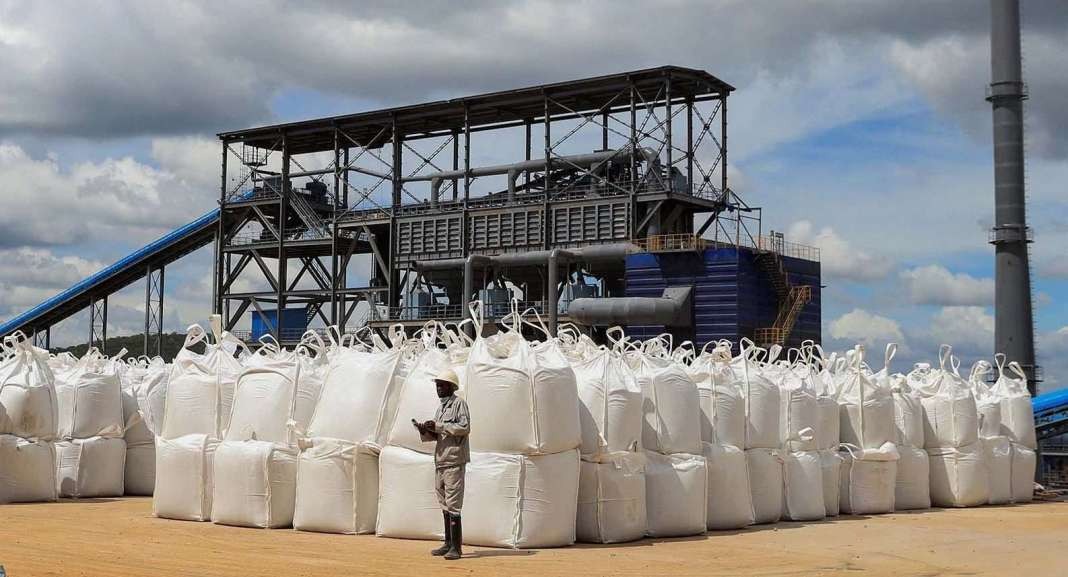
HARARE, Oct 9 – Zimbabwe has reaffirmed its plan to prohibit exports of lithium concentrate from January 2027, rejecting calls to delay the restriction as the government seeks to expand domestic processing and capture more value from its mineral resources.
The southern African country initially halted lithium concentrate shipments in February before easing restrictions in April. The export ban is now scheduled to take effect at the beginning of 2027, despite requests from producers for additional time to complete processing facilities.
Lithium companies operating in Zimbabwe urged the government in June to extend the deadline, arguing that more time was needed to establish the infrastructure required to process concentrate locally into higher-value products.
The government’s position reflects a broader push to move beyond exporting raw and semi-processed minerals towards greater domestic beneficiation, particularly for lithium, a key input in electric vehicle batteries and energy storage systems.
Lithium Export Earnings Reach $2.16 Billion
Zimbabwe generated $2.16 billion from lithium exports in the nine months to September 30, nearly four times the value recorded during the whole of the previous year, according to the Minerals Marketing Corporation of Zimbabwe (MMCZ).
The increase was driven primarily by a 283% rise in the price of spodumene concentrate, a lithium-bearing mineral used as a major source of the battery metal, MMCZ General Manager Nomusa Moyo said during a briefing.
Spodumene accounted for approximately $1.8 billion of the country’s lithium export earnings during the period. Petalite, another lithium-bearing mineral, contributed a further $155 million.
Zimbabwe also earned $190 million from lithium sulphate, a processed chemical used as an intermediate material in producing battery-grade lithium compounds.
The figures highlight the growing economic significance of lithium exports to Zimbabwe, while also illustrating the government’s rationale for requiring more processing to take place within the country.
Domestic Processing Becomes a Policy Priority
Under the planned restrictions, producers will face greater pressure to establish local processing capacity before the export ban takes effect. The government aims to retain a larger share of the value generated from its lithium resources by encouraging investment in facilities that can produce more processed materials domestically.
For mining companies, the deadline creates an incentive to accelerate infrastructure development, but also raises questions about the readiness of processing plants and the cost of meeting the new requirements.
The policy’s eventual impact will depend on the pace of investment, the availability of reliable energy and processing infrastructure, and international lithium prices.
Zimbabwe’s challenge is to translate strong mineral export earnings into a more developed domestic value chain, while ensuring that restrictions do not prevent producers from operating efficiently or undermine the flow of investment into the sector.
