
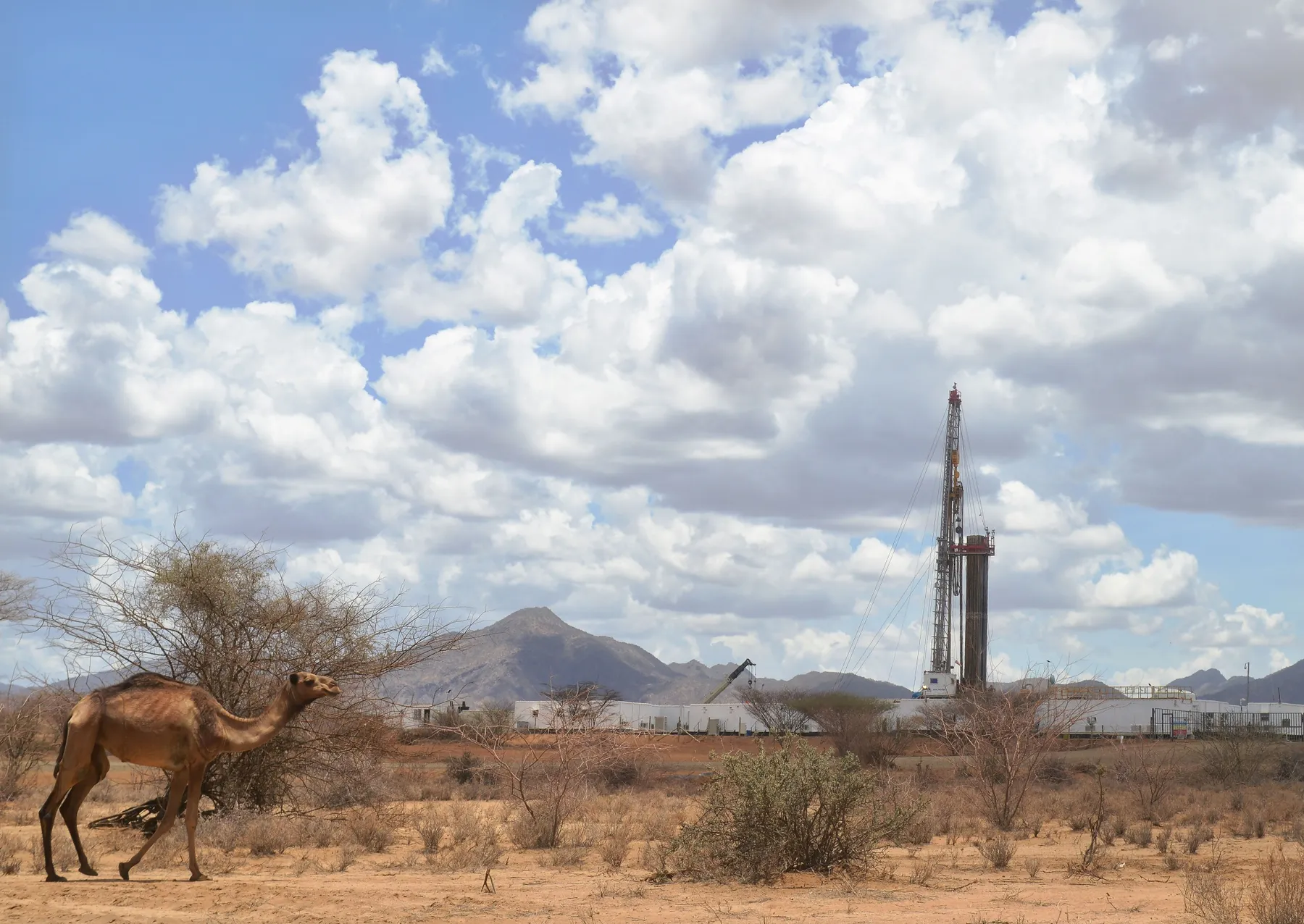
NAIROBI, Sept 25 – Kenya has moved closer to its first commercial crude oil production after a 1,500-horsepower drilling rig arrived at the Port of Mombasa ahead of planned drilling in the South Lokichar Basin in Turkana County.
The GW70 rig, leased by Gulf Energy E&P BV SEZ from China’s Great Wall Drilling Company, arrived at Kilindini Port on September 25 aboard the MV Transit Sedanka after being transported from Duqm Port in Oman.
Valued at more than KSh2.59 billion ($20 million), the rig is being offloaded by the Kenya Ports Authority before being transported by road to Turkana, where it will be deployed for the next phase of development in the South Lokichar Basin.
Gulf Energy E&P BV SEZ Chief Executive Officer Paul Limoh said drilling is scheduled to begin on November 1, with the company targeting first crude production in December 2026.
“All workstreams at Gulf Energy E&P BV SEZ are running to a tight project management schedule, and the project remains on course for First Oil production in December 2026,” Limoh said.
South Lokichar Production Plans
Gulf Energy plans to produce approximately 20,000 barrels of crude oil per day during the first phase of development before increasing output to 50,000 barrels per day in the second phase.
The initial production programme forms part of a wider KSh776.7 billion ($6 billion) development of the South Lokichar Basin, with Gulf Energy investing in infrastructure, equipment and other facilities required to establish commercial production.
The company has contracted Baker Hughes to provide integrated well services, while SLB will supply the Early Production Facility for the first phase.
Before drilling begins, the GW70 rig will undergo commissioning and acceptance testing. The equipment has previously been deployed on projects operated by Abu Dhabi National Oil Company (ADNOC) in the United Arab Emirates.
Kenya’s Emerging Oil Industry
The arrival of the rig represents another step in Kenya’s effort to commercialise petroleum resources discovered in the South Lokichar Basin.
The government estimates that the basin could generate more than KSh375.7 billion ($2.9 billion) in lifetime earnings, although actual returns will depend on international crude prices and production levels.
The basin has been under exploration since 2012, when Tullow Oil announced a major discovery at the Ngamia-1 well. Initial estimates put recoverable resources at approximately 560 million barrels, while oil initially in place across the basin has previously been estimated at as much as 4 billion barrels. Only a portion of that resource is considered technically and economically recoverable.
Kenya’s emerging oil production is also becoming relevant to plans for downstream infrastructure. Nigerian industrialist Aliko Dangote is pursuing a proposed $16 billion refinery in Lamu, with a planned capacity of 700,000 barrels per day.
The refinery would require substantial crude supply, making the development of Kenya’s domestic petroleum resources strategically relevant to the country’s broader plans for an integrated oil industry.
