
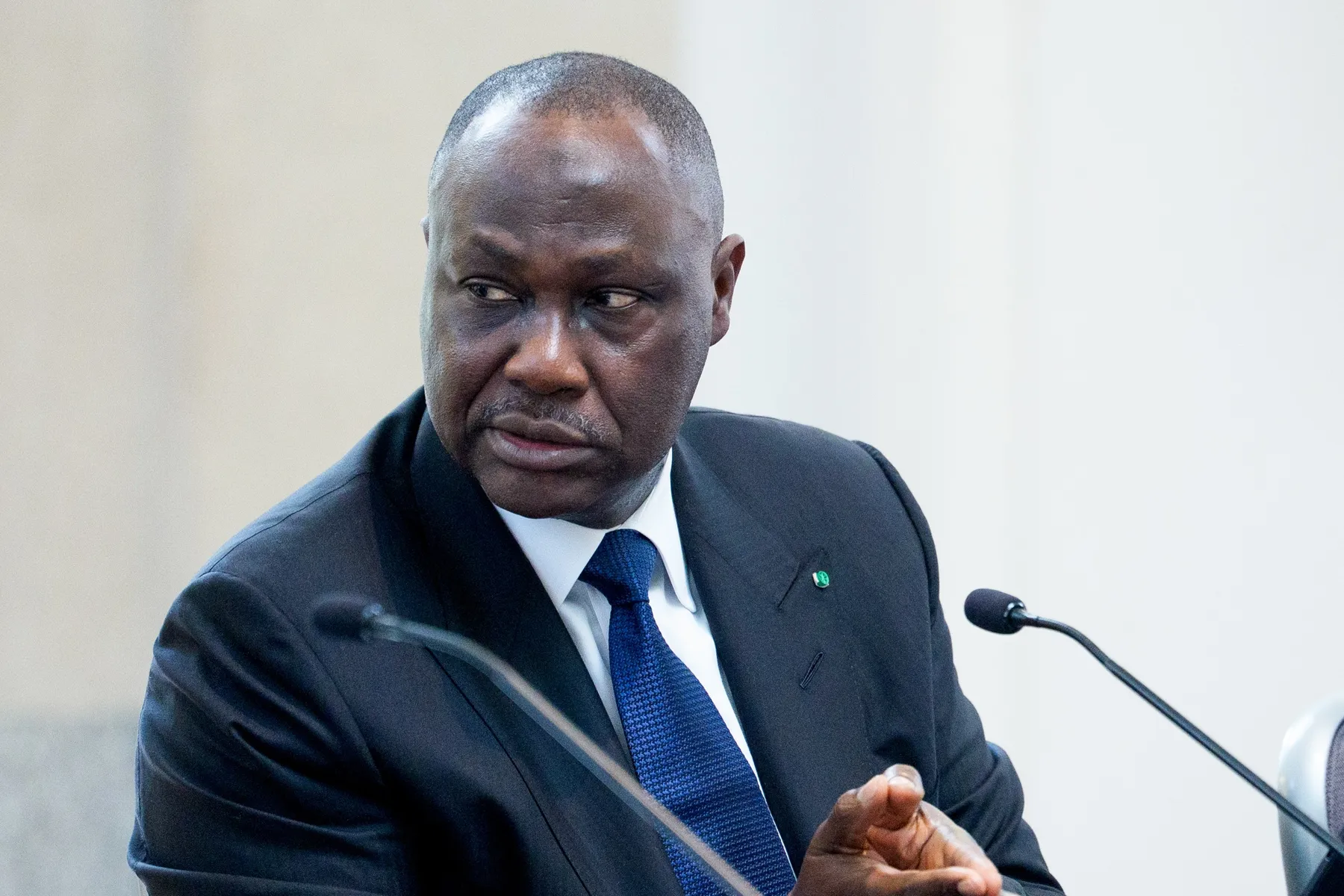
LAGOS, Sept 4 – The Africa Finance Corporation (AFC) has described the Dangote Group’s sustained investments across Africa as an important driver of industrialization, productivity and economic growth as the continent seeks to convert its demographic expansion into broader economic opportunity.
AFC President and Chief Executive Officer Samaila Zubairu made the remarks at the Lagos Economic Summit on Friday, September 4, 2026, where business leaders, economists and financial experts examined investment opportunities under the theme “The Real Deal: Africa’s Greatest Investment Opportunity”.
Zubairu said recent economic reforms had helped improve foreign exchange stability, strengthen reserves and ease inflationary pressures, but argued that the next priority should be accelerating industrial output, productivity and employment.
The comments reflected a broader discussion at the summit around the role of large-scale private investment in strengthening domestic production and reducing African economies’ dependence on imports.
Several economists and industry stakeholders pointed to investments by the Dangote Group as examples of how industrial projects can support job creation, conserve foreign exchange and increase local production capacity. They also called on governments to establish policies that provide stronger support for domestic industries and encourage economic diversification.
Muda Yusuf, Chief Executive Officer of the Centre for the Promotion of Private Enterprise, said industrialisation remains central to achieving sustainable economic development. He called for greater coordination between trade and industrial policies to enable local manufacturers to compete more effectively.
Ugodre Obi-Chukwu, Founder and Chief Executive Officer of Nairametrics, highlighted Africa’s rapidly expanding population as a major opportunity for industrial investment. He said projects such as the Dangote Refinery could help retain capital within the continent while expanding domestic production capacity.
The discussion comes as African economies seek to move from consumption-driven growth towards stronger domestic production and investment. Expanding industrial capacity could help countries reduce import dependence while creating employment opportunities for a growing working-age population.
In his keynote address, Bismarck Rewane, Managing Director of Financial Derivatives Company Limited, said Nigeria was gradually moving away from a consumption-led economic model towards one increasingly driven by investment and production.
Rewane argued that sustained investment in productive sectors would be important for generating economic growth, creating employment and improving living standards.
Participants also identified weaknesses in credit infrastructure as a constraint on investment and economic activity. They called for stronger systems to improve access to financing, alongside better national identification infrastructure that could expand participation in economic and financial services.
Skills development was another major theme, with participants advocating greater investment in human capital to raise productivity and improve the international competitiveness of Africa’s growing youth population.
The discussions placed large-scale private investment within a wider policy framework, suggesting that industrial projects alone will not be sufficient to unlock Africa’s economic potential without complementary improvements in finance, infrastructure, skills and government policy.
For Nigeria and other African economies, the challenge now is to translate investment into broader productive capacity. The summit’s emphasis on industrialisation, employment and diversification reflects a growing push to build economies capable of capturing more value from Africa’s resources and expanding domestic economic opportunity.
