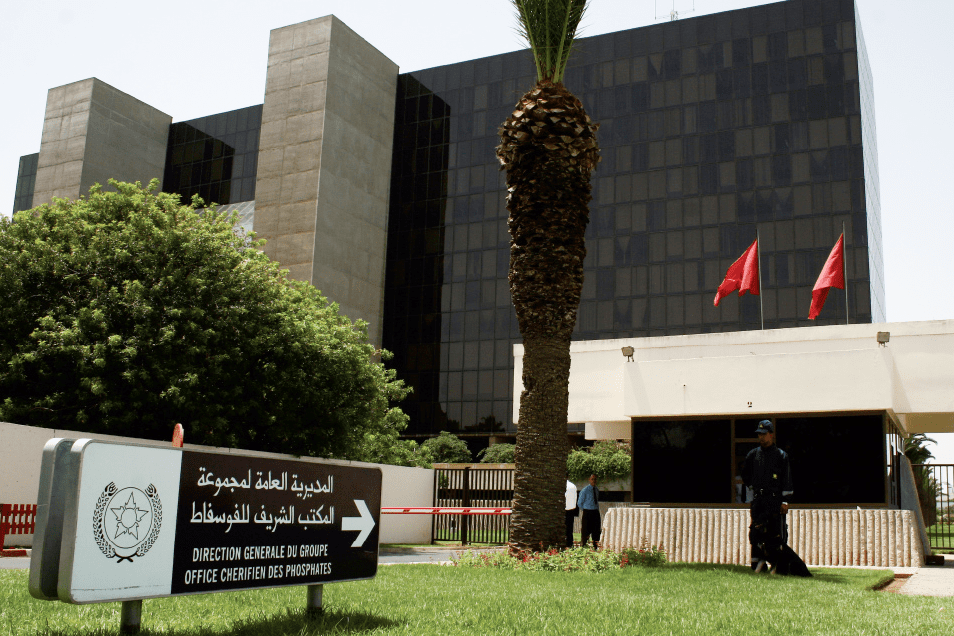
RABAT, Sept 3 – Morocco’s OCP Group, the world’s largest phosphate fertilizer producer reported revenue of MAD 48.37 billion ($5.18 billion) for the first half of 2026, a decline from MAD 52.17 billion ($5.58 billion) during the same period last year, as geopolitical tensions and disruptions to global raw-material supply chains weighed on market conditions.
Second-quarter revenue reached MAD 28.28 billion ($3.03 billion), compared with MAD 30.57 billion ($3.27 billion) in the corresponding period of 2025.
The phosphate and fertilizer producer said it responded to changing market conditions by adjusting production levels, product offerings and the sourcing of production inputs. The measures were aimed at maintaining supply to customers while adapting to shifts in global demand and raw-material availability.
Despite the lower revenue, OCP said the results demonstrated the resilience of its integrated business model and the flexibility of its industrial operations.
Investment remains elevated
OCP continued to commit substantial capital to its industrial expansion during the first half of the year, capital expenditure reached MAD 5.92 billion ($634 million) in the second quarter, down 36% from MAD 9.23 billion ($988 million) a year earlier. For the six-month period, however, investment increased 6% to MAD 16.07 billion ($1.72 billion), compared with MAD 15.16 billion ($1.62 billion) in the first half of 2025.
The group attributed the increase primarily to payments concentrated in the first quarter for strategic industrial and water infrastructure projects, alongside renewable energy developments.
OCP expects investment spending to slow during the remainder of 2026, consistent with its previously announced guidance.
The investment programme comes as the group continues to expand its fertilizer production capabilities and strengthen its position in major agricultural markets.
OCP expands US market presence
OCP’s international strategy has received a boost from changes in US trade policy, opening a route back into one of the world’s major agricultural markets.
In June, US President Donald Trump authorised the temporary suspension of certain duties on Moroccan phosphate fertilizers following an emergency declaration concerning fertilizer supplies. The measure covers countervailing and anti-dumping duties for up to eight months, or until the emergency is terminated.
The White House said the policy response was aimed at addressing insufficient domestic phosphate fertilizer production and disruptions affecting international agricultural supply chains.
The change enabled OCP to resume significant shipments to the US market. On August 17, a vessel carrying approximately 54,000 metric tons of Moroccan Triple Super Phosphate fertilizer arrived at the Port of New Orleans, marking the group’s first major return to the US market after years of restricted access.
OCP is also seeking to establish a more permanent production presence in the country. Its North American subsidiary and US farmer-owned cooperative CHS have proposed a joint venture to develop a phosphate fertilizer plant in Louisiana, with planned investment of up to $450 million.
If completed, the facility would represent OCP’s first major US manufacturing base and would bring production closer to American agricultural customers.
The group has also expanded its international partnerships. In July, OCP Nutricrops agreed with US-based Koch Ag & Energy Solutions to establish a 50/50 joint venture at OCP’s Jorf Lasfar fertilizer complex. The facility has annual production capacity of up to 1.2 million metric tons of phosphate-based fertilizers.
The latest financial results therefore present a mixed picture for OCP. Revenue declined during the first half as global market conditions became more difficult, while capital spending remained substantial and the group continued to expand its international production and distribution footprint.
Its renewed access to the US market and planned investments in North American production could provide an additional growth avenue as OCP seeks to strengthen its position in global fertilizer supply chains.