
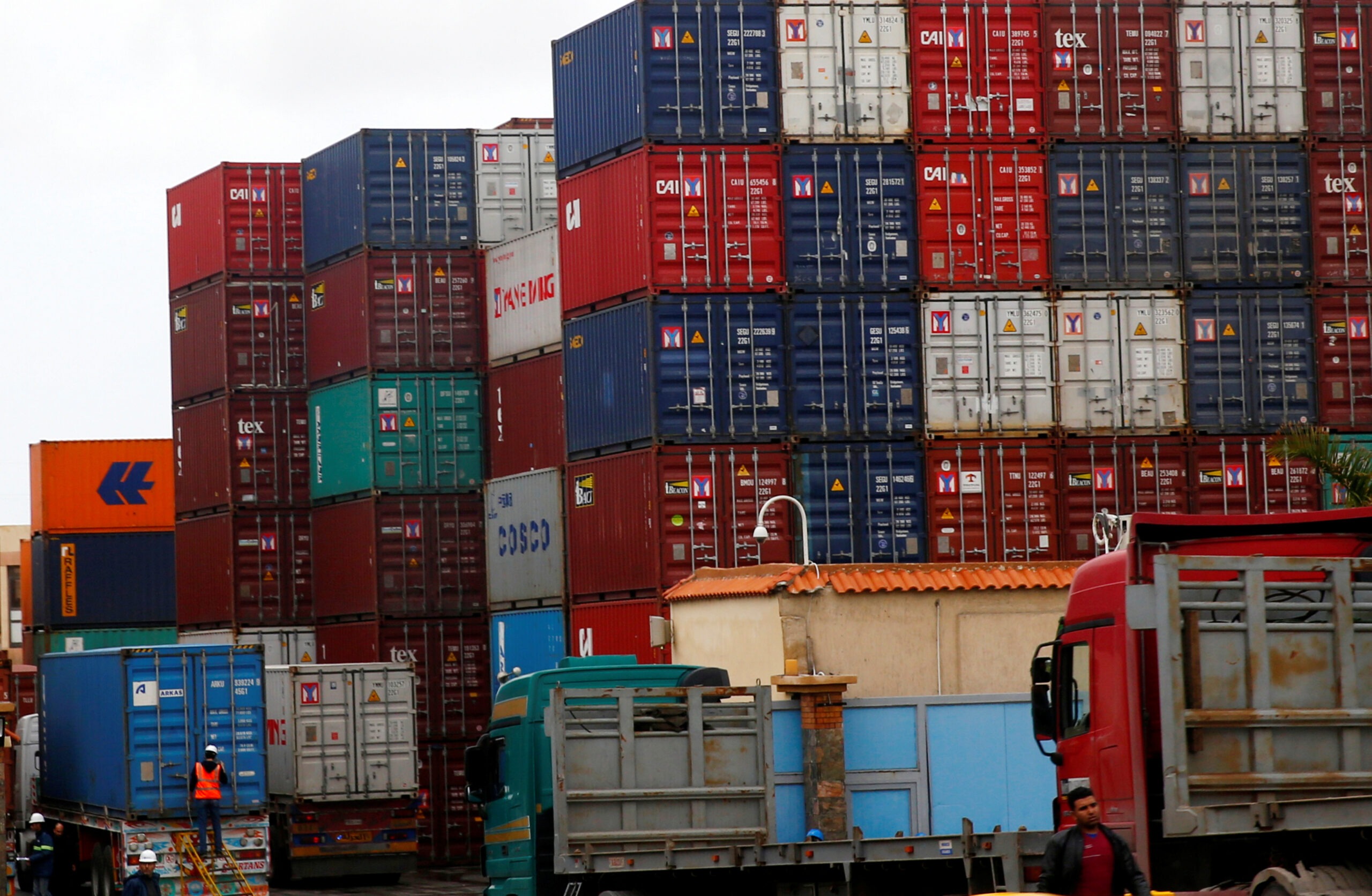
LAGOS, Aug 10 – In the first half of 2026, Morocco’s ports processed 148.6 million tons of trade traffic, marking a 14.4% rise compared to about 130 million tons during the same period the previous year, driven by a significant increase in transshipment activity that boosted total volumes.
Transshipment traffic, involving cargo transferred between vessels before reaching its final destination, reached 82.6 million tons during the period, up 28.6% from the first half of 2025. It accounted for 55.6% of total port activity, reinforcing Morocco’s role as a major maritime hub connecting trade routes between Europe, Africa and other international markets.
National traffic, by contrast, was broadly unchanged. Volumes rose just 0.6% year on year to 66 million tons. Imports accounted for 27.4% of overall traffic, exports for 13.9%, cabotage for 2.6% and bunkering for 0.6%.
Import activity provided additional support to port volumes. Moroccan ports processed 40.7 million tons of imports during the first half, an increase of 3.6% from the same period in 2025. Exports moved in the opposite direction, falling 1.6% to 20.6 million tons, while cabotage traffic declined 14.6% to 3.9 million tons.
Hydrocarbon bunkering, which includes fuel supplied to vessels operating through Morocco’s maritime routes, also weakened. Volumes fell 4.1% to 868,000 tons during the period, despite the country’s strategic position along shipping routes around the Strait of Gibraltar.
Performance across major categories was mixed. Cereal traffic increased 13.8% to 5.8 million tons, while imports of hydrocarbons rose 7.7% to 7.1 million tons. Container traffic expanded 1.7% to 6.3 million twenty-foot equivalent units, or TEUs, while traffic involving new vehicles increased 12.9% to 357,634 units.
Other segments recorded declines. Traffic involving phosphates and related products fell 11.2% to 14.6 million tons, while coal volumes decreased 2.9% to 5.2 million tons. International road transport through the port system also declined, falling 3.2% to 301,191 units.
Passenger activity was relatively stable during the period. Moroccan ports handled about 1.6 million passengers through the end of June, a marginal 0.3% decline from a year earlier. Cruise traffic performed better, with passenger numbers increasing 2.4% to 174,366.
Fishing activity also weakened. Landings from coastal and artisanal fishing operations fell 6.3% year on year to 367,184 tons during the first half of 2026.
The divergence between transshipment and national traffic highlights the growing importance of Morocco’s position as a regional logistics and maritime hub. The strong expansion in cargo transferred between vessels provided the main impetus for overall port growth, while underlying domestic trade volumes remained comparatively subdued.
The performance also reflects the strategic importance of Morocco’s port infrastructure to international supply chains. The country’s location at the intersection of major European, African and Atlantic shipping routes gives its ports a significant role in connecting global cargo flows with markets across the continent.
For Morocco, sustaining this momentum will depend not only on continued growth in transshipment but also on the performance of domestic imports, exports, industrial cargo and logistics activity. The first-half figures suggest that while the country’s maritime infrastructure continues to attract substantial international cargo, the strength of national port activity remains more uneven across sectors.
