
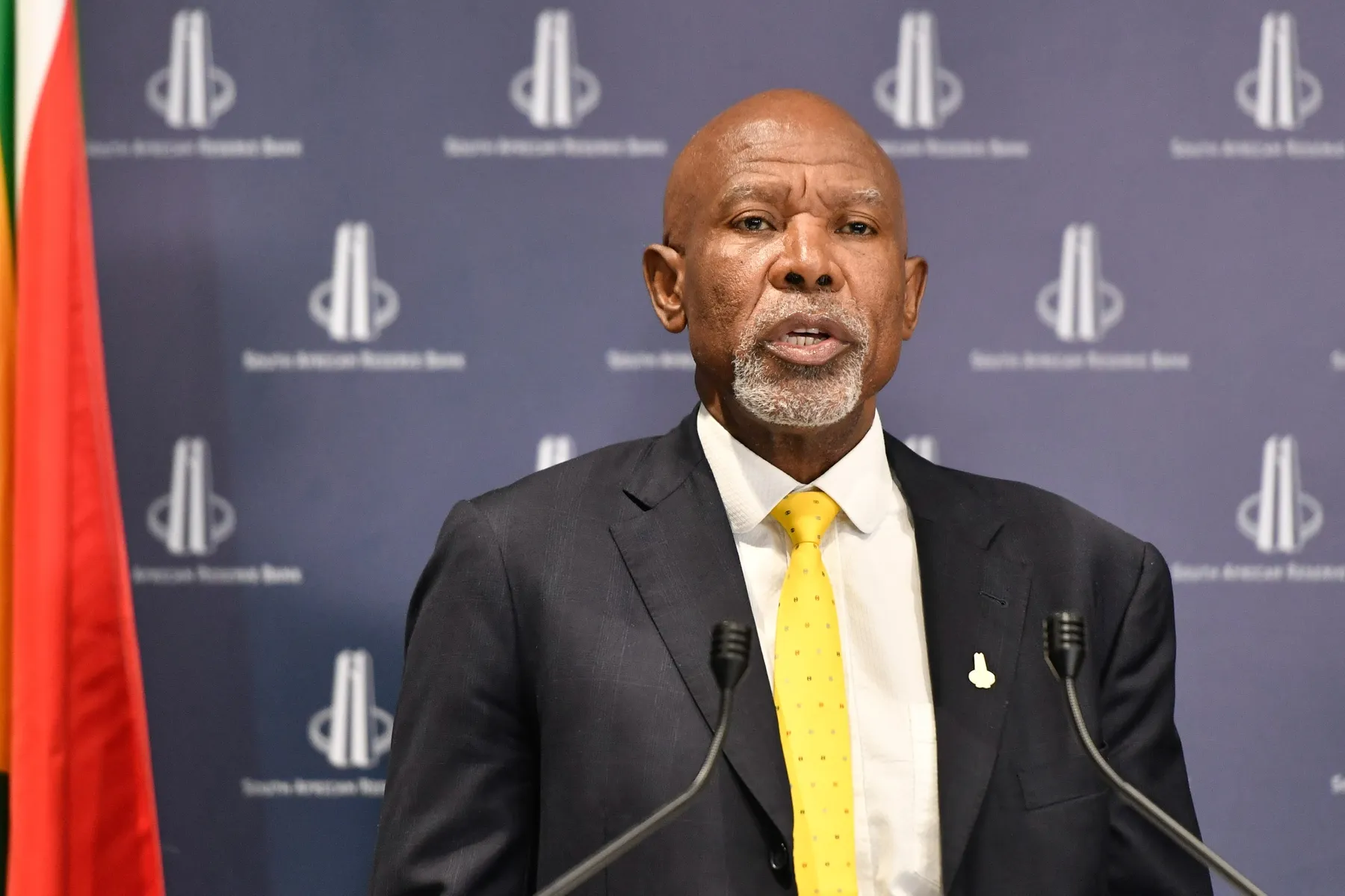
JOHANNESBURG, Sept 28 – South African Reserve Bank Governor Lesetja Kganyago expects inflation to decline sharply and return to the central bank’s 3% target by the end of 2027, as tighter monetary policy works to contain the effects of global supply shocks.
Speaking at the Mapungubwe Institute for Strategic Reflection Forum on Africa and Geopolitics, Kganyago said South Africa was facing an increasingly uncertain global environment shaped by geopolitical tensions, climate-related disruptions, technological change, elevated debt and growing pressure on fiscal policy.
The governor said the latest energy shock, linked to conflicts in Ukraine and the Middle East, had pushed South African inflation away from target after the country had previously returned to the 3% level.
“We expect inflation to slow significantly next year, and we have increased our policy rate to make sure we get back to 3%. We currently expect to get there around the end of next year,” Kganyago said.
The SARB has maintained a forward-looking approach to monetary policy, seeking to prevent temporary supply disruptions from becoming entrenched in inflation expectations.
Kganyago said the global economy was increasingly vulnerable to supply shocks, with disruptions to energy, food production and transportation creating inflationary pressures while also weakening economic activity.
He pointed to the Russia-Ukraine war and escalating tensions in the Middle East as examples of how geopolitical disruptions are affecting commodity markets. Oil prices have fluctuated around $100 a barrel, while attacks on energy infrastructure and shipping have added pressure to global fuel and food markets.
For central banks, the shift toward more frequent supply shocks presents a difficult policy environment because inflation can rise even as economic growth weakens.
Kganyago also highlighted climate change as a growing source of macroeconomic and financial risk. More severe weather events could disrupt agricultural production, increase insurance losses and make some markets increasingly difficult to insure.
Beyond climate and geopolitics, the governor identified artificial intelligence as another emerging source of economic and financial uncertainty. Rapid advances in AI could generate productivity gains, but also create cybersecurity risks and contribute to asset-price distortions if investment expectations become detached from underlying economic fundamentals.
Global debt represents another major concern.
Kganyago said debt levels, particularly among advanced economies, remain high and are continuing to rise. Large technology companies are also borrowing heavily to finance AI infrastructure, adding another layer of leverage to global financial markets.
Higher debt burdens are becoming more difficult to manage as long-term interest rates rise. Kganyago warned that the combination of high debt, elevated borrowing costs and growing government spending requirements could increase pressure on central banks.
He also addressed the risk of “fiscal dominance”, where monetary authorities become pressured to accommodate government financing needs at the expense of price stability.
Kganyago argued that high public debt does not automatically lead to fiscal dominance, but said central-bank independence remains essential for maintaining monetary stability.
South Africa itself has experienced a substantial increase in public debt since the global financial crisis. Kganyago said government debt had roughly tripled over that period, while interest costs now consume about 5.3% of gross domestic product.
Despite those pressures, he said South Africa’s macroeconomic position had improved.
The country’s debt trajectory is showing signs of stabilisation, while its country risk premium has declined. South Africa’s longer-term bond yields have remained around 9% this year, relatively contained compared with earlier levels and despite the repricing of global bond markets.
The rand has also shown relatively low volatility, according to Kganyago.
However, economic growth remains a significant weakness. South Africa’s economy has expanded by an average of only about 0.6% annually over the past decade. The SARB estimates that potential growth has improved to roughly twice that rate, but Kganyago said it remains low by international standards.
He said the country’s reform agenda could improve its growth prospects, but progress remained gradual and external shocks continued to weigh on the economy.
The governor also pointed to the end of load-shedding as a major improvement in South Africa’s economic environment, while noting that higher electricity costs and the broader increase in living and operating costs continue to offset some of the gains.
Kganyago said South Africa’s relative macroeconomic resilience could provide an advantage as global financial and geopolitical risks increase.
The country is geographically distant from many geopolitical hotspots and has substantial natural resources, while improvements in its macroeconomic positioning have helped shield domestic financial markets from some of the pressure affecting advanced economies.
However, he cautioned that the global environment is becoming more volatile and less predictable, requiring South Africa to identify and capitalise on its economic advantages while continuing with domestic reforms.
