
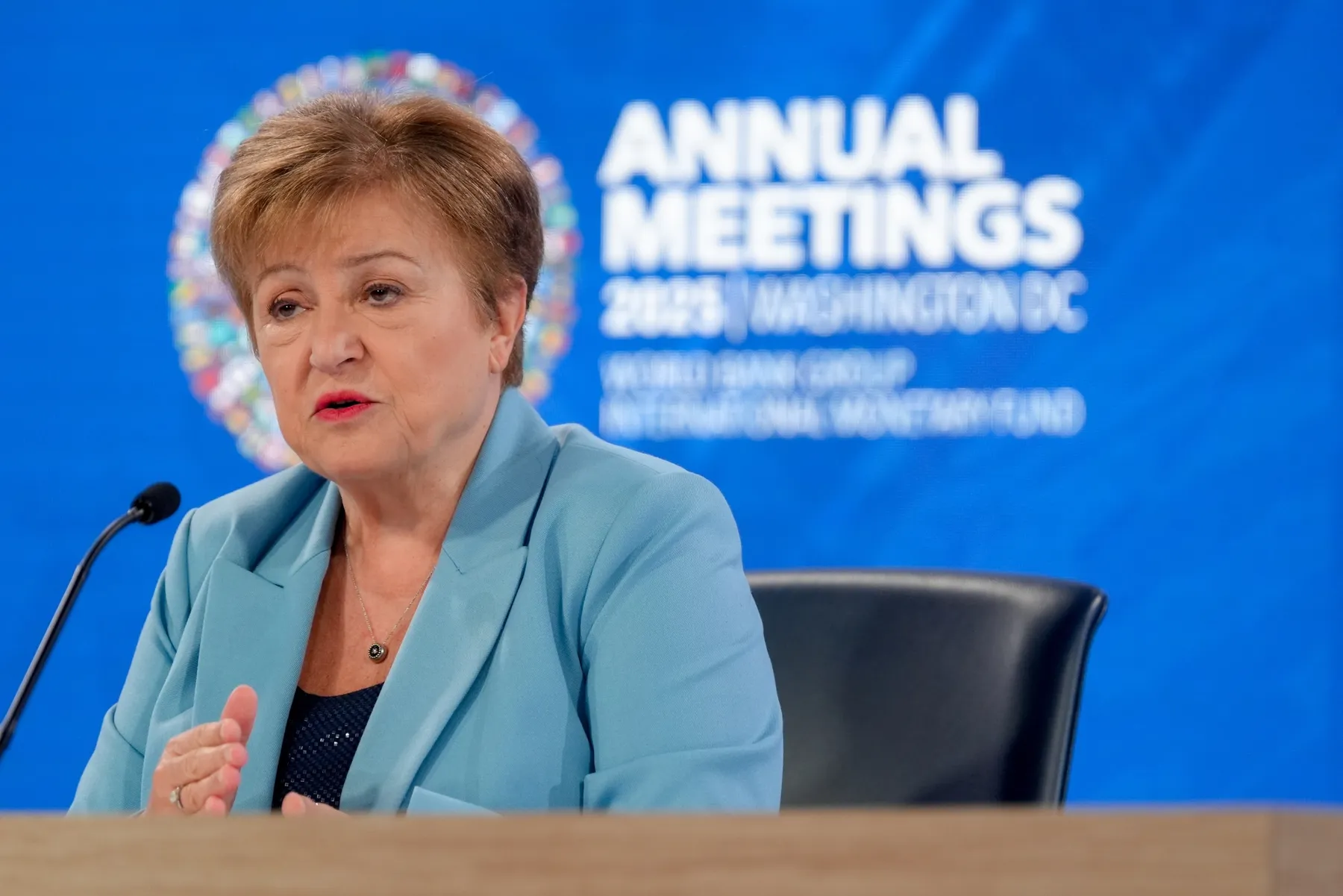
LONDON, June 8 – The International Monetary Fund (IMF) Managing Director Kristalina Georgieva has warned that the global economy must adapt to a future where economic, geopolitical and climate-related shocks occur with increasing frequency.
Speaking on Bloomberg’s Leaders with Francine Lacqua podcast, Georgieva said governments, businesses and international institutions need to rethink how they prepare for disruptions after a period marked by repeated global crises.
According to Georgieva, recent years have demonstrated that shocks are no longer isolated events but are becoming a defining feature of the global economic landscape.
“I am worried that we are not completely internalizing yet that this is how the world is going to be,” Georgieva said.
“We are not going to get to a place where shocks are gone.”
Her comments come after a series of major disruptions that have reshaped the global economy, including the COVID-19 pandemic, geopolitical conflicts, supply chain disruptions, inflationary pressures, energy market volatility and climate-related events.
These developments have challenged traditional economic assumptions and exposed vulnerabilities in both advanced and developing economies.
Georgieva stressed the importance of building stronger economic foundations capable of withstanding future disruptions rather than relying on expectations of prolonged stability.
The IMF chief suggested that resilience, adaptability and preparedness should become central pillars of economic policymaking.
For emerging and developing economies, the challenge is particularly significant as many countries continue to face high debt levels, limited fiscal space and growing financing needs.
The warning also comes at a time when policymakers worldwide are grappling with heightened geopolitical tensions, shifting trade patterns and increasing uncertainty across global financial markets.
Institutions such as the IMF have repeatedly emphasized the need for stronger fiscal frameworks, diversified supply chains, improved crisis-response mechanisms and greater international cooperation to reduce vulnerability to future shocks.
Georgieva’s remarks reflect a growing consensus among global economic leaders that resilience will play a more important role in economic strategy as governments navigate an increasingly fragmented and unpredictable world.
As global risks continue to evolve, policymakers are being urged to focus not only on growth but also on the ability of economies to absorb and recover from future disruptions.
