
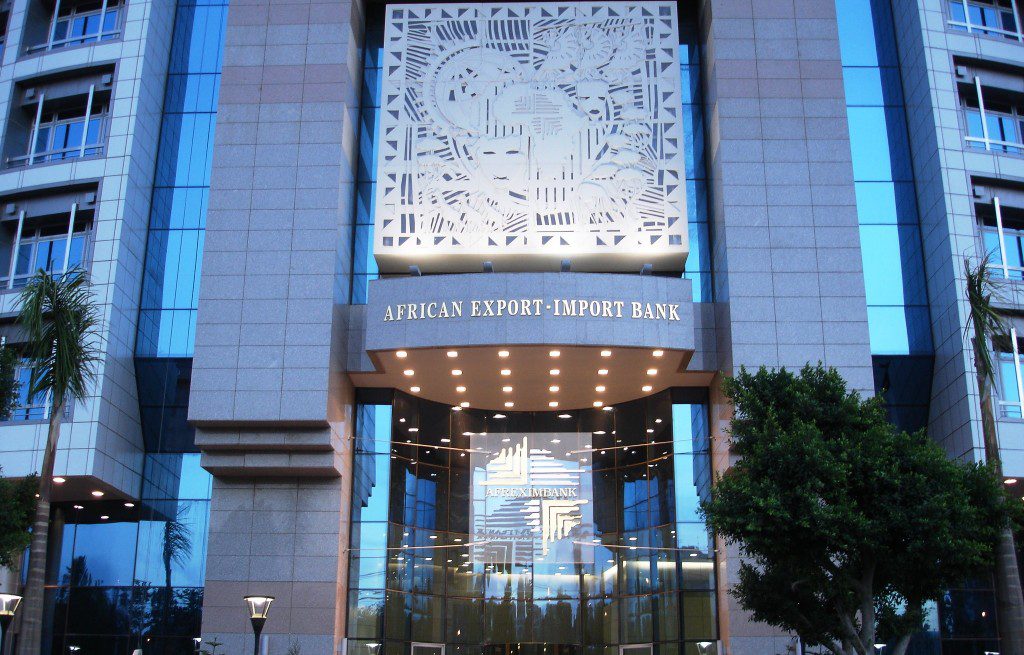
CAIRO, June 12 – S&P Global Ratings has assigned a BBB+ long-term issuer credit rating and an A-2 short-term rating to African Export-Import Bank, highlighting the institution’s growing importance in supporting trade, industrialization and economic development across Africa.
The rating agency assigned a stable outlook to the Egypt-based multilateral financial institution, reflecting confidence in its policy relevance, shareholder support and expanding role as a countercyclical lender during periods of economic stress.
According to S&P, the bank’s strategic importance has increased significantly in recent years as African countries seek to deepen intra-African trade and accelerate implementation of the African Continental Free Trade Area.
“Afreximbank consistently demonstrates an ability to act as a countercyclical lender, providing financing to the continent during periods of heightened risk when international commercial banks typically reduce their exposures,” S&P noted.
The rating agency highlighted the bank’s rapid growth over the past decade.
Between 2015 and 2025, Afreximbank’s total assets expanded from $7.1 billion to $42.3 billion, while shareholder equity increased from $1.3 billion to $8.4 billion.
Paid-in capital rose from $511 million to approximately $3.8 billion over the same period, supported by capital injections and retained earnings.
S&P also pointed to Afreximbank’s leadership during major global crises, including the COVID-19 pandemic, the commodity downturn, the Russia-Ukraine conflict and the ongoing Middle East crisis.
The bank recently launched a $10 billion Gulf Crisis Response Program designed to help African and Caribbean economies manage foreign exchange pressures, commodity price volatility and trade disruptions arising from geopolitical tensions.
Beyond financing, S&P emphasized Afreximbank’s role in developing continental trade infrastructure and financial systems.
Among the initiatives highlighted were the Pan-African Payment and Settlement System (PAPSS), the AfCFTA Adjustment Fund, the African Trade Gateway and various trade facilitation platforms aimed at reducing barriers to intra-African commerce.
PAPSS currently operates across 20 African countries and is supported by more than 175 financial institutions, enabling cross-border transactions in local currencies and reducing dependence on external reserve currencies.
Despite the positive assessment, S&P identified several factors limiting a higher rating.
The agency noted that Afreximbank’s liquidity levels remain lower than those of many highly rated multilateral development institutions.
As of September 2025, the bank’s six-month liquidity coverage ratio stood at 0.95x, while its 12-month liquidity ratio was 0.71x.
S&P also cited risks associated with sovereign debt restructurings, particularly following recent challenges involving Ghana and Zambia, where the bank experienced payment delays and entered restructuring discussions.
In addition, the agency pointed to Afreximbank’s partially commercial structure and dividend distribution policy as factors that differentiate it from many traditional multilateral lenders.
Nevertheless, shareholder support remains strong.
S&P highlighted the success of the bank’s $6.5 billion General Capital Increase program, which has already exceeded its original capital-raising target ahead of schedule.
The agency said an upgrade could become possible if Afreximbank further strengthens its capital position and improves liquidity buffers while maintaining its growing policy role across the continent.
Conversely, weaker liquidity coverage, reduced shareholder support or significant pressure on capital levels could lead to a downgrade.
Founded in 1993, Afreximbank was established to promote trade finance, support export development and strengthen economic integration across Africa.
For now, the BBB+ rating reinforces Afreximbank’s position as one of Africa’s most influential development finance institutions and reflects growing confidence in its role as a key financier of trade, infrastructure and industrial development across the continent.
