
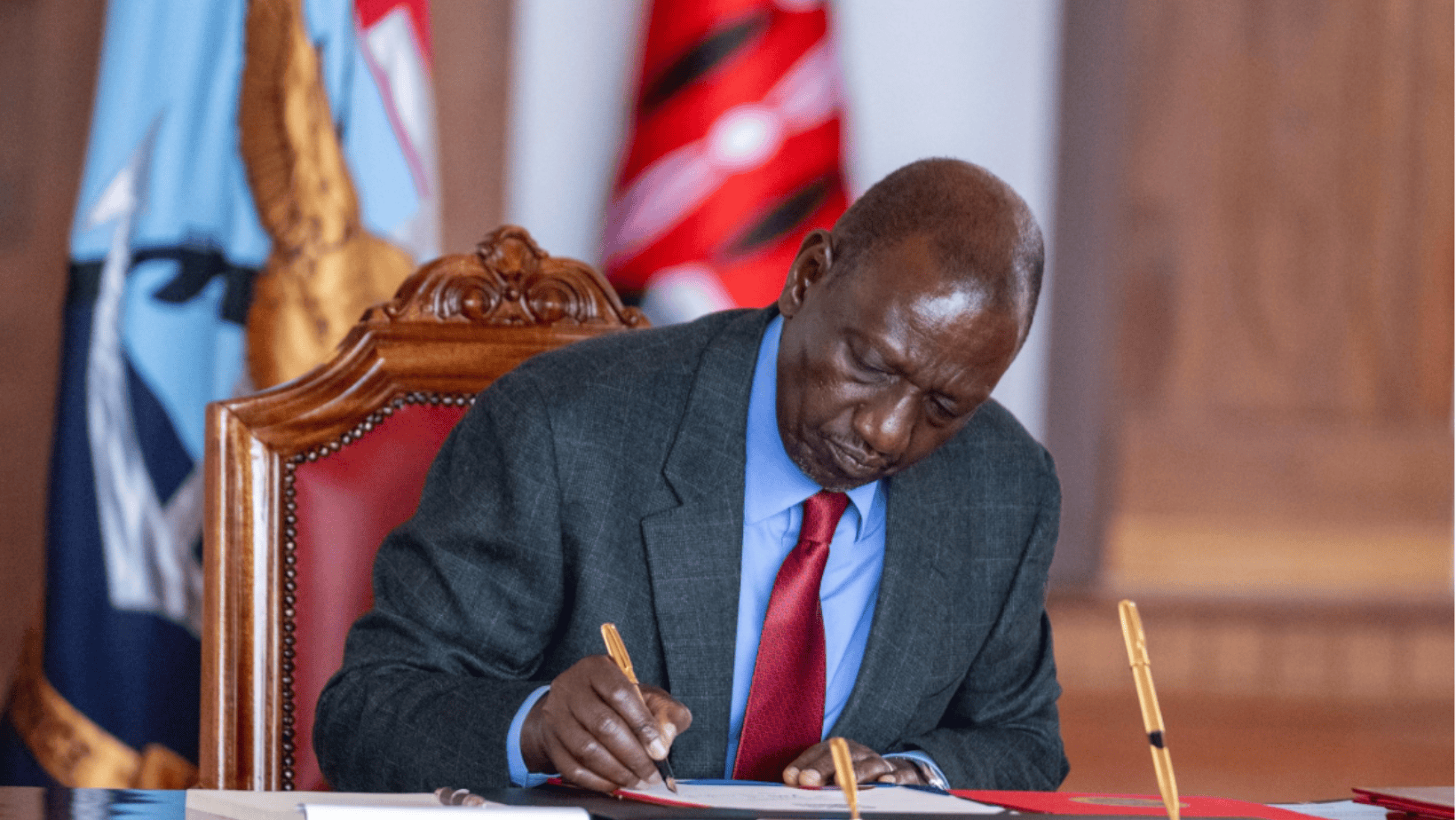
NAIROBI, July 7 – Kenya has introduced a new legal framework that allows the Central Bank of Kenya (CBK) to provide emergency funding to banks during periods of financial stress, following the signing of the Central Bank of Kenya (Amendment) Bill, 2026, into law by President William Ruto.
The new law gives the central bank the authority to provide emergency liquidity assistance to banks where intervention is considered necessary to protect the stability of the financial system. However, the support will only be available to institutions that are solvent, financially viable, not under liquidation and whose failure could pose a wider risk to the banking sector.
Under the framework, emergency funding will be temporary, discretionary and subject to conditions set by the CBK. Loans and advances must be backed by acceptable collateral and repaid within 12 months, although the central bank may extend the repayment period where necessary.
The amendments also broaden the central bank’s mandate by requiring it to promote liquidity, solvency, the proper functioning and integrity of the country’s market-based financial system, while strengthening oversight of the banking sector.
In addition, the law expands the range of reserve assets the CBK can hold and trade. Alongside gold and foreign exchange, the central bank can now buy, sell, import, export and hold gold coins, bullion, silver, platinum and other precious metals under terms it determines.
The legislation also authorises the CBK to provide training and capacity-building programmes for its staff, public institutions, members of the public and institutions from other countries. It further updates the appointment process for deputy governors by aligning the law with Kenya’s 2010 Constitution.
According to President Ruto, the reforms are intended to strengthen the central bank’s ability to safeguard financial stability, improve banking supervision and modernise Kenya’s monetary policy framework.
