
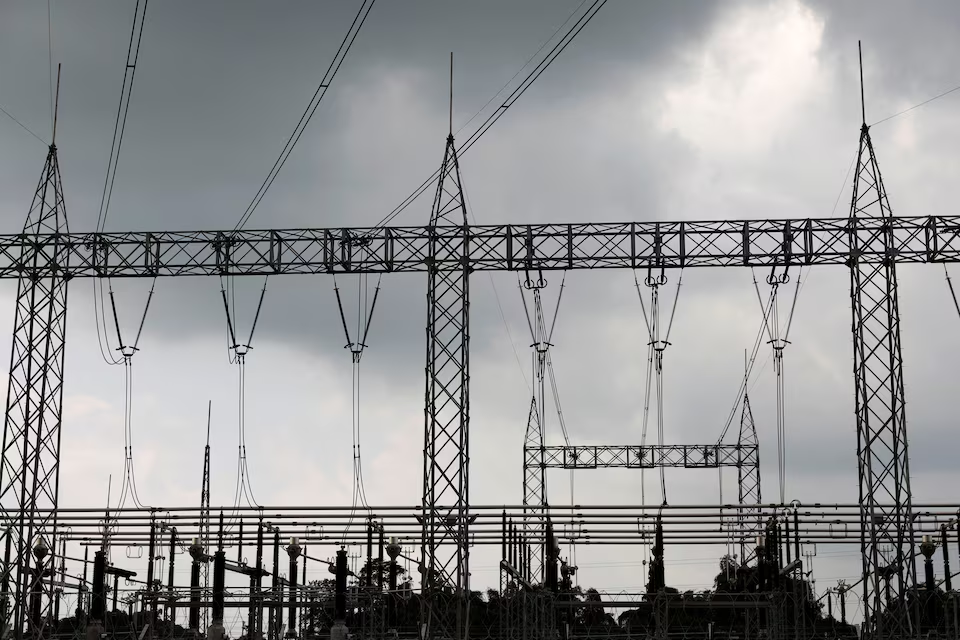
LAGOS, May 29 – Nigeria’s electricity generation dropped by nearly 20% on Thursday, adding to concerns over the country’s unstable power supply and ongoing challenges in the energy sector.
Data from the Nigerian Independent System Operator (NISO) showed that power generation fell to 3,527.76 megawatts (MW), down from 4,405.04MW recorded the previous day. The decline represents a drop of 877.28MW. The latest fall in output is expected to worsen electricity shortages already affecting homes and businesses across the country.
Industry stakeholders said persistent gas supply problems, weak transmission infrastructure and long-standing financial issues continue to limit growth in the sector.
Energy economist Prof. Wumi Iledare said the industry remains weighed down by more than N4 trillion in legacy debt, which has affected power generation companies, gas suppliers, distribution companies and the Nigerian Bulk Electricity Trading Plc (NBET).
According to him, several government interventions and subsidy programmes have only provided temporary relief without solving the deeper structural problems in the market.
He added that the sector would continue to struggle unless Nigeria adopts more cost-reflective tariffs, improves governance and strengthens market discipline.
Meanwhile, Chief Executive Officer of the Centre for the Promotion of Private Enterprise (CPPE), Muda Yusuf, said Nigeria’s power sector remains one of the toughest parts of the country’s economic reform efforts.
Yusuf noted that the industry still faces major issues including weak infrastructure, financing gaps, transmission bottlenecks and policy inconsistencies.
He added that the government’s difficulty in fully implementing cost-reflective tariffs has increased subsidy pressure and widened funding challenges across the electricity value chain.
