
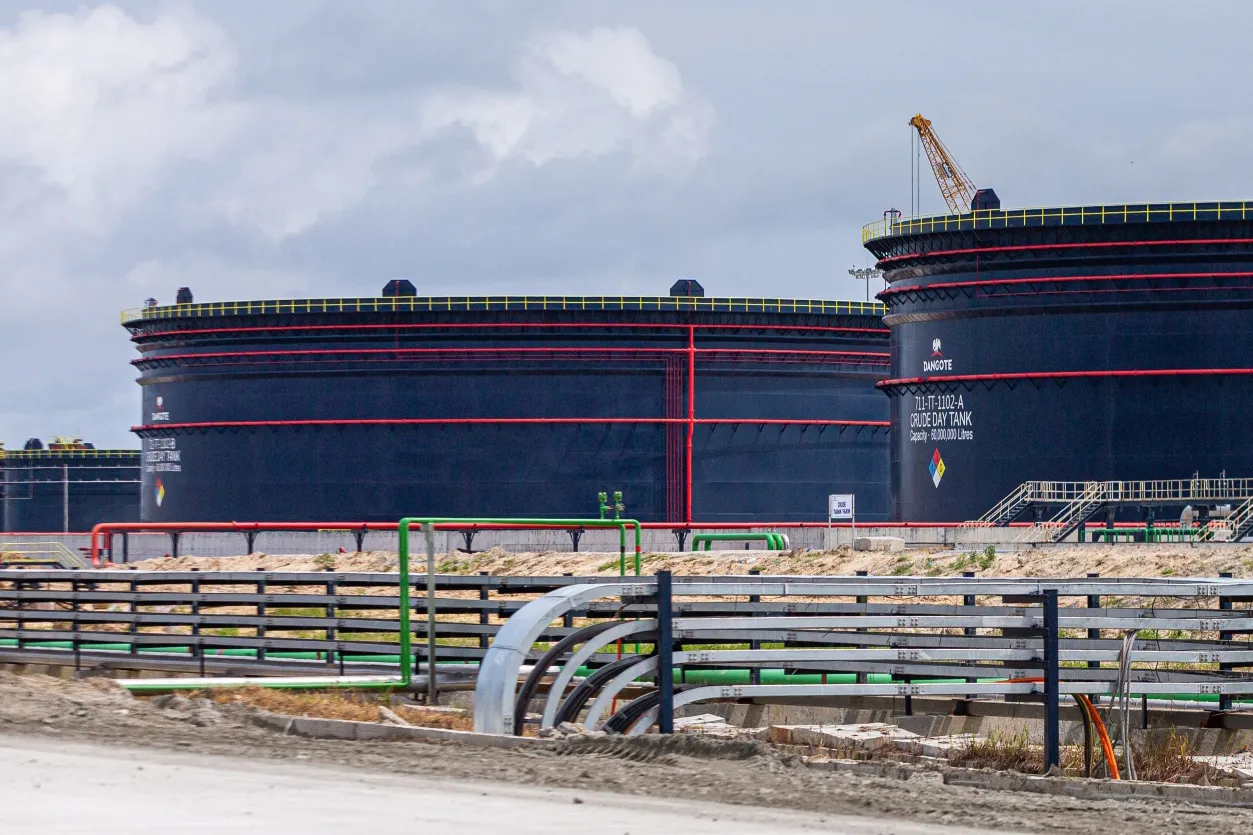
LAGOS, May 29 – Dangote Petroleum Refinery became the world’s largest exporter of jet fuel in April 2026, capitalizing on higher production levels and changes in global fuel trade routes triggered by geopolitical tensions in the Middle East.
According to a recent industry report by S&P Global, aviation fuel exports from the refinery surged as international buyers sought alternative supply sources following disruptions to established fuel trading networks.
Data cited in the report showed that jet fuel emerged as one of the refinery’s strongest export products during the month, helping position the facility as the largest single exporter of aviation fuel globally.
Managing Director and Chief Executive Officer of Dangote Petroleum Refinery, David Bird said the refinery responded to changing market conditions by increasing jet fuel production as global demand strengthened.
The refinery has now reached its full designed processing capacity of approximately 650,000 barrels per day following a gradual production ramp-up.
To maximize output, the facility has been utilizing a flexible refining strategy that incorporates feedstocks such as gas-to-liquids naphtha and condensates alongside traditional crude oil inputs.
Bird noted that operating at full scale requires increasingly sophisticated trading, logistics and supply-chain management capabilities as the refinery expands its presence in international energy markets.
The report also highlighted the refinery’s transition toward a merchant refining model, under which it actively trades both crude oil and refined petroleum products across global markets rather than focusing primarily on domestic supply.
As part of that strategy, the refinery is broadening the range of crude grades it can process, including heavier and more complex blends from different producing regions.
Management indicated that the facility currently has the capability to process around 40 different crude grades and plans to expand that number further in the coming years.
The company’s longer-term ambitions include increasing overall refining capacity to approximately 1.4 million barrels per day, which would require sourcing additional crude supplies from regions such as the United States, the Middle East and South America.
Dangote Refinery is also pursuing long-term supply agreements with airlines, governments and national oil companies as it seeks to reduce reliance on short-term spot-market sales.
Beyond refining operations, the company is investing in regional energy infrastructure, including proposed storage facilities, logistics hubs and pipeline projects across parts of Southern, Central and East Africa.
According to Bird, the broader vision is to transform the Lekki Free Zone into a major integrated industrial and energy hub centered on refining, petrochemicals, logistics and export-oriented manufacturing.
The refinery’s rise as the world’s largest aviation fuel exporter underscores its growing influence within global energy markets and its expanding role in Africa’s industrial transformation.
