
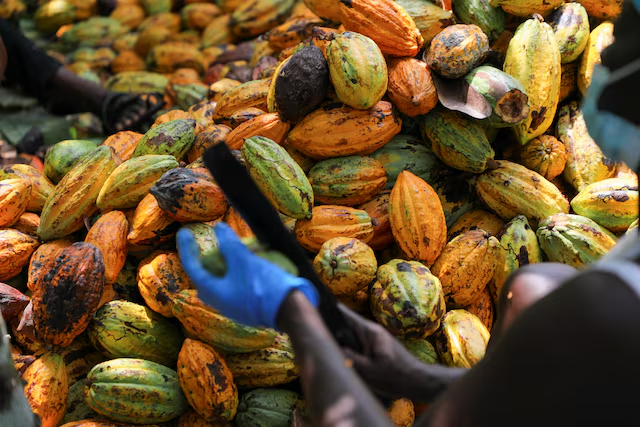
ACCRA, May 21 – Ghana plans to call on global cocoa buyers and chocolate manufacturers to invest directly in African cocoa farms as producing countries face rising costs tied to sustainable production and regulatory compliance.
The proposal is expected to form a central part of discussions at the 2027 World Cocoa Foundation Partnership Meeting, which will be hosted in Accra for the first time since the summit was established roughly two decades ago.
Randy Abbey, chief executive of the Ghana Cocoa Board, said producing countries should no longer carry the financial burden of maintaining a viable and sustainable cocoa industry alone.
“The quest for a financially viable industry cannot and should not be the sole burden of producing countries,” Abbey said during the summit launch ceremony.
Ghana intends to advocate for a broader financing model involving international chocolate companies, cocoa traders and global buyers.
The country’s proposals are expected to include investment in replanting aging cocoa farms, replacing diseased trees, improving farm productivity and supporting sustainability programmes.
Ivory Coast and Ghana together account for roughly 60% of global cocoa production, yet much of the sector remains dominated by smallholder farmers with relatively low incomes despite the global cocoa industry generating an estimated $100 billion annually.
Both governments currently spend hundreds of millions of dollars each year supporting farmers through fertilizer distribution, seedlings, disease management and regulatory compliance programmes.
The summit is also expected to address the financial implications of the European Union’s new deforestation regulations, which require cocoa imported into Europe to be fully traceable and verified as deforestation-free.
The rules are scheduled to take effect later this year and are expected to increase compliance costs across cocoa-producing countries.
Abbey said sustainability compliance costs should not disproportionately burden poor farmers and producing nations.
“We need a fair, transparent pricing structure that reflects the true cost of sustainable production,” he said.
The push for greater buyer participation comes after a period of sharp volatility in global cocoa markets.
Cocoa prices surged to record highs in late 2024 before falling sharply, creating financial disruptions across supply chains in both Ghana and Ivory Coast.
The market instability has also prompted discussions around reforming domestic cocoa pricing systems in the two countries.
Authorities are now considering more flexible pricing mechanisms that adjust more frequently to global market movements rather than maintaining largely fixed seasonal prices.
The debate reflects growing pressure across Africa’s agricultural commodity sectors for fairer value distribution and increased local participation in global supply chains.
