
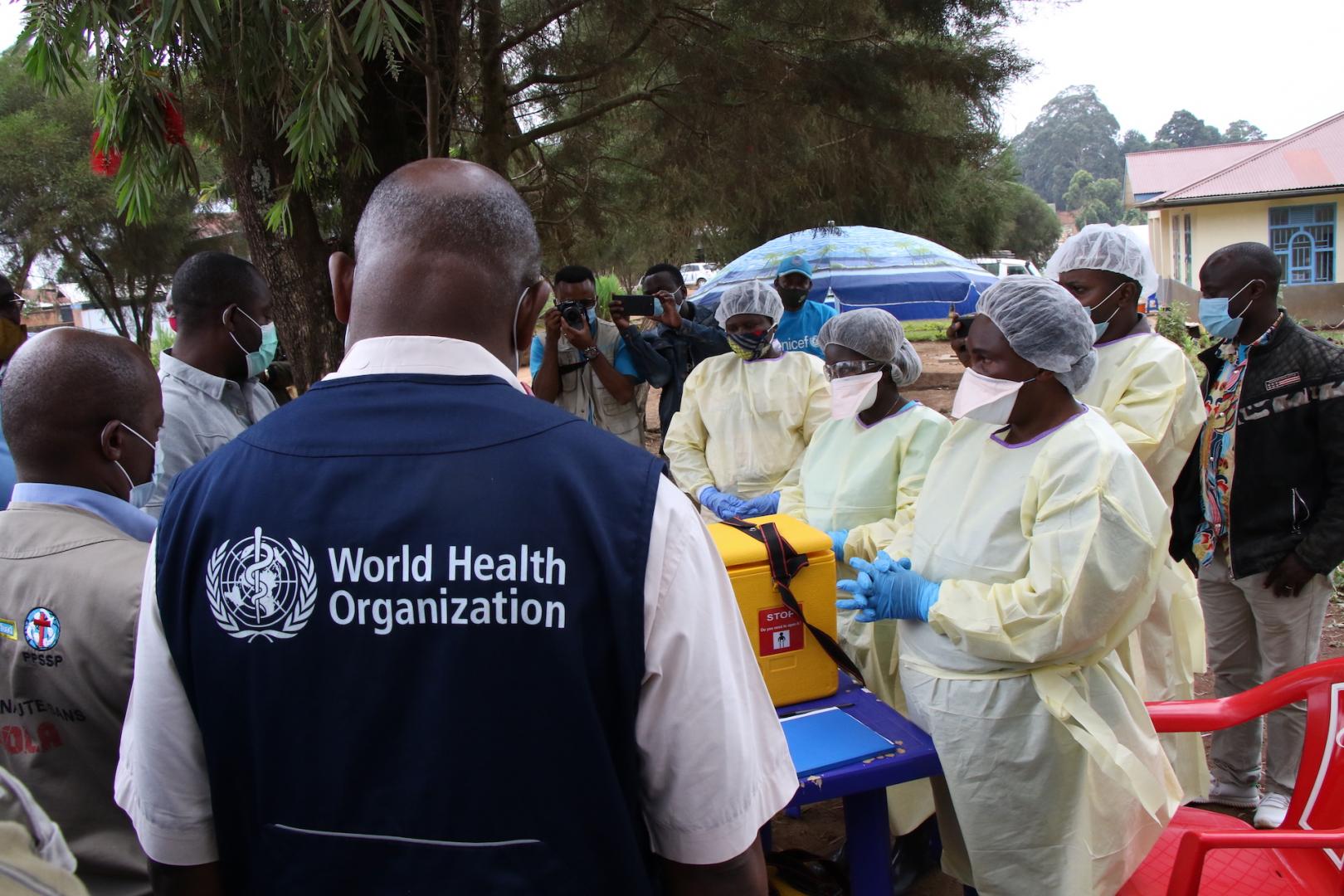
KINSHASA, May 17 – The World Health Organization has declared the Ebola outbreak affecting Democratic Republic of Congo and Uganda a public health emergency of international concern following rising fatalities and confirmed cross-border transmission.
The outbreak, linked to the Bundibugyo strain of the Ebola virus, has resulted in at least 80 suspected deaths, nine laboratory-confirmed cases and 246 suspected infections, according to WHO data released Sunday.
The agency said the outbreak does not currently meet the threshold for a pandemic emergency, though countries bordering the DRC face a high risk of further spread.
Most cases have been concentrated in the DRC’s eastern Ituri Province across the Bunia, Rwampara and Mongbwalu health zones.
A ninth confirmed case was reported in the eastern Congolese city of Goma, according to a statement issued by M23 rebel authorities.
The WHO warned that the outbreak could be significantly larger than currently documented due to rising suspected infections and a high positivity rate among tested samples.
The Bundibugyo strain presents an additional challenge because there are currently no approved vaccines or therapeutics specifically designed for the variant, unlike the more common Ebola-Zaire strain responsible for most previous outbreaks in Congo.
The outbreak marks the country’s 17th Ebola epidemic since the virus was first identified in 1976.
Health officials confirmed that international transmission has already occurred.
In Kampala, two laboratory-confirmed Ebola cases, including one death, were linked to travelers arriving from the DRC.
Another confirmed infection was reported in Kinshasa involving an individual who had traveled from Ituri Province.
The WHO urged countries to strengthen border screening measures, activate emergency-response mechanisms and intensify surveillance across internal transport corridors.
The agency also advised that confirmed cases and identified contacts should avoid international travel unless medically evacuated, with monitoring recommended for 21 days following exposure.
At the same time, the WHO cautioned governments against closing borders or imposing trade restrictions, warning such actions could encourage informal and unmonitored crossings that may worsen transmission risks.
Africa Centres for Disease Control and Prevention Director-General Jean Kaseya said the agency is assessing whether the outbreak should also be classified as a continental public health emergency.
Ebola is a severe viral hemorrhagic disease that spreads through direct contact with infected bodily fluids, contaminated materials or deceased victims. Symptoms include fever, vomiting, diarrhea and severe body pain.
The DRC’s dense tropical forests are considered a natural reservoir for the Ebola virus, contributing to repeated outbreaks in the region over recent decades.
