
– Business, Finance, Markets & Economic News
  • Home
  • Economy
  • Business
  • Markets
  • Finance
  • Credit Ratings
  • Policy
  • Tech
– Business, Finance, Markets & Economic News
  • Home
  • Economy
  • Business
  • Markets
  • Finance
  • Credit Ratings
  • Policy
  • Tech
Top News
Uganda Signs Crude Oil Marketing Agreement with Vitol as Country Prepares for First Oil Exports
How Nigeria’s Industrial Policy Turned Dangote and Others Into Manufacturing Giants
Ramaphosa Courts Silicon Valley Investment, Cites $74 billion Infrastructure Programme
Nigeria Launches 2026 Oil and Gas Licensing Round Portal, Offers 40 Blocks
African Export-Import Bank Raises $478 million Through Third Samurai Bond Issuance
EBRD to Expand Investment in Côte d’Ivoire with €250 Million Pipeline During Presidential Visit
Dangote Proposes 1,000km Highway to Connect Five West African Economies
Kenya Forex Reserves Decline to $13.95 Billion as Import Cover Falls to 5.6 Months
AfDB and Morocco Mobilize More Than €2 Billion for Transport Infrastructure
Kenya Commences Turkana Oil Operations, First Production Expected December 1
Dangote Refinery Raises Nigeria Petrol Supply by 12% as Imports Climb 47% in October
ExxonMobil Approves $4 Billion Angola Oilfield Redevelopment as Block 15 Makes New Discovery
Zimbabwe Revises Lithium Export Tax Formula to Capture More Downstream Value
Gabon Seeks IMF Programme Deal in December 2026 as Eurobonds Rally
African Pension Funds Grow as OECD Highlights Investment Gaps Across Markets
SUBSCRIBE
– Business, Finance, Markets & Economic News
Subscribe
– Business, Finance, Markets & Economic News
  • Home
  • Economy
  • Business
  • Markets
  • Finance
  • Credit Ratings
  • Policy
  • Tech
Copyright 2026 - All Right Reserved
Energy

Nigeria Suspends Gasoline Import Licenses as Dangote Refinery Dominates Supply

by Emmanuel Ebube March 11, 2026
written by Emmanuel Ebube March 11, 2026
FacebookTwitterLinkedinEmail
234

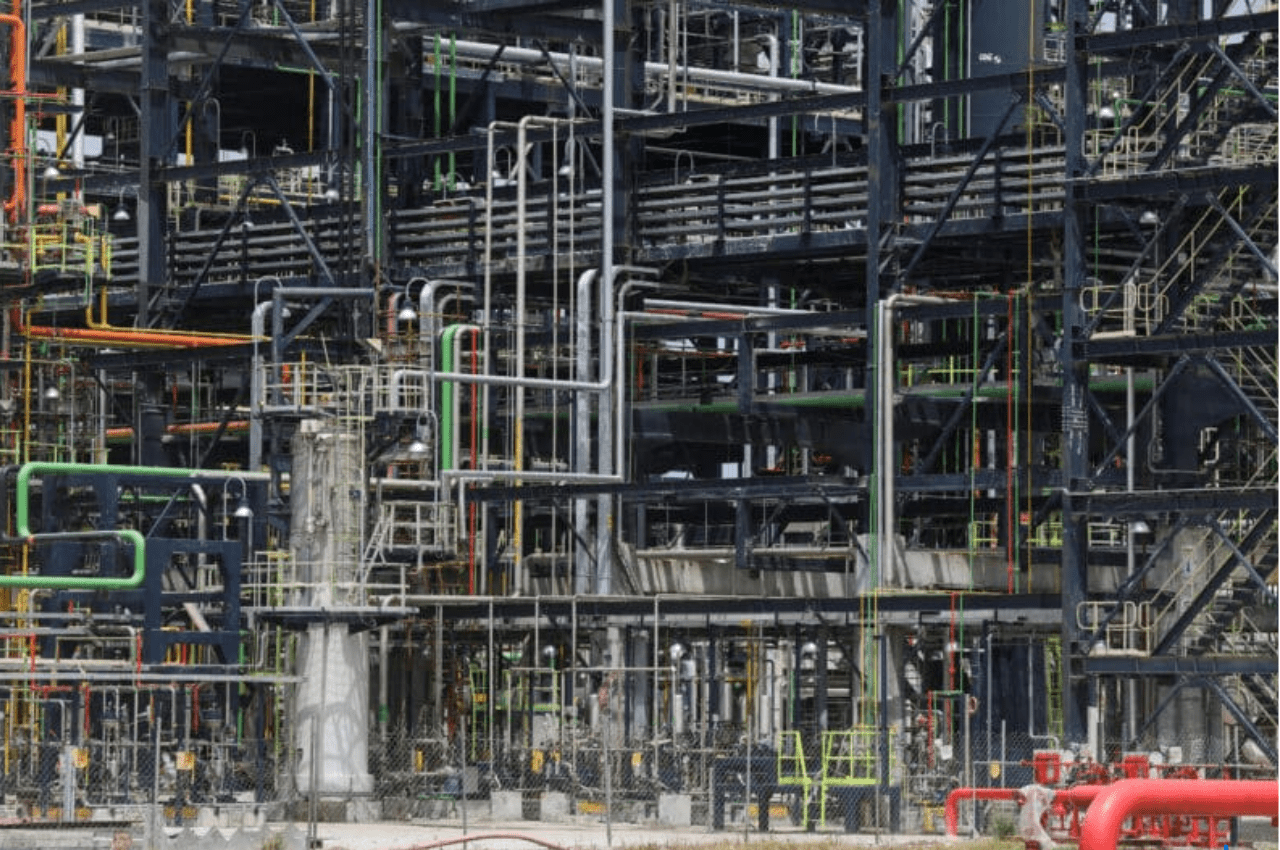
LAGOS, Mar 11 – Nigeria has suspended the issuance of gasoline import permits in a move that strengthens the position of the massive refinery controlled by billionaire Aliko Dangote.

Data from the Nigerian Midstream and Downstream Petroleum Regulatory Authority shows that nearly all gasoline supplied within the country in February originated from the Dangote Refinery.

Under the new policy, import permits will only be granted when domestic production cannot meet demand. Authorities say this condition does not currently apply, meaning fresh import licenses are effectively on hold.

Several oil marketing companies that previously imported fuel have seen their licenses suspended. These include a local subsidiary of TotalEnergies as well as Conoil Plc and MRS Nigeria Plc. The firms had collectively supplied about 38% of Nigeria’s gasoline imports as recently as January.

You Might Be Interested In
  • South Africa’s Sasol Secures EU Certification for Sustainable Jet Fuel Exports

Dangote had previously challenged the continuation of fuel imports through legal action against the regulator, the Nigerian National Petroleum Company Limited and several importers. He later withdrew the lawsuit after relations with government authorities improved.

The refinery, located near Lagos, has a processing capacity of about 650,000 barrels of crude oil per day. According to regulators, the facility is currently operating at roughly 78% capacity.

In February, the refinery met approximately 64% of Nigeria’s gasoline demand. The remaining supply gap, estimated at around 20 million liters per day, was covered using previously imported fuel inventories.

Before the refinery began operations, Nigeria had long exported crude oil while relying heavily on imported refined petroleum products, despite being Africa’s largest crude producer.

Energy analysts say the policy shift helps protect the investment case for domestic refining. Years of government incentives and tax concessions were introduced to encourage projects such as the Dangote refinery.

However, some experts warn that supply gaps could still influence pump prices, especially as global energy markets remain volatile due to geopolitical tensions in the Middle East.

The recent conflict involving the United States, Israel and Iran has already disrupted global oil markets, pushing prices higher and prompting several fuel price adjustments in Nigeria.

Read Next

  • Africa Finance Corporation Says Dangote Investments Are Critical to Africa’s Industrial Growth

    September 4, 2026
  • South African Rand Jumps, Bonds and Stocks Rally After Middle East Ceasefire

    April 8, 2026
  • Kenya Approves $350 Million Financing for Kenya Airways as Restructuring Advances

    October 9, 2026
  • US and Indian Consortium Targets 2027 Restart for Chemaf Mines in Congo

    April 23, 2026
  • Morocco Inflation Rises as Higher Fuel Costs Push Up Transport Prices

    May 22, 2026

Newsletter

Subscribe to our newsletter for trusted insights on Africa’s economies, markets, and business.

African Economy Inc. Logo

About Us

We are a business and economic intelligence platform delivering in-depth reporting, analysis, and insights on markets, companies and economic developments across Africa.

Our Company

  • AI Disclosure Policy
  • About
  • Editorial Standard
  • Partnerships
  • Advertise With Us
  • Careers
  • Ownership

News

  • Economy
  • Business
  • Markets
  • Finance
  • Credit Ratings
  • Policy
  • Tech

Useful Links

  • Privacy Policy
  • Terms of Use
  • Closed Captioning Policy
  • Accessibility Statement
  • Personal Information
  • Data Tracking
  • Register New Account

Subscribe Newsletter

Subscribe to our newsletter for trusted insights on Africa’s economies, markets, and business.

©2026 Majons Media Inc. All Rights Reserved.

Facebook Twitter Instagram Linkedin
Manage Consent
To provide the best experiences, we use technologies like cookies to store and/or access device information. Consenting to these technologies will allow us to process data such as browsing behavior or unique IDs on this site. Not consenting or withdrawing consent, may adversely affect certain features and functions.
Functional Always active
The technical storage or access is strictly necessary for the legitimate purpose of enabling the use of a specific service explicitly requested by the subscriber or user, or for the sole purpose of carrying out the transmission of a communication over an electronic communications network.
Preferences
The technical storage or access is necessary for the legitimate purpose of storing preferences that are not requested by the subscriber or user.
Statistics
The technical storage or access that is used exclusively for statistical purposes. The technical storage or access that is used exclusively for anonymous statistical purposes. Without a subpoena, voluntary compliance on the part of your Internet Service Provider, or additional records from a third party, information stored or retrieved for this purpose alone cannot usually be used to identify you.
Marketing
The technical storage or access is required to create user profiles to send advertising, or to track the user on a website or across several websites for similar marketing purposes.
  • Manage options
  • Manage services
  • Manage {vendor_count} vendors
  • Read more about these purposes
View preferences
  • {title}
  • {title}
  • {title}
– Business, Finance, Markets & Economic News
  • Economy
  • Business
  • Markets
  • Banking & Finance
  • Energy
  • Tech
  • Policy
  • African Economy Inc.