
LAGOS, Nov 22 – Nigeria’s industrial landscape has been reshaped over the past two decades by a policy approach designed to make domestic manufacturing more attractive than importing finished products.
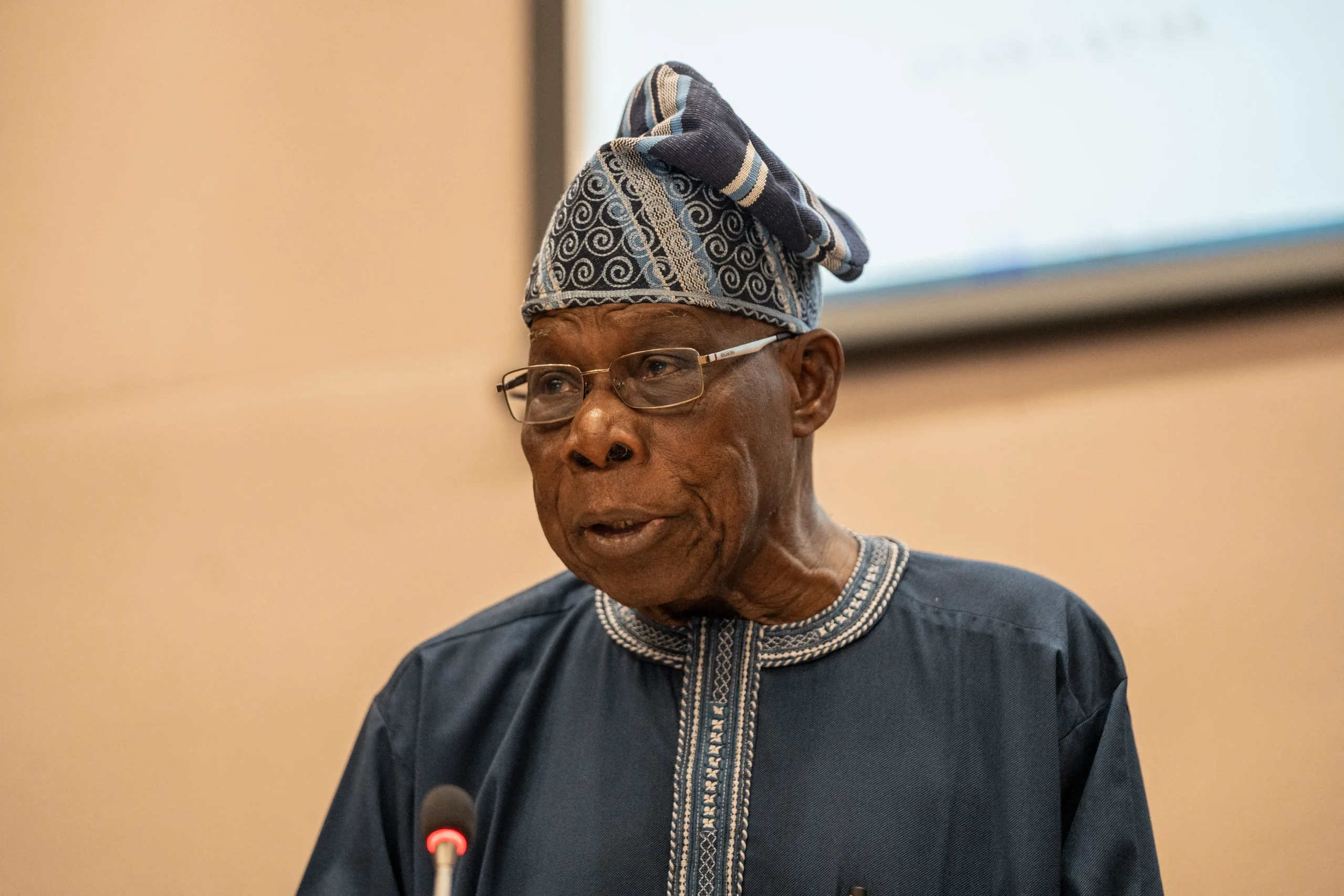
One of the most consequential expressions of this approach began under President Olusegun Obasanjo in 2002, when his administration introduced the Backward Integration Policy for the cement industry.
The policy helped alter the economics of a sector in which Nigeria had substantial limestone deposits and a history of domestic production, yet continued to depend heavily on imported cement.
The intervention coincided with a period of aggressive investment by Nigerian industrial groups. Dangote, which had built its commercial position through trading and importing, expanded into large-scale cement manufacturing. BUA Group developed its own production capacity, while other companies invested in domestic industrial assets and supply chains.
The policy approach later found expression in other sectors, including sugar and rice, although the instruments and results differed. Sugar refining expanded, but domestic cane production remained far below national requirements.
Rice cultivation and milling grew, supported by trade restrictions and agricultural financing programmes, but the sector continued to face constraints in productivity, logistics and the supply of quality paddy.
The record is therefore more complex than a simple account of import substitution. Nigeria succeeded in building substantial industrial capacity in some areas, particularly cement. It was less successful in developing the agricultural and supporting industrial systems required to sustain production across the wider economy.
Nigeria’s backward integration strategy
The origins of Nigeria’s modern backward integration drive can be traced to the return to democratic government in 1999 and the industrial policy direction adopted by President Olusegun Obasanjo.
Obasanjo’s administration inherited an economy in which several manufacturing industries had been weakened by years of underinvestment, inconsistent policy and dependence on imported finished products. The government’s response included a broader effort to encourage private investment, revive industrial capacity and reduce the country’s exposure to imports.
Cement became one of the earliest and most important tests of that approach.
Despite possessing substantial limestone reserves and having established cement factories dating back to the 1950s, Nigeria remained a major importer. Existing plants were not producing enough to meet domestic demand, while importation offered established businesses a relatively attractive commercial alternative to the capital-intensive process of building factories.
The problem reportedly came into focus in a conversation between Obasanjo and Aliko Dangote, then a major cement importer. According to research published in the Journal of Development Studies in 2025, Obasanjo questioned why Nigeria, which had begun producing cement around the same period as Egypt, was still importing rather than exporting the product. Dangote’s reported response was that importing and selling cement was more profitable than manufacturing it.
The exchange illustrated the commercial incentives confronting domestic industry. Where importing offered a more predictable return than investing in factories, private capital had little reason to assume the risks associated with long-term manufacturing.
The Obasanjo administration’s response was the introduction of the Cement Backward Integration Policy in 2002. Under the framework, access to cement import licences was increasingly linked to commitments by companies to establish domestic production capacity. The government also used trade restrictions and fiscal incentives to encourage investment in local manufacturing.
The administration’s wider reform programme included the privatisation of publicly owned cement assets, creating opportunities for private investors to acquire and rehabilitate existing industrial facilities. The privatisation of companies such as Benue Cement Company, Ashaka Cement and the Cement Company of Northern Nigeria formed part of the changing ownership structure of the industry.
Importantly, the Backward Integration Policy was not contained in one comprehensive policy document. It developed through a series of fiscal and trade measures introduced by the Obasanjo administration and subsequently maintained or adjusted by later governments. Its implementation therefore extended beyond the original political leadership that introduced it.
The policy was also not a standalone explanation for the industry’s eventual expansion. Privatisation, rising domestic construction demand, access to finance, infrastructure investment and the capabilities of private operators all contributed to the outcome.
Nevertheless, Obasanjo’s administration established a critical principle: access to the domestic market could be used as an instrument to encourage investment in local productive capacity.
That principle became an important feature of Nigeria’s subsequent industrial policy.
Dangote’s transition from importer to industrial manufacturer
The expansion of Dangote Cement is perhaps the clearest corporate example of the opportunities created by Nigeria’s shift towards domestic manufacturing.
However, the distinction between the company’s existing commercial position and the effect of government policy is important. Dangote did not emerge as a major business because of the 2002 policy. The group had been active in trading and importing commodities for decades, and its entry into cement manufacturing began before the policy was introduced.
In 2000, Dangote acquired Benue Cement Company. It subsequently acquired Obajana Cement in 2002, laying the foundation for what would become one of Africa’s largest cement businesses.
The investment strategy marked a transition from importing and distributing cement to controlling the production process. Rather than relying principally on imported finished products, the group began building an integrated manufacturing operation around Nigeria’s domestic limestone resources.
Construction of the Obajana plant began in 2004, with the facility commissioned in 2007. Its initial two production lines provided approximately five million tonnes of annual capacity. Further investment expanded the site, while the commissioning of the Ibese plant in 2012 added another major production base.
Dangote Cement’s Nigerian operations subsequently expanded across Obajana, Ibese, Gboko and Okpella. The company’s reported installed capacity in Nigeria reached approximately 35.25 million tonnes per annum by 2021 and remained at that level through 2024 in the capacity series cited by CardinalStone.
The expansion changed the economics of the Nigerian cement market. Domestic manufacturers increasingly replaced imported cement, while local production capacity grew sufficiently to support exports to neighbouring African markets.
The company also developed export infrastructure, including terminals serving regional markets. This was a significant change from the earlier model in which Nigeria depended on imported cement to meet domestic construction requirements.
The wider industry experienced a substantial increase in installed capacity. Data cited in Dangote Cement’s securities documentation show that domestic installed capacity rose from approximately 3.67 million tonnes per annum in 2002 to 48.7 million tonnes in 2019 and about 50.9 million tonnes in 2020.
Actual production, however, remained below installed capacity. US Geological Survey estimates put Nigerian cement production at 26.2 million tonnes in 2020, 28 million tonnes in 2021, 29 million tonnes in 2022, 28 million tonnes in 2023 and 30 million tonnes in 2024.
The difference between installed capacity and actual output is important. It indicates that building factories is only one part of industrial development. Energy costs, plant utilisation, distribution, construction demand and the wider operating environment determine how much of that capacity can be converted into marketable production.
For Dangote, the policy environment helped make large-scale investment more commercially attractive. It reduced the competitive pressure from imported finished cement and gave manufacturers a stronger basis for committing capital to domestic production.
The company’s expansion was also supported by its financial resources, ability to mobilise local and international capital, access to limestone deposits and capacity to execute large industrial projects.
The lesson is not that government policy created Dangote Cement. It is that policy helped change the incentives under which the company and its competitors made long-term investment decisions.
BUA and the emergence of a second major domestic cement producer
Dangote’s expansion was not the only significant corporate response to Nigeria’s cement industrialisation strategy. BUA Group also developed a substantial position in the sector, becoming one of the country’s leading cement manufacturers.
The company’s cement business expanded through investment in production facilities, acquisitions and new capacity. Its operations in Sokoto and Edo helped establish a manufacturing footprint that increasingly challenged the existing market structure.
BUA Cement’s installed capacity increased from approximately 11 million tonnes per annum in 2021 to 17 million tonnes in 2024, following the addition of production lines in Sokoto and Edo. The company’s 2024 annual report also outlined plans for a further three-million-tonne plant, which would take its capacity towards 20 million tonnes per annum.
The expansion illustrates how the policy environment helped create opportunities for more than one domestic industrial group. While Dangote became the largest producer, BUA’s investment demonstrated that the Nigerian market could support another major manufacturing platform.
The presence of multiple producers is economically important. Industrial policy that succeeds in creating domestic capacity but leaves the market excessively concentrated can produce a different set of challenges, particularly around pricing, competition and the distribution of benefits.
By the end of 2024, industry estimates placed Nigeria’s installed cement capacity at approximately 65 million tonnes per annum, against demand of about 32 million tonnes. These figures suggest that the country had moved beyond the earlier problem of insufficient installed capacity, although actual production and effective utilisation remained separate questions.
The next phase of the industry will therefore depend not simply on adding more factories, but on improving efficiency, strengthening competition, managing energy costs and expanding access to regional export markets.
Sugar: Refining capacity without sufficient domestic cane production
The sugar industry offers a different perspective on the limits of Nigeria’s backward integration approach.
Unlike cement, where domestic limestone provided an accessible raw material base for large-scale manufacturing, sugar production depends on a more complex agricultural system. Refining capacity must be supported by reliable supplies of sugarcane, suitable land, irrigation, agricultural inputs, transport infrastructure and processing facilities.
Nigeria’s sugar industrialisation programme gathered momentum after the government directed the National Sugar Development Council to develop a framework for achieving domestic self-sufficiency. The resulting Nigeria Sugar Master Plan was developed after 2008, published in 2012 and launched in 2013.
The programme sought to reduce the country’s dependence on imported raw sugar by encouraging investment in domestic sugarcane cultivation and processing. Its ambitions included the development of large-scale plantations, new sugar factories and supporting infrastructure.
The plan envisaged approximately 28 sugar factories and 250,000 hectares of sugarcane cultivation. It also introduced an incentive structure intended to encourage companies importing raw sugar to invest in domestic production.
The policy framework was subsequently extended, with the current programme horizon running to 2033. Major industrial groups responded by investing in sugar refining and backward integration projects.
Dangote Sugar Refinery expanded its refining operations and pursued investments in domestic sugarcane production, including the Savannah Sugar Company in Adamawa State and the development of a sugar project in Nasarawa State.
The company’s 2024 annual report outlined a long-term target of producing 700,000 tonnes of refined sugar annually from its backward integration operations by 2031/32. Its plans included expanding the Numan operation, developing a power plant and redesigning the Nasarawa project around a large processing facility and extensive cane cultivation.
Flour Mills of Nigeria also developed its sugar operations through the Sunti Golden Sugar Estate in Niger State. The project combined sugarcane cultivation with processing infrastructure, while the company’s Lagos refinery provided a significant downstream refining operation.
BUA Foods developed another major sugar refining business, adding to the industry’s domestic processing capacity.
The result was a substantial expansion of refining infrastructure. National Sugar Development Council figures put installed refinery capacity at approximately 1.44 million tonnes per annum for Dangote Sugar, 1.5 million tonnes for BUA Foods and 750,000 tonnes for Golden Sugar.
These figures describe refining capacity, not domestic sugar production. The distinction is central to understanding the industry’s performance.
Despite significant investment in refineries, Nigeria continued to import most of the sugar required by domestic consumers and manufacturers. National Sugar Development Council data show that domestic production remained a small fraction of consumption.
In 2023, for example, domestic sugar production was approximately 30,053 tonnes, compared with reported consumption of about 1.44 million tonnes. Imports accounted for approximately 1.41 million tonnes.
The figures reveal a persistent gap between the capacity to refine imported raw sugar and the capacity to produce sugar from domestic cane.
Nigeria has therefore built substantial downstream processing infrastructure without developing an agricultural supply base at a comparable scale.
The challenges are not limited to land availability. Sugarcane production requires sustained investment in agricultural development, water management, farm mechanisation, rural infrastructure and reliable access to finance. Projects also face land acquisition and community relations issues, while delays in developing plantations can undermine the economics of processing facilities.
The sugar experience highlights a central weakness in the country’s industrial policy approach. Fiscal incentives and import restrictions can encourage investment in factories, but they cannot independently create the agricultural productivity required to supply them.
Rice: Industrial policy meets agricultural productivity
Rice provides another example of how Nigeria attempted to connect domestic production with industrial processing. The sector’s policy framework became more interventionist during the 2010s, as the government sought to reduce imports, encourage local milling and increase domestic paddy production.
In 2014, the government introduced a tariff framework that offered more favourable import conditions to investors demonstrating commitments to backward integration and domestic milling capacity. Under the framework, qualifying investors faced a lower import duty and levy than traders without comparable local investment commitments.
The Central Bank of Nigeria subsequently restricted access to official foreign exchange for rice imports in June 2015. In November of the same year, it launched the Anchor Borrowers’ Programme, which sought to connect smallholder farmers with processors through financing, inputs and structured off-take arrangements.
These measures were intended to address two connected constraints: dependence on imported rice and insufficient domestic supply of paddy for industrial mills.
The policy environment attracted investment from large agricultural and food-processing companies.
Olam Agri and integrated rice processing
Olam Agri became one of the most prominent investors in integrated rice production. Its Nigerian operations combined farming and processing, including a large-scale project in Nasarawa State.
Central Bank reporting documented a major integrated rice investment by Olam Farms Nigeria, including a reported processing capacity of 210,000 tonnes annually and a 10,000-hectare farm. Other Central Bank reporting separately referred to the commissioning of a 105,000-tonne integrated mill in Nasarawa. These figures relate to reported project components and should not be treated as interchangeable measures of a single facility’s output.
Olam’s investment illustrates the potential for large agricultural companies to connect domestic farming with industrial processing. It also demonstrates that Nigeria’s market attracted international agribusiness capital alongside investment from domestic conglomerates.
Dangote’s proposed rice investment
Dangote Industries also announced plans for a major rice investment. The proposed project included a reported US$1 billion commitment, 150,000 hectares across five states and two mills with a combined processing capacity of 240,000 tonnes of paddy.
The proposal reflected the scale of ambition surrounding domestic rice production, although an announced investment plan should not be confused with completed operating capacity.
Domestic production and continuing imports
Domestic rice production increased over the period. FAOSTAT-based estimates show Nigerian paddy production rising from approximately 4.47 million tonnes in 2010 to 9.13 million tonnes in 2024.
However, paddy production is not the same as milled rice output. Milling recovery rates, post-harvest losses, grain quality and processing efficiency all influence the quantity of rice ultimately available for consumption.
US Department of Agriculture estimates also indicate that Nigeria continued to rely on imports. For marketing year 2023/24, the USDA estimated milled rice production at approximately 5.23 million tonnes and imports at 1.9 million tonnes. Its estimates for 2024/25 placed domestic milled production at approximately 4.85 million tonnes and imports at 1.5 million tonnes.
These estimates demonstrate that domestic production has expanded, but import dependence has not disappeared.
Rice also differs from cement in the nature of its supply chain. Cement production depends heavily on mineral deposits, industrial energy and large-scale capital investment. Rice production depends on thousands of farms, seasonal cycles, rural infrastructure, irrigation, inputs, farmer productivity and the ability of processors to secure consistent supplies.
The result is a more fragmented production system, making coordination between farmers, aggregators, millers and distributors particularly important.
Import restrictions can support domestic processors by creating demand for local rice. But without improvements in agricultural productivity and processing quality, protection can also increase costs for consumers and encourage smuggling or informal trade.
The rice experience therefore reinforces the importance of designing industrial policy around the full production system rather than focusing exclusively on the processing stage.
Comparing the three sectors: Three different industrial outcomes
The contrasting experiences of cement, sugar and rice provide a useful framework for evaluating Nigeria’s backward integration strategy.
| Sector | Main policy framework | Industrial outcome | Principal limitation |
|---|---|---|---|
| Cement | Backward Integration Policy, introduced in 2002 | Installed capacity rose from 3.67 million tonnes per annum in 2002 to 48.7 million in 2019 | Market concentration, capacity utilisation and affordability |
| Sugar | Nigeria Sugar Master Plan, launched in 2013 | Significant refining infrastructure and private-sector investment | Domestic sugarcane production remains far below consumption |
| Rice | 2014 fiscal incentives, 2015 foreign-exchange restrictions and Anchor Borrowers’ Programme | Expansion of paddy production and domestic milling | High production costs, agricultural constraints and continuing import dependence |
The comparison reveals three distinct outcomes.
Cement achieved the strongest degree of industrial capacity expansion and import substitution. Nigeria possessed substantial limestone resources, domestic demand was large and growing, and production could be concentrated in major industrial facilities. Large companies also had the financial and organisational capacity to invest in captive power, transport infrastructure and distribution networks. Policy incentives, private investment, growing demand and economies of scale reinforced one another.
Sugar developed significant processing infrastructure without achieving agricultural self-sufficiency. The country attracted investment in refining and announced major sugar estate projects, but agricultural production did not expand sufficiently to supply domestic refineries. The resulting production structure combines industrial processing capacity with continued dependence on imported raw sugar.
Rice expanded domestic production without achieving complete market integration. Production increased and the country attracted investment in large-scale mills and integrated farming operations. However, production costs, insecurity, input constraints, logistics and informal imports continue to affect the market. The sector has made progress but has not established a sufficiently productive and competitive domestic supply chain to eliminate import dependence.
The companies behind Nigeria’s industrial transformation
The corporate experience is as important as the policy framework itself. Nigeria’s backward integration strategy relied heavily on private-sector companies to provide the capital, technology, management and operational capacity required to build domestic industries.
Dangote Industries provides the most prominent example of a diversified industrial strategy. Its investments across cement and sugar, alongside proposed agricultural projects, demonstrate the ambition to move from importing and trading into domestic manufacturing and integrated production.
BUA Group illustrates the expansion of domestic industrial capacity through acquisitions and new investments in cement, sugar refining and food processing.
Flour Mills of Nigeria demonstrates the role of established food and agricultural businesses in developing domestic supply chains, particularly through its Sunti Golden Sugar Estate and other agricultural investments.
Olam Agri shows how a large international agribusiness can respond to Nigeria’s domestic market opportunities by investing in integrated farming and processing.
These companies should not be treated as identical examples of policy success. Their investment decisions, business models and operating outcomes differ. Nor should all their growth be attributed to backward integration. Corporate expansion reflects access to capital, management capabilities, demand conditions, acquisitions, technology, infrastructure and broader market opportunities.
The policy created capacity, but the supply chains remain unfinished
Nigeria’s backward integration experience is one of the country’s most significant industrial policy experiments since the return to democratic government in 1999.
The role of President Olusegun Obasanjo in establishing the original cement policy in 2002 was central. His administration helped change the incentives facing cement importers and manufacturers, creating a framework that encouraged domestic investment and contributed to the transformation of the industry.
The subsequent expansion of Dangote Cement and BUA Cement demonstrates the scale of industrial capacity that can emerge when government policy aligns with private capital, domestic resources and sustained market demand.
But the experience of sugar and rice reveals the limitations of relying on manufacturing investment without equivalent progress in agricultural production and supporting infrastructure.
Nigeria has built factories, expanded refining and milling operations, and created major domestic industrial groups. Yet it continues to import substantial quantities of raw sugar and rice, illustrating the distance between processing capacity and genuine domestic self-sufficiency.
The central lesson is that industrialisation is not achieved simply by replacing imported finished goods with locally manufactured products. It requires the development of the entire chain, from raw materials and agriculture to processing, energy, logistics, finance and technology.
Obasanjo’s cement intervention demonstrated what targeted industrial policy could achieve. The challenge for Nigeria’s next phase is to reproduce that level of industrial commitment across sectors where the constraints are more complex, and to ensure that domestic capacity becomes internationally competitive rather than permanently dependent on protection.