
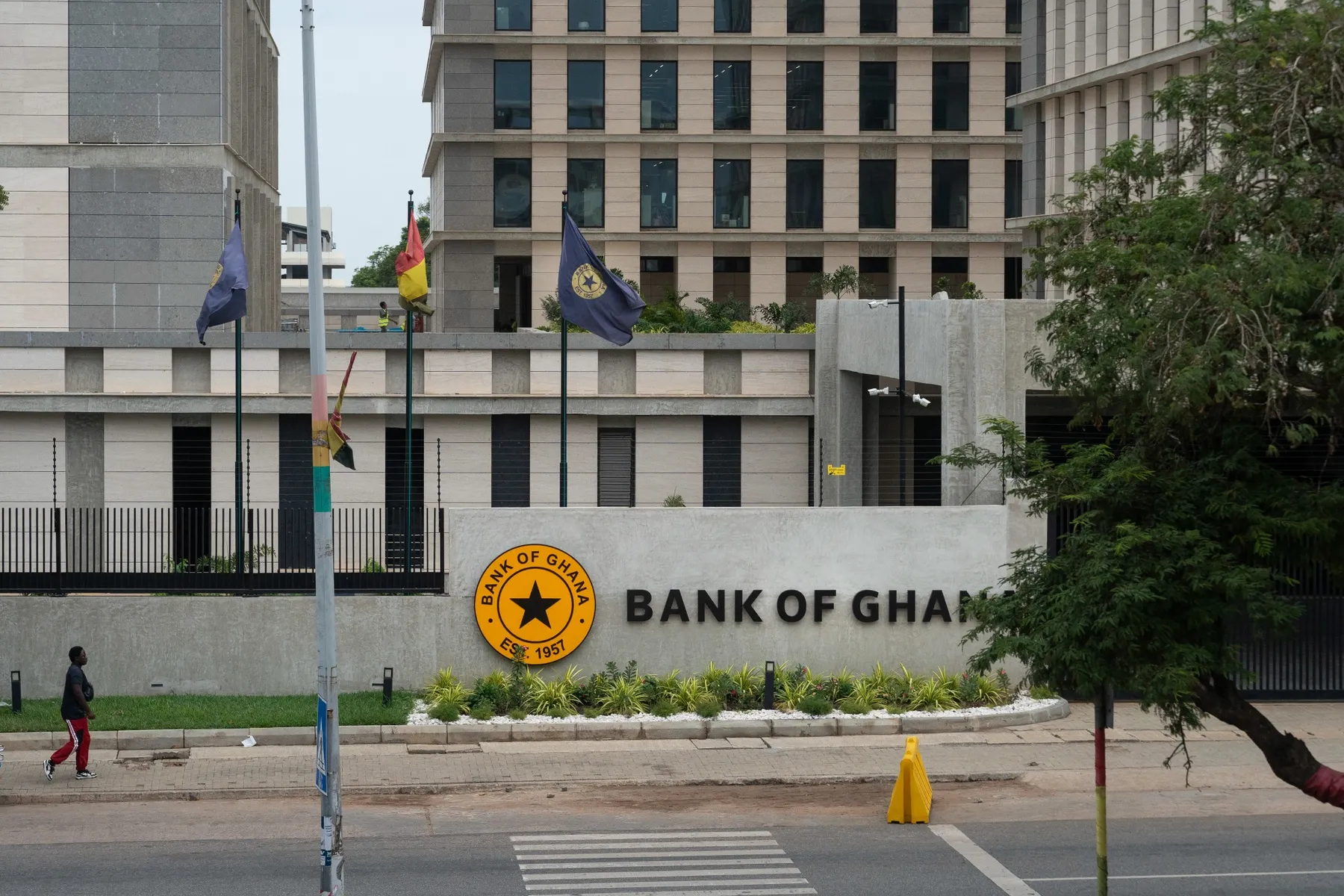
ACCRA, Nov 19 – The Bank of Ghana has cut its monetary policy rate by 300 basis points to 11%, citing a need to realign its official benchmark with prevailing market conditions, even as inflation increased for a third consecutive month in October.
The decision, announced on Wednesday, surprised economists surveyed by Reuters, who had expected the central bank to leave the rate unchanged. Annual inflation stood at 5.5% in October, remaining below the Bank of Ghana’s target range of 6% to 10%.
Governor Johnson Asiama said the reduction reflected a gap between the announced policy rate and the effective cost of borrowing in the market.
“Prevailing market rates have evolved at levels below the current monetary policy rate, indicating that the effective policy stance is actually lower than the announced rate,” Asiama told a press conference.
He said domestic macroeconomic conditions had improved, while the central bank would continue monitoring potential inflationary pressures from crude oil prices, the El Niño weather pattern and utility tariffs.
Central bank describes move as a realignment
The rate reduction drew questions from analysts, with Standard Chartered economist Razia Khan saying Asiama had gone to “great lengths to explain that this is not an easing”.
The Bank of Ghana’s explanation echoes the rationale given by the Central Bank of Nigeria when it reduced its benchmark interest rate by 350 basis points in September. Economists had also expected the Nigerian central bank to hold rates at the time.
However, the inflation trends in the two countries differed. Inflation was declining in Nigeria when the September reduction was announced, while Ghana’s inflation rate had risen for three consecutive months and could soon move into the Bank of Ghana’s 6% to 10% target range.
Ghana navigates post-IMF programme transition
Ghana, a major producer of gold, oil and cocoa, is emerging from its most severe economic crisis in decades.
The country’s $3 billion support programme with the International Monetary Fund ended earlier this year. Ghana is now engaging with the Fund through an arrangement that does not provide financing but involves regular IMF reviews.
The arrangement can help demonstrate the government’s commitment to economic reforms and provide reassurance to investors as the country manages its recovery.
The latest rate decision comes as the central bank balances improving domestic macroeconomic conditions against renewed inflationary risks, while seeking to align its official policy benchmark with movements in market interest rates.
