
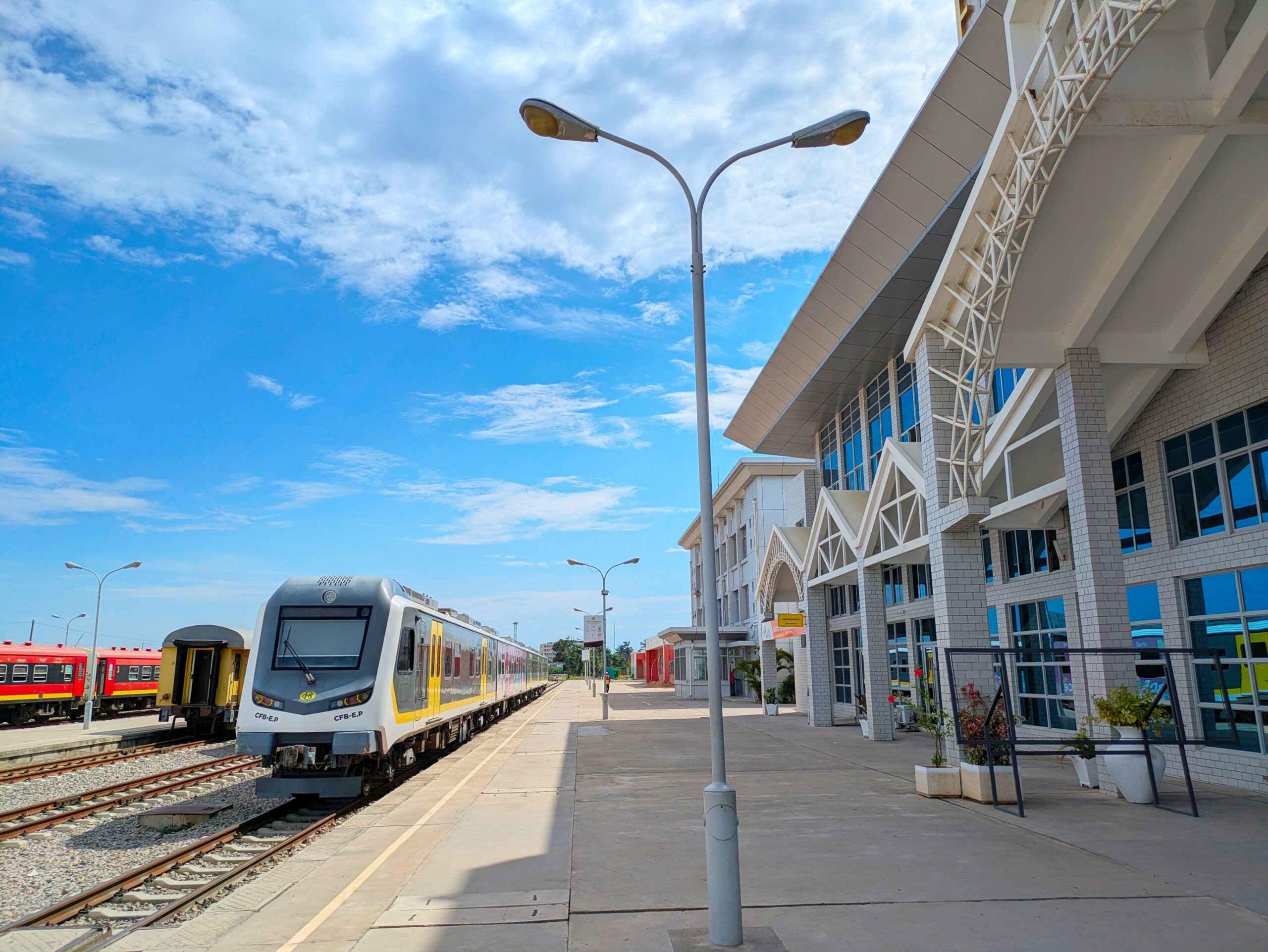
LUANDA, Oct 27 – Africa Finance Corporation (AFC) has selected preferred bidder groups that include Italy’s Webuild and Brazil’s Odebrecht Engenharia & Construção to build an 830 km section of the Lobito Corridor railway, a strategic infrastructure project linking Central Africa’s copper and cobalt-producing regions to Angola’s Atlantic coast.
The selected groups will negotiate engineering, procurement and construction (EPC) agreements for the Zambia Lobito Railway Project, which forms part of a planned 1,739 km railway connecting Kolwezi in the Democratic Republic of Congo (DRC) to the Port of Lobito in Angola.
Contract negotiations are scheduled to begin in November 2026, with the aim of concluding agreements within eight to 12 weeks, subject to satisfactory technical, commercial and legal negotiations.
Webuild, Mota-Engil SGPS and Türkiye’s IC Ictas are negotiating to construct the section running from Chingola in Zambia to the Angolan border. Mota-Engil and Odebrecht, a unit of Brazil’s Novonor, are in discussions over the section extending from the border to Luacano in Angola.
AFC President and Chief Executive Officer Samaila Zubairu said the selection marked a significant step towards implementation, with construction expected to begin within six to eight months.
“This is a significant step toward delivery,” Zubairu said in an interview. “It’s not going to be longer than six to eight months for us to start construction,” he said, declining to disclose the expected value of the contracts.
Mota-Engil is also involved in groups selected to build other sections of the wider railway corridor.
Strategic importance for critical minerals
The railway is intended to improve transport links between the mineral-producing regions of the DRC and Zambia and international markets through Angola’s Atlantic coast. Both countries are major copper producers, while the DRC is the world’s largest supplier of cobalt, a key material used in rechargeable batteries.
The United States has backed the wider corridor as part of efforts to diversify critical mineral supply chains and strengthen access to resources needed for the energy transition. The project is also viewed within the broader context of competition with China, which has a significant position across Africa’s critical minerals sector.
Beyond mineral exports, the new railway is expected to reduce logistics costs, improve market access and create opportunities for agricultural production, mineral processing and other industrial activities along the corridor.
The AFC said the project could unlock billions of dollars in economic value through expanded trade and industrialisation, enabling regional economies to capture more value from their natural resources.
“What we want to do is build infrastructure that will support the growth of African production,” Zubairu said. “We want African resources matched or tied to African producers, to African consumers and to global consumers as well.”
Project development and financing
AFC is developing the Zambia Lobito Railway Project through Trans African Rail Company FZCO (TARC), the project holding company, alongside Zambia Lobito Railway Limited and Zambia Lobito Railway S.A., the project companies.
The latest milestone follows the signing of a memorandum of understanding in October 2023 involving the governments of Angola and Zambia, the European Union, the United States government, the Italian government and the African Development Bank.
Subsequent progress has included feasibility and technical studies, concession agreements signed in 2024, intergovernmental agreements concluded in 2025 and the completion of preliminary engineering designs.
AFC and its partners have also advanced Environmental and Social Impact Assessments and Resettlement Action Plans, while preparing the competitive EPC tender process.
The project is a flagship initiative under Italy’s Mattei Plan for Africa, a government programme intended to strengthen investment and economic partnerships with African countries. Italy’s development finance institution, Cassa Depositi e Prestiti (CDP), has established a €250 million financing facility, backed by Italian export credit agency SACE, to support Italian participation in infrastructure projects, including the railway.
AFC has worked with the governments of Angola and Zambia to coordinate approvals, align project priorities and advance preparations for construction.
Once completed, the railway is expected to strengthen regional connectivity between Zambia and Angola, improve access to global markets and support the development of mineral processing, agriculture and other industries along the corridor. Its broader economic impact will depend on the successful completion of construction, supporting infrastructure and the development of commercial activity along the route.
