
– Business, Finance, Markets & Economic News
  • Home
  • Economy
  • Business
  • Markets
  • Finance
  • Credit Ratings
  • Policy
  • Tech
– Business, Finance, Markets & Economic News
  • Home
  • Economy
  • Business
  • Markets
  • Finance
  • Credit Ratings
  • Policy
  • Tech
Top News
Developing Countries’ External Debt Hits Record $9.4 Trillion in 2025, World Bank Warns
AngloGold Ashanti to Invest $900 Million in Gold Mine Expansions Across Africa and Brazil
AfDB Arranges $1.2 Billion Financing for Tanzania’s Tabora–Kigoma Standard Gauge Railway
Caledonia Mining Secures $150 Million Bridge Facility for Zimbabwe’s Bilboes Gold Project
AfDB President Calls for New African Financial Architecture to Accelerate Private-Sector Growth
US and Egypt Sign $125 Million Agreement to Expand Private-Sector Opportunities
Ethiopia Becomes Africa’s Fifth-Largest Economy After GDP Rebasing to $210.7 Billion
CANEX WKND 2026: Afreximbank Pushes Financing and Market Access for Africa’s Creative Industries
World Bank’s IFC Says Africa Needs Deeper Financial Markets to Mobilize Private Capital at Scale
Dangote Explores Cross-Border Share Trading as Refinery IPO Attracts $4.77 Billion in Orders
OPay Suspends $304 Million US IPO Following Chinese Regulatory Inquiry
Egypt Raises $500 Million Through International Bond Market Reopening
Ramaphosa Sees Opportunity to Reset South Africa-US Relations After Midterm Elections
Ghana Inflation Rises for Third Consecutive Month to 5.5% in October 2026
Dangote Unveils $2.5 Billion Namibia Fuel Storage and Regional Pipeline Project
SUBSCRIBE
– Business, Finance, Markets & Economic News
Subscribe
– Business, Finance, Markets & Economic News
  • Home
  • Economy
  • Business
  • Markets
  • Finance
  • Credit Ratings
  • Policy
  • Tech
Copyright 2026 - All Right Reserved
Home » Economy » Nigeria Targets Single-Digit Inflation Before End-2027, Finance Minister Says
Economy

Nigeria Targets Single-Digit Inflation Before End-2027, Finance Minister Says

by Emmanuel Ebube October 26, 2026
written by Emmanuel Ebube October 26, 2026
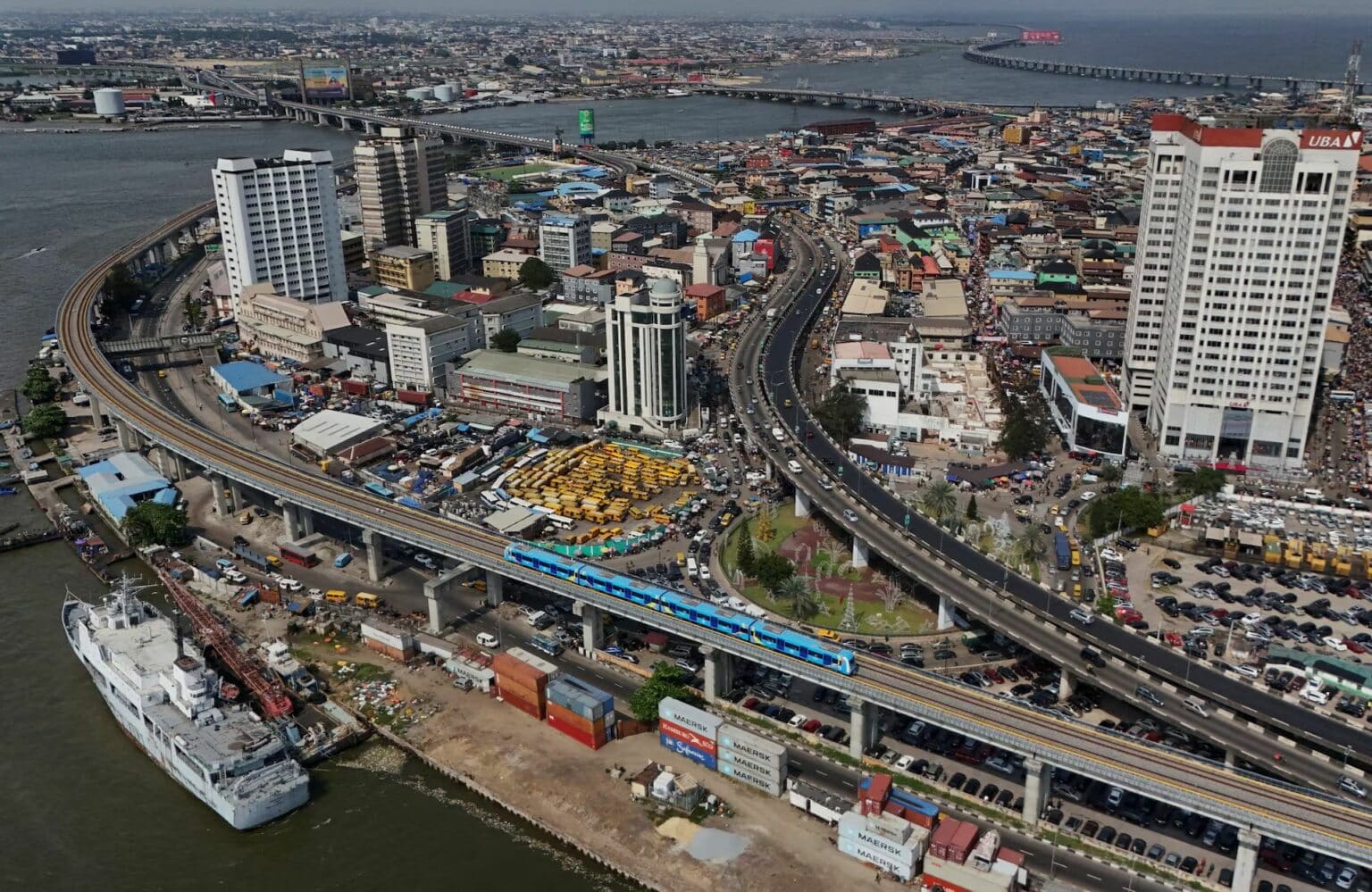
A drone view of the Marina in Lagos, Nigeria, December 2, 2025. REUTERS
FacebookTwitterLinkedinEmail
20

ABUJA, Oct 26 – Nigeria aims to reduce inflation to single digits before the end of 2027, creating room for significantly lower interest rates to reduce borrowing costs and support economic growth, Finance Minister Taiwo Oyedele said on Monday.

Speaking at the Nigeria Economic Summit, Oyedele argued that lower financing costs could unlock investment and expand economic activity, particularly as businesses currently face borrowing rates far above the country’s economic growth rate.

“If you are growing ​at 4.43% and borrowing at close to 30%, ​imagine what is possible when you borrow at ⁠single-digit rates,” Oyedele said.

Nigeria’s headline inflation remains around 15%, while the Central Bank of Nigeria’s benchmark interest rate stands at 23%. The combination has kept financing costs elevated and household purchasing power under pressure, with the country approaching a national election.

You Might Be Interested In
  • Ghana’s Economy Grew 6.4% in the First Quarter, Here’s What’s Actually Driving It

Oyedele said the government’s economic reforms were already delivering benefits but that policymakers wanted to accelerate progress so household incomes could rise faster than prices. Lower inflation and interest rates, he said, would help stimulate investment and accelerate growth.

The proposed inflation target represents a significant ambition for an economy that has experienced persistent price pressures following major policy changes, including the removal of fuel subsidies and the devaluation of the naira.

Balancing reforms with cost-of-living pressures

Since President Bola Tinubu took office in 2023, his administration has implemented reforms aimed at improving public finances, strengthening foreign reserves and restoring investor confidence. These measures have included scrapping fuel subsidies and allowing a substantial adjustment in the exchange rate.

The reforms have improved aspects of the government’s fiscal position and financial outlook, but they have also contributed to a severe cost-of-living crisis, with households facing higher transport, food and other essential expenses.

Oyedele said policymakers were willing to adjust their approach where evidence showed that particular measures were not working. He also urged critics to engage with the details of government policy rather than rely on “emotion” or incomplete narratives.

Achieving single-digit inflation would require a sustained reduction in price pressures, potentially allowing monetary policymakers to ease interest rates if economic conditions permit. However, the government’s target does not guarantee that borrowing costs will fall to single-digit levels within the same period.

For businesses, lower interest rates could reduce financing costs, support capital expenditure and improve the viability of investments that are difficult to fund at current lending rates. The broader impact would depend on how quickly inflation declines, the response of monetary policy and whether banks pass lower funding costs on to borrowers.

Nigeria’s policy challenge is to sustain the gains from its economic reforms while easing the pressure on households and businesses. The pace of disinflation will be central to whether the government can achieve its 2027 target and create conditions for more affordable credit and stronger economic growth.

You may also like

Egypt and South Africa Push for Stronger Africa Trade Corridors at BRICS Summit

Read Next

  • Zambia Extends Fuel Tax Relief Until End of September

    July 3, 2026
  • Moody’s Revises South Africa Outlook to Positive as Reforms Gain Momentum

    May 23, 2026
  • Nigeria’s Tinubu Seeks Approval for $20.5 Billion and €1.04 Billion Borrowing Plan

    October 27, 2026
  • Nigeria Urges South Africa to Step Up Protection for African Migrants

    July 28, 2026
  • TotalEnergies to Invest $10 Billion in Angola as It Targets Sustained Oil Production

    September 10, 2026

Newsletter

Subscribe to our newsletter for trusted insights on Africa’s economies, markets, and business.

African Economy Inc. Logo

About Us

We are a business and economic intelligence platform delivering in-depth reporting, analysis, and insights on markets, companies and economic developments across Africa.

Our Company

  • AEI Intelligence
  • About
  • Editorial Standard
  • Partnerships
  • Advertise With Us
  • Careers
  • Ownership

News

  • Economy
  • Business
  • Markets
  • Finance
  • Credit Ratings
  • Policy
  • Tech

Useful Links

  • Privacy Policy
  • Terms of Use
  • Closed Captioning Policy
  • Accessibility Statement
  • Personal Information
  • Data Tracking
  • Register New Account

Subscribe Newsletter

Subscribe to our newsletter for trusted insights on Africa’s economies, markets, and business.

©2026 Majons Media Inc. All Rights Reserved.

Facebook Twitter Instagram Linkedin
Manage Consent
To provide the best experiences, we use technologies like cookies to store and/or access device information. Consenting to these technologies will allow us to process data such as browsing behavior or unique IDs on this site. Not consenting or withdrawing consent, may adversely affect certain features and functions.
Functional Always active
The technical storage or access is strictly necessary for the legitimate purpose of enabling the use of a specific service explicitly requested by the subscriber or user, or for the sole purpose of carrying out the transmission of a communication over an electronic communications network.
Preferences
The technical storage or access is necessary for the legitimate purpose of storing preferences that are not requested by the subscriber or user.
Statistics
The technical storage or access that is used exclusively for statistical purposes. The technical storage or access that is used exclusively for anonymous statistical purposes. Without a subpoena, voluntary compliance on the part of your Internet Service Provider, or additional records from a third party, information stored or retrieved for this purpose alone cannot usually be used to identify you.
Marketing
The technical storage or access is required to create user profiles to send advertising, or to track the user on a website or across several websites for similar marketing purposes.
  • Manage options
  • Manage services
  • Manage {vendor_count} vendors
  • Read more about these purposes
View preferences
  • {title}
  • {title}
  • {title}
– Business, Finance, Markets & Economic News
  • Economy
  • Business
  • Markets
  • Banking & Finance
  • Energy
  • Tech
  • Policy
  • African Economy Inc.