
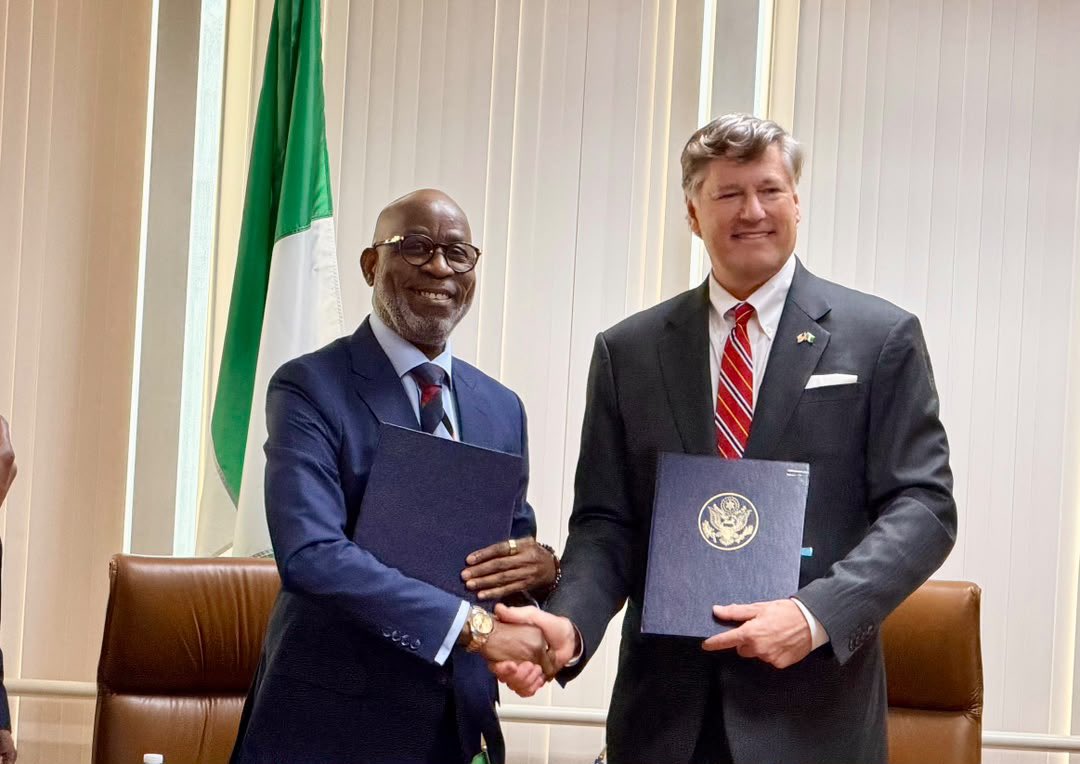
NEW YORK, Sept 24 – Nigeria and the United States have signed a framework agreement aimed at increasing U.S. investment in Nigeria’s mining industry and supporting the development of the country’s mineral resources.
The agreement was signed in New York by Nigeria’s Minister of Solid Minerals Development Dele Alake and U.S. Deputy Secretary of State Christopher Landau, according to Nigerian officials.
The framework covers several areas of the mining value chain, including geological data, mineral exploration, mineral development and processing, infrastructure and technical capacity building.
The partnership comes as the United States seeks to strengthen relationships with mineral-producing countries and diversify supply chains for critical minerals used in industries including electric vehicles, energy storage and renewable energy infrastructure.
Nigeria estimates the value of its mineral resources at approximately $700 billion and has been seeking to develop the sector as part of efforts to diversify its economy beyond oil.
For Abuja, the agreement also places greater emphasis on moving beyond the export of unprocessed minerals and developing domestic value chains.
“Nigeria cannot remain a source of raw materials while others capture most of the value. We want more local processing, quality jobs, stronger skills and greater opportunities for Nigerian businesses,” Alake said in a statement.
Focus on Processing and Investment
The framework could provide a basis for greater foreign investment across Nigeria’s relatively underdeveloped mining industry, including its emerging lithium sector.
Lithium has attracted growing international interest because of its use in batteries and other energy technologies, while Chinese companies have been among the most active foreign investors in Nigeria’s emerging lithium industry.
The focus on geological data and exploration also points to efforts to improve the information available to potential investors and expand the pipeline of commercially viable mineral projects.
For Nigeria, developing processing capacity alongside mining could allow a greater share of mineral value to be captured domestically through manufacturing, technical services, infrastructure and employment.
The agreement therefore broadens U.S.-Nigeria economic cooperation into a strategic area of the global energy transition, while giving Nigeria another avenue for attracting capital and technical expertise into its mining sector.
