
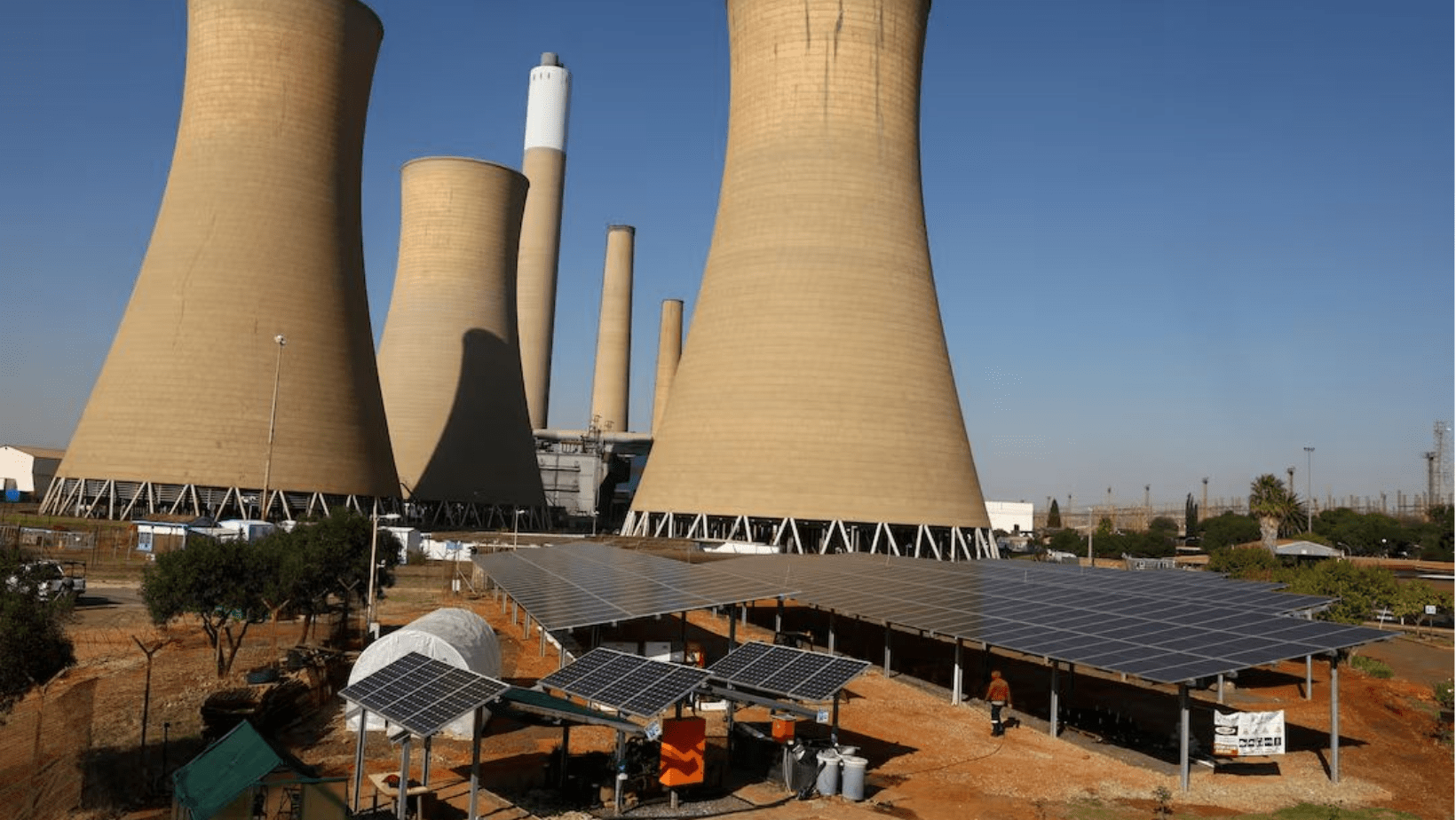
JOHANNESBURG, Aug 26 – South African miners are accelerating their shift to renewable power as they look to reduce costs, diversify their energy sources and meet decarbonisation targets, gradually reducing their long-standing dependence on state utility Eskom.
Mining companies including Anglo American and Sibanye Stillwater are investing in renewable energy as Eskom’s ageing coal-fired power plants continue to dominate South Africa’s electricity system. Executives, however, say Eskom will remain an important source of baseload power for years because renewable energy is intermittent and battery storage is still developing.
South Africa currently generates more than 80% of its electricity from coal, while renewables account for about 10%.
Anglo American has partnered with independent power producers through Envusa Energy, a 50-50 joint venture it established with EDF power solutions in 2022. The venture supplies renewable energy to Anglo’s Kumba Iron Ore, De Beers and former subsidiary Valterra Platinum.
Envusa currently produces 520 megawatts, made up of 280 MW of wind and 240 MW of solar, covering about 30% of Anglo’s mining energy consumption. Its project pipeline stands at 1,500 MW, with plans to reach 3,000 MW by 2030 for Anglo’s operations and other industrial users.
Envusa CEO Nicole Mason said renewable power from wind and solar could be 20% to 30% cheaper than Eskom electricity.
Sibanye, which relied on Eskom for about 99% of its platinum group metals energy needs and 88% of its gold electricity demand last year, has chosen to buy renewable power through supply agreements instead of owning generation assets. It has contracted 835 MW of renewable capacity, with 164 MW already operational.
By the end of 2028, renewables are expected to supply about 64% of energy demand at Sibanye’s South African operations, CEO Richard Stewart said. He expects renewable power to cost 20% to 30% less than forecast Eskom tariffs.
Coal producer Exxaro Resources is also expanding renewable energy through its subsidiary Cennergi, which operates 297 MW and has a 593 MW pipeline. Exxaro is targeting 1,600 MW by 2030.
Its 68 MW solar plant has already cut Grootegeluk coal mine’s reliance on the national grid by 30%, saving about 100 million rand ($6.25 million) annually and reducing scope 2 emissions by 22%.
Meanwhile, Thungela Resources is developing a coal-bed methane project at Lephalale to diversify its energy business. The company has drilled about 19 wells and begun extracting gas to power a generator at one of its sites, potentially saving 30 million to 40 million rand a year in Eskom costs.
