
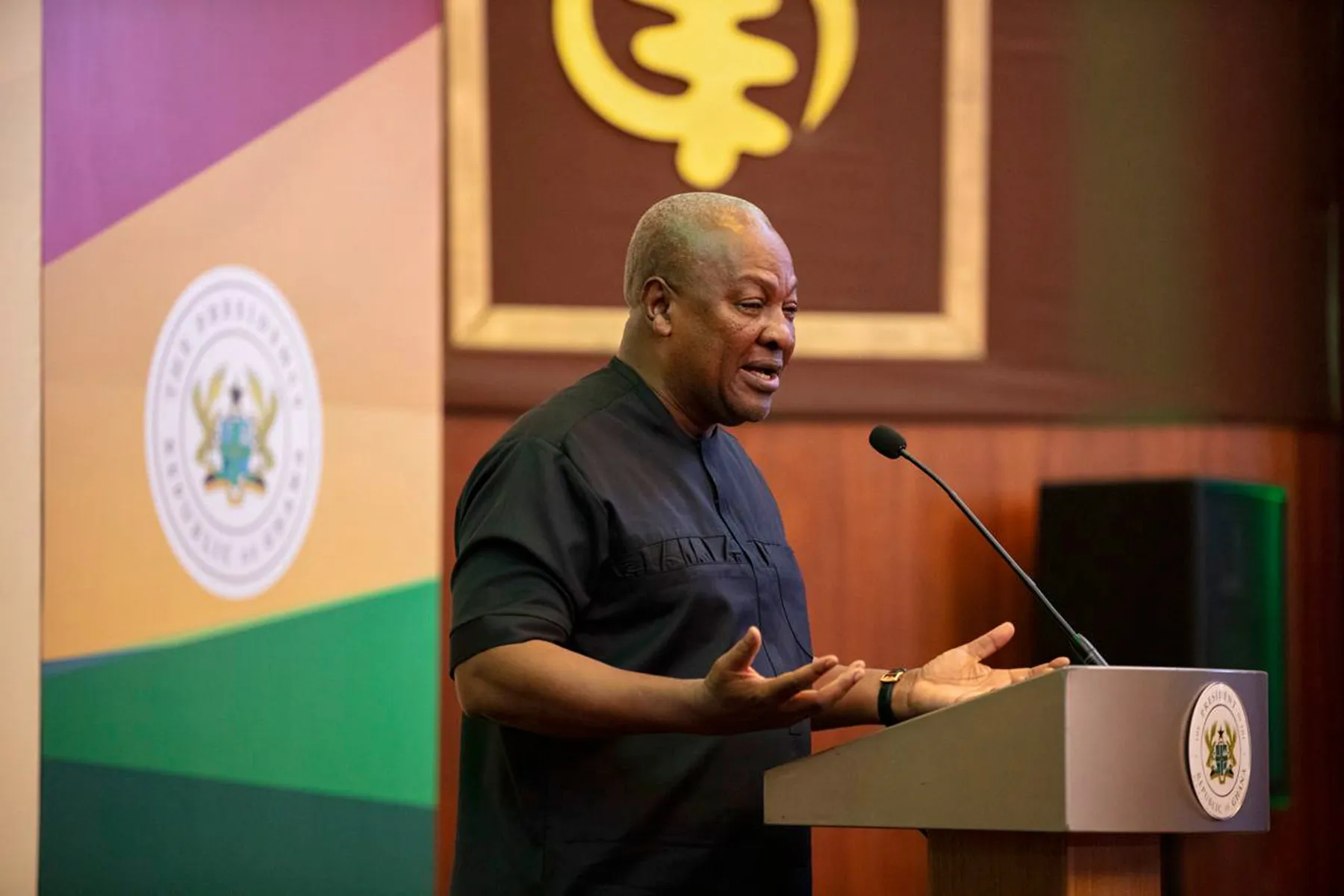
LONDON, June 3 – Ghanaian President John Dramani Mahama has called for major reforms to global debt restructuring systems, arguing that developing economies need faster and more effective solutions to address financial challenges while supporting long-term economic growth.
Speaking at an investment conference in London, Mahama said existing sovereign debt resolution mechanisms should be made more efficient, equitable and responsive to the needs of developing countries.
His remarks come as Ghana continues its economic recovery following the debt crisis that culminated in a sovereign default in 2022 and subsequently led to the restructuring of both domestic and external obligations.
The West African nation became one of the countries to utilize the G20 Common Framework, a debt treatment mechanism designed to coordinate restructuring efforts among official and private creditors.
However, the process has faced criticism from policymakers and investors who argue that negotiations often take too long to conclude, prolonging economic uncertainty for affected countries.
Mahama stressed that future debt frameworks should not only focus on fiscal sustainability but also support broader development objectives and economic transformation.
He also highlighted the importance of expanding climate finance, noting that African economies require greater access to affordable capital to address climate-related challenges while pursuing growth and industrialization goals.
According to the president, Ghana is investing heavily in strategic sectors including transportation infrastructure, energy reliability and workforce development as part of efforts to build a more resilient and competitive economy.
Mahama used the platform to advocate for a new model of engagement between Africa and the United Kingdom, centered on trade, innovation and investment rather than traditional aid relationships.
He argued that Africa should increasingly be viewed as a destination for capital, entrepreneurship and business expansion rather than solely as a recipient of development assistance.
The president emphasized that the continent offers significant opportunities across sectors such as infrastructure, technology, energy, agriculture and manufacturing, particularly as African economies continue to urbanize and integrate through regional trade initiatives.
His comments come as Ghana’s economy shows signs of stabilization following recent reforms and debt restructuring efforts.
Economic growth accelerated toward the end of 2025, although investors remain focused on upcoming economic data that will provide a clearer picture of how global developments, including higher energy prices and geopolitical tensions, are affecting growth momentum in 2026.
The latest remarks reinforce a growing push among African leaders for greater investment-driven partnerships and reforms to the global financial architecture aimed at supporting sustainable development across the continent.
