
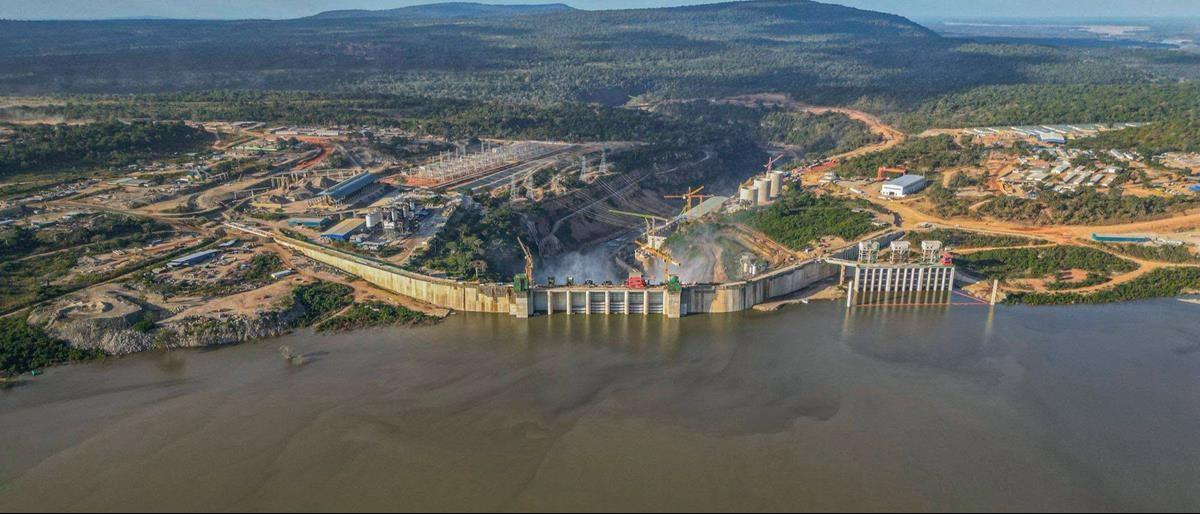
LAGOS, Aug 22 – Tanzania has commissioned the 2,115-megawatt Julius Nyerere Hydropower Project, more than doubling the country’s electricity generation capacity and creating a substantial power surplus that officials say could support industrial growth and electricity exports.
President Samia Suluhu Hassan inaugurated the project on Saturday, built on the Rufiji River at a reported cost of about 7.45 trillion Tanzanian shillings, equivalent to approximately $2.84 billion, the project is Tanzania’s largest power-generation facility.
The plant increases Tanzania’s total electricity generation capacity to 4,646 MW, compared with peak demand of 2,271 MW, leaving a potential surplus of about 2,375 MW, according to Energy Minister Deogratius Ndejembi.
Ndejembi said Tanzania is already discussing potential electricity exports with several neighbouring countries, including Kenya and Zambia. The additional generation capacity could therefore strengthen Tanzania’s position as a regional electricity supplier while providing a larger power base for domestic industries.
President Hassan said the project would help address the electricity shortages that previously contributed to frequent blackouts and constrained economic activity. According to her, “We are confident that this project will increase opportunities for business, investment, and production, create jobs, and boost individual income and the national GDP as a whole.”
The government expects the additional electricity supply to improve reliability for businesses while supporting investment in manufacturing and other power-intensive industries. Greater availability of electricity could also reduce one of the infrastructure constraints facing Tanzania’s industrial expansion.
The project, however, has faced environmental opposition since construction began in 2019. Conservation groups raised concerns about the potential impact of the dam on wildlife and downstream habitats because the Rufiji River passes through the Selous Game Reserve, one of Africa’s largest protected areas.
The reserve is home to major populations of wildlife, including elephants, black rhinos and cheetahs, as well as diverse ecosystems, according to UNESCO. The environmental concerns have made the project one of Tanzania’s most closely watched infrastructure developments.
Hassan acknowledged the controversy surrounding the dam but defended the decision to proceed. “We had no way to abandon this project, given its importance to our nation,” she said.
With the Julius Nyerere project now operational, hydropower accounts for about 60% of Tanzania’s electricity generation, with natural gas providing much of the remaining supply.
The project’s commissioning marks a significant expansion of Tanzania’s power infrastructure. If the projected surplus is sustained, the country could increasingly use electricity exports as a source of regional integration and foreign-exchange earnings while leveraging greater power availability to attract industrial investment.
