CONAKRY, Nov 26 – Guinea has approved legislation establishing a $1 billion sovereign wealth fund that will channel part of the country’s mining revenues into long-term investments, economic stabilization and savings for future generations, as the government prepares to capture greater value from its expanding extractive sector.
The National Assembly adopted the law establishing the Fonds Souverain de la République de Guinée (FSG) on November 25, with 121 votes in favour, none against and two abstentions out of 123 ballots cast.
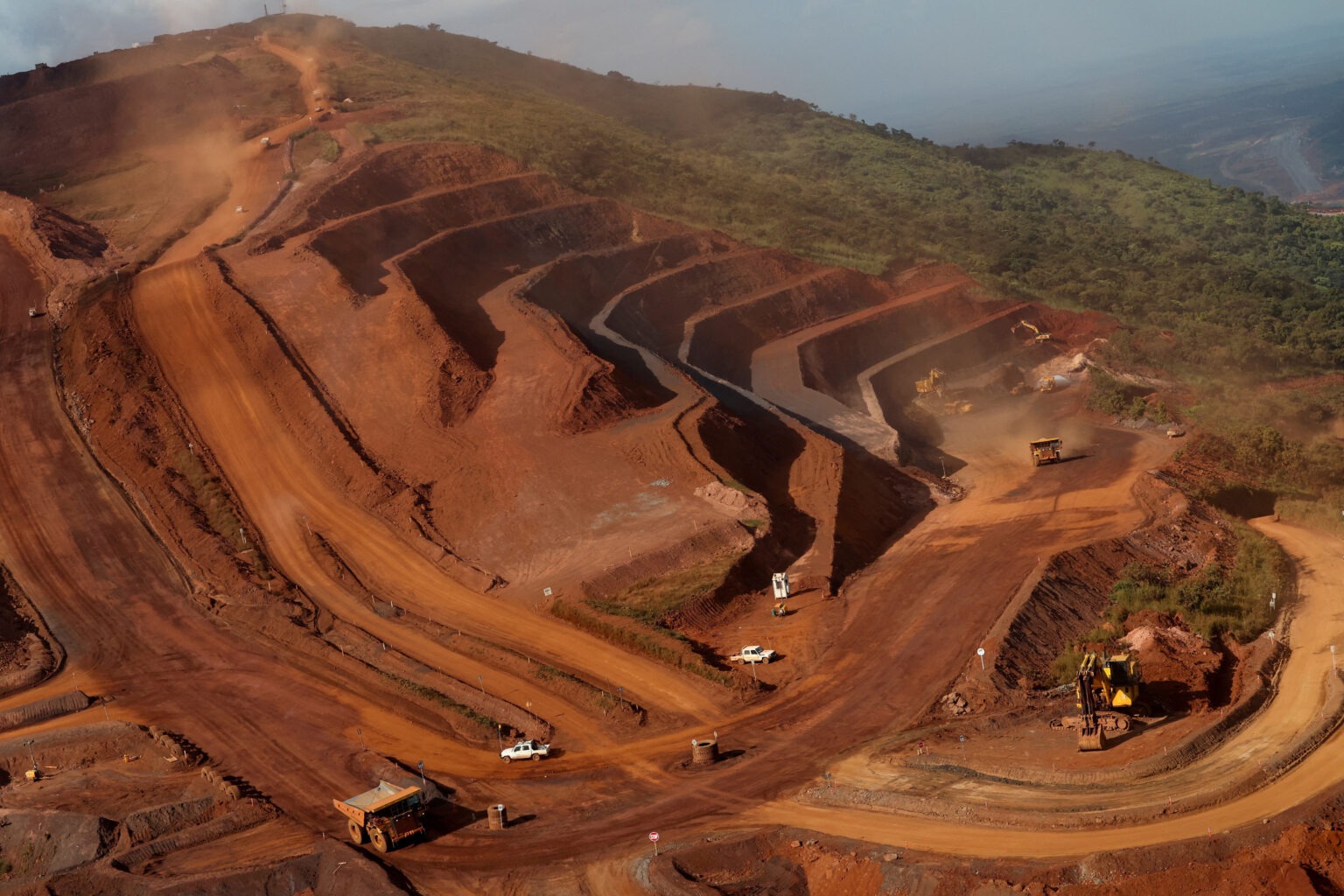
Wholly owned by the Guinean state, the fund is expected to mobilise an initial endowment of $1 billion over a maximum period of five years. Its principal funding sources will include allocations from the Simandou iron ore project and revenues from future mining developments that begin commercial operations after the legislation takes effect.
Under the funding framework, 30% of fiscal and non-fiscal revenues generated by Simandou will be allocated to the fund, alongside 5% of revenues from qualifying extractive projects entering the exploitation phase after the law’s enactment.
The initiative forms part of the government’s broader Simandou 2040 development programme, which seeks to convert the country’s mineral wealth into longer-term economic capacity and investment.
Three mandates for mining revenues
The FSG will operate through three investment vehicles covering economic stabilisation, domestic development and intergenerational savings.
The stabilisation vehicle will build financial reserves to help protect public finances against external shocks, particularly fluctuations in international commodity prices. The mechanism is intended to reduce the exposure of government revenues and expenditure to volatility in the mining sector.
A separate development investment vehicle will co-invest with private-sector and institutional partners in commercially viable projects across infrastructure, energy, industry and other productive sectors. The mandate places emphasis on investments capable of generating employment and supporting domestic economic activity.
The third vehicle will manage long-term financial assets, preserving part of the country’s natural resource wealth for future generations rather than allowing the proceeds of finite mineral resources to be consumed entirely through current expenditure.
The structure is designed to give the fund distinct responsibilities while linking resource revenue management to broader economic objectives.
Governance and investment oversight
Although fully state-owned, the fund is designed to operate with institutional autonomy and governance arrangements aligned with international sovereign wealth fund standards.
Its oversight will be handled by a nine-member board of directors, including seven independent directors. Investment decisions are expected to be guided by financial performance, economic objectives and risk-management considerations.
The framework also draws on the Santiago Principles, the internationally recognised set of voluntary standards for sovereign wealth funds. These principles cover governance, accountability, transparency and investment practices.
The law provides for regular public reporting on the fund’s investments, performance and management, with the aim of strengthening oversight and public confidence in how mineral revenues are deployed.
Simandou places resource management at the centre of development strategy
The fund’s establishment comes as Guinea prepares to expand the economic contribution of its mining industry, particularly through the Simandou iron ore project.
By earmarking a share of Simandou revenues and contributions from future extractive projects, the government is seeking to establish a mechanism through which mining income can support investment beyond the life of individual projects.
The approach also reflects a broader policy challenge for resource-rich economies: converting commodity revenues into productive assets while maintaining fiscal stability during periods of price volatility.
The legislation marks an important institutional step, but the fund’s impact will depend on its operationalisation, the pace at which its initial capital is mobilised and the quality of its investment and governance decisions.
For Guinea, the central test will be whether the FSG can translate rising extractive revenues into durable economic assets, stronger domestic productive capacity and financial reserves that extend the benefits of mineral wealth beyond the current generation.