
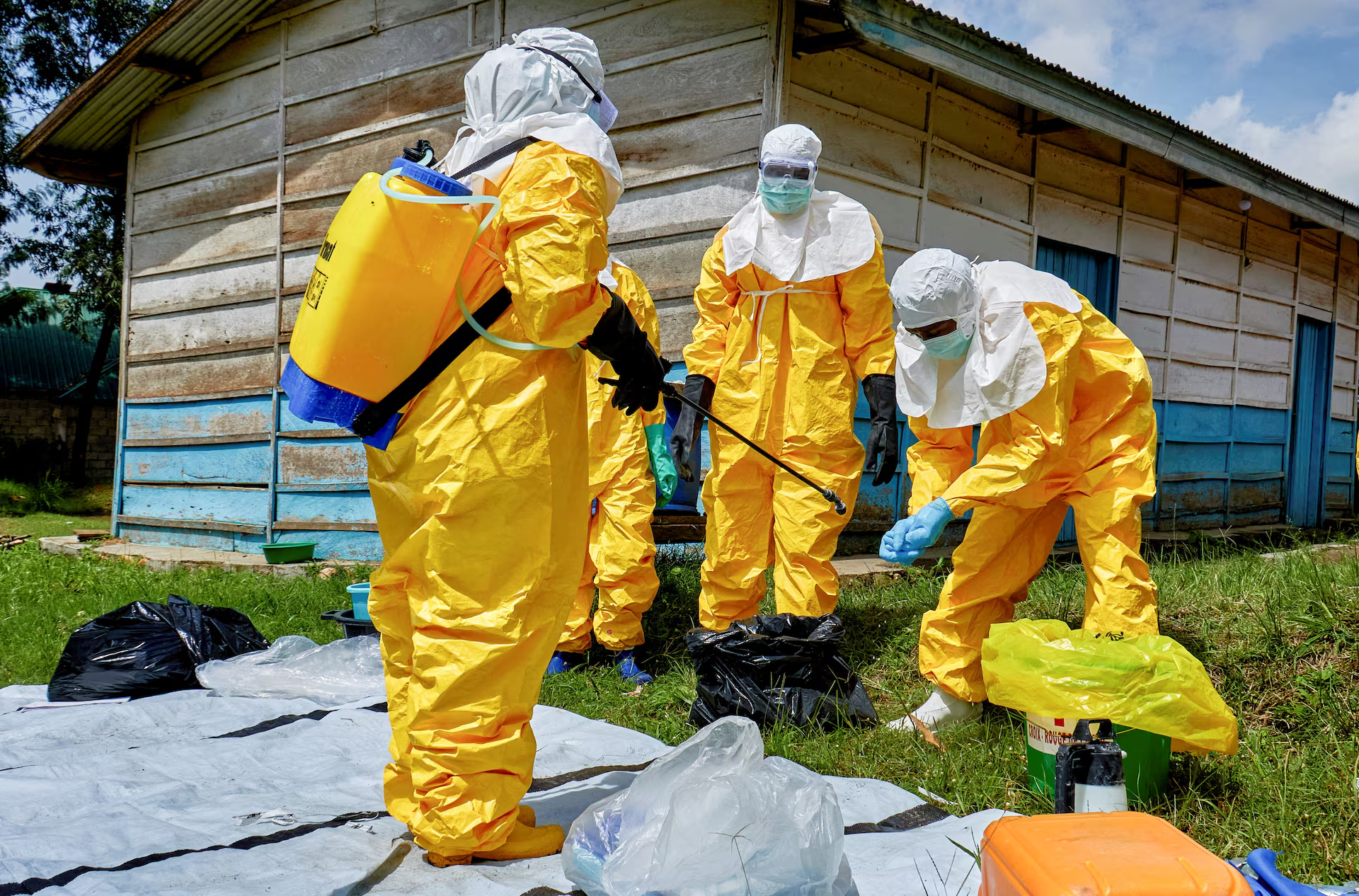
KINSHASA, May 26 – African governments and international partners have committed approximately $498.8 million to strengthen response efforts against the expanding Bundibugyo Ebola outbreak, as health authorities confront a growing number of infections and deaths across Central Africa.
The funding commitments were announced during a high-level ministerial meeting aimed at coordinating containment measures and improving preparedness in affected and high-risk countries.
Director general of Africa Centres for Disease Control and Prevention, Jean Kaseya said the latest commitments reflect a coordinated continental response focused on protecting Africa’s health systems and limiting further transmission of the virus.
According to health officials, the death toll linked to the outbreak has climbed to 220, increasing pressure on emergency response teams as infections continue to spread.
Tedros Adhanom Ghebreyesus warned that the outbreak is evolving rapidly, indicating that containment efforts are facing increasing challenges.
Several international partners announced major financing commitments during the meeting, including approximately $160 million allocated for response efforts in the Democratic Republic of the Congo, alongside additional support from the United States and European partners.
The funding follows earlier emergency interventions by humanitarian agencies after the outbreak was classified as a World Health Organization Public Health Emergency of International Concern.
The outbreak continues to place particular pressure on the Democratic Republic of Congo and Uganda, where health authorities are monitoring growing numbers of cases.
Officials in Congo have recorded hundreds of suspected infections and deaths, while Uganda has also confirmed cases linked to cross-border transmission patterns.
The Bundibugyo strain presents an additional challenge because no approved vaccine or disease-specific treatment currently exists.
Unlike the more common Zaire strain, which was responsible for the devastating West African Ebola epidemic between 2014 and 2016, the Bundibugyo virus has historically been associated with only a limited number of outbreaks.
Health agencies have emphasized that rapid coordination, public trust and accelerated surveillance efforts will be critical in slowing transmission and preventing broader regional spread.