
LAGOS, July 10 – Global cocoa prices have staged a sharp recovery after months of declines, climbing to multi month highs as renewed supply concerns across West Africa revive fears of another tight production season.
September cocoa futures on ICE New York were trading at $6,366 per metric tonne as of 10 July 2026, marking their highest level in approximately 24 weeks. The contract has gained nearly 40% over the past four weeks, reversing part of the steep correction that saw prices fall from record highs above $11,000 per metric tonne in mid 2024 to around $3,100 to $3,300 per metric tonne in March and April 2026.
The rebound reflects growing concerns over weather disruptions, crop disease and the long term outlook for global cocoa supplies, particularly in West Africa, which accounts for the majority of global cocoa production.
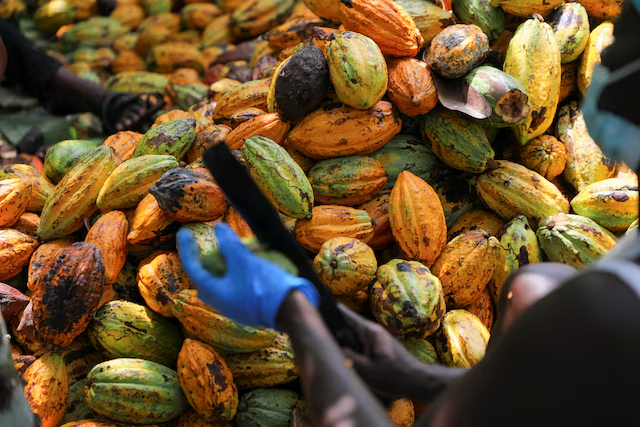
Heavy rainfall across Côte d’Ivoire and Ghana, the world’s two largest cocoa producers, has disrupted harvesting activities, delayed the transportation of cocoa pods and heightened the risk of black pod disease and brown rot, fungal infections that can significantly reduce yields.
Field assessments in Côte d’Ivoire indicate that the development of young cocoa pods is running below seasonal averages. Early estimates for the country’s 2026/27 main crop suggest production could decline to between 1.7 million and 1.8 million metric tonnes, compared with an estimated 2.2 million metric tonnes for the current season.
Nigeria, Africa’s fourth largest cocoa producer, is also facing mounting production challenges after prolonged periods of exceptionally heavy rainfall affected key cocoa growing regions. While adequate rainfall is essential for cocoa cultivation, excessive moisture creates favourable conditions for fungal diseases that can destroy developing pods and reduce harvest volumes.
Industry forecasts indicate Nigeria’s cocoa production for the 2025/26 season could decline by around 11%, falling from approximately 344,000 metric tonnes to 305,000 metric tonnes. However, continued flooding has raised concerns that production could fall below those already reduced expectations.
Adding to market uncertainty, climate forecasters including the Japan Meteorological Agency and the U.S. National Oceanic and Atmospheric Administration’s Climate Prediction Center (NOAA) have highlighted an increased probability of a strong El Niño event developing later in the crop cycle. Historically, El Niño conditions have brought hotter and drier weather to West Africa during critical stages of cocoa development, reducing yields and tightening global supplies.
The latest rally also reflects deeper structural concerns within the cocoa industry. Although certified cocoa inventories held in ICE warehouses have recovered to their highest level in two years, market participants continue to point to ageing cocoa trees, years of underinvestment in farm productivity and the lengthy time required for new plantings to become commercially productive.
The widening premium between nearby and longer dated cocoa futures suggests traders expect elevated price volatility to persist rather than anticipating a rapid return to lower price levels seen before the market correction.
Analysts increasingly expect cocoa prices to remain within a range of $5,000 to $7,000 per metric tonne through much of the third quarter of 2026 as weather developments across West Africa determine the outlook for the upcoming harvest.
For Africa’s cocoa producing economies, particularly Côte d’Ivoire, Ghana and Nigeria, sustained high prices could boost export earnings. However, lower production caused by adverse weather and crop diseases may limit the extent to which producers can benefit from the stronger market.
