
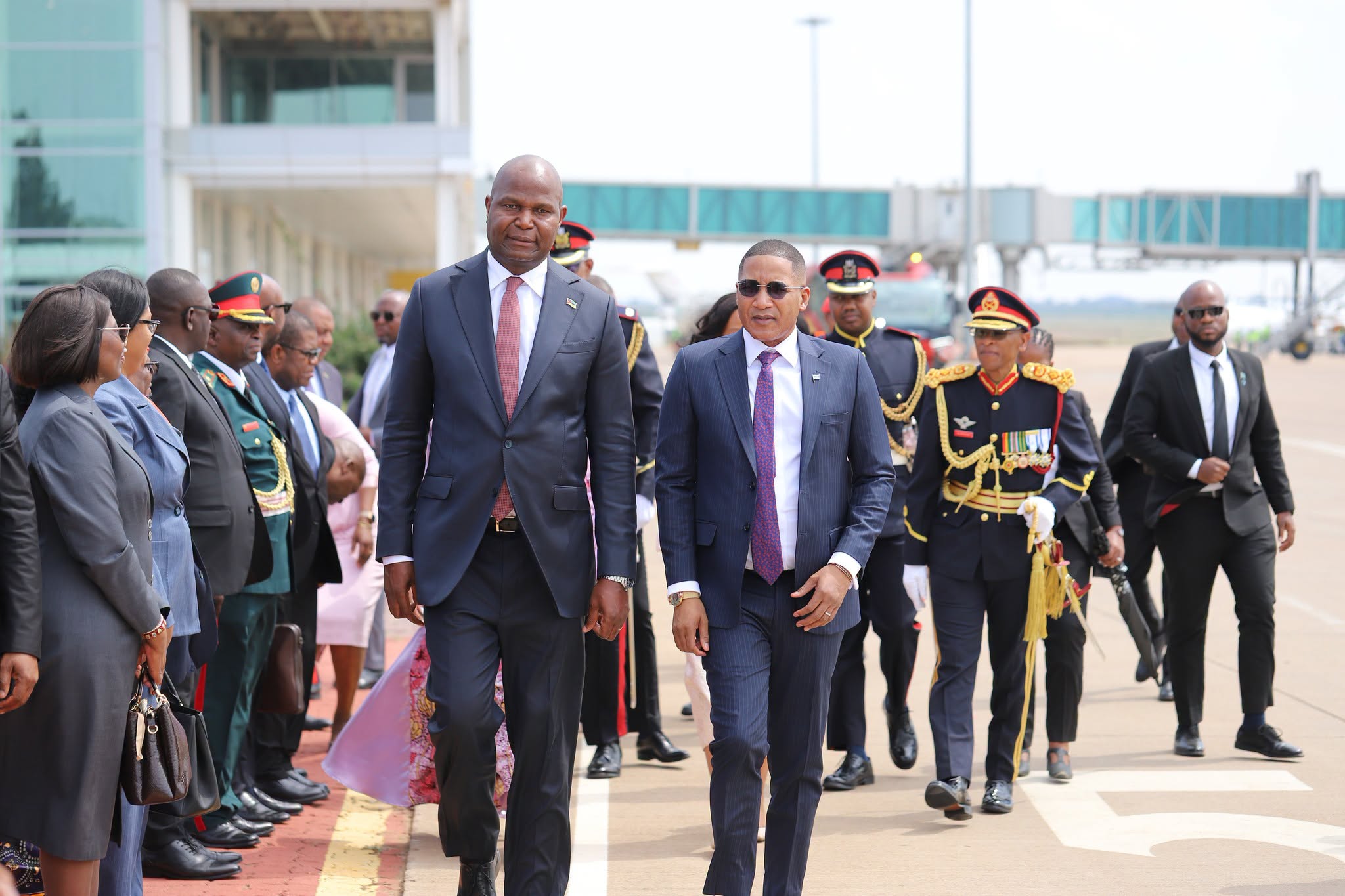
GABORONE, Sept 28 – Mozambican President Daniel Chapo began a three-day state visit to Botswana on September 28, as the two countries seek to accelerate transport, logistics and trade projects linking Botswana’s landlocked economy with Mozambique’s Indian Ocean ports.
Chapo’s visit, at the invitation of Botswana President Duma Boko, follows the ninth session of the Botswana-Mozambique Joint Permanent Commission on Cooperation (JPCC) held in Gaborone on September 23. The meeting placed implementation of existing agreements, the Limpopo Development Corridor and the Ponta Techobanine project among the key areas of bilateral cooperation.
Chapo is also participating as Guest of Honour in celebrations marking 60 years of Botswana’s independence, while holding talks with Botswana authorities on bilateral and regional issues.
From Agreements to Implementation
The ninth JPCC session highlighted a shift toward implementing agreements already negotiated by the two countries. Botswana and Mozambique are considering upgrading the JPCC into a Binational Commission, which would provide a higher-level framework for overseeing strategic and economic cooperation.
The two sides reviewed 18 draft agreements and memoranda of understanding covering trade, science and technology, tourism, education, health, youth, housing, public administration, media and other areas.
Mozambique’s Director for Africa and the Middle East, Hermenegildo José Caetano, called for greater emphasis on implementing existing commitments rather than continuing to expand the number of agreements.
Botswana’s Permanent Secretary in the Ministry of International Relations, Thuso Ramodimoosi, similarly called for implementation gaps to be identified, responsibilities assigned and timelines established for outstanding commitments.
The approach reflects the two countries’ effort to translate diplomatic cooperation into commercial activity, particularly in infrastructure and logistics.
Botswana Seeks Greater Access to Mozambican Ports
Botswana’s landlocked position makes efficient access to maritime trade routes important for its exporters and importers, while Mozambique has multiple ports and transport corridors connecting the Southern African interior with the Indian Ocean.
During President Boko’s official visit to Mozambique in March 2025, the two countries discussed expanding Botswana’s use of Mozambican infrastructure, including the Port of Nacala, alongside existing connections through Maputo and plans for Ponta Techobanine.
Botswana Oil Chief Executive Meshack Tshekedi said during that visit that Botswana already moved goods through the Port of Maputo and identified opportunities to export commodities such as coal through the port.
Greater use of Mozambican ports could give Botswana additional routes to international markets while creating more cargo for Mozambique’s ports, railways, storage facilities, road transport operators and related logistics services.
For Mozambique, attracting additional transit cargo is central to the commercial development of its regional corridors. For Botswana, multiple routes can provide alternatives for imports and exports and reduce reliance on individual transport corridors.
Ponta Techobanine Remains a Major Project
The Ponta Techobanine project, involving Botswana, Mozambique and Zimbabwe, remains one of the most ambitious infrastructure initiatives linking the Southern African interior to the Indian Ocean.
The proposed development includes a railway connection of approximately 1,700 kilometres to a deep-water port facility on the Mozambican coast. Botswana previously estimated the project at about $6.5 billion.
The project was again discussed during the latest JPCC meeting, with the three countries needing to address outstanding issues before implementation can advance. Botswana and Mozambique have also called for greater coordination with Zimbabwe on the railway component.
The proposed corridor is intended to handle heavy cargo, including minerals, and provide a new route between landlocked production centres and maritime markets.
Its commercial viability will depend on financing, regulatory coordination, railway and port operating arrangements, and sufficient cargo volumes to support the infrastructure over the long term.
Limpopo Corridor and Regional Logistics
The Limpopo Development Corridor is another priority identified by the two governments. Developing multiple routes could strengthen regional logistics resilience by allowing cargo to move through different corridors rather than being concentrated along a single transport network.
Mozambique’s geographic position gives it access to the Maputo, Beira and Nacala corridors, allowing the country to serve several landlocked economies across Southern Africa.
The opportunity extends beyond minerals. Petroleum products, agricultural commodities, manufactured goods and consumer products could all generate additional regional freight flows if transport costs, border procedures and port efficiency remain competitive.
Energy Cooperation Adds Another Dimension
Energy is also part of the broader economic relationship. During Boko’s March 2025 visit to Mozambique, the two countries discussed energy cooperation, including the Maputo Thermal Power Station. Botswana also explored opportunities to use Mozambican infrastructure for petroleum-product imports.
The development of port and corridor infrastructure could therefore support more than mineral exports. Fuel storage, distribution networks, road and rail connections and other logistics services could become part of a broader regional supply chain.
For Botswana, access to Mozambican ports could provide additional options for sourcing petroleum products from international markets. For Mozambique, increased transit demand could generate activity across ports, railways, storage and downstream logistics.
Trade and Economic Diversification
The push for stronger transport links comes as Botswana seeks to diversify its economy and strengthen its position as a regional trade and logistics hub.
The country remains heavily exposed to the mining sector, particularly diamonds, while its landlocked geography adds transportation costs to international trade.
Mozambique, meanwhile, is seeking to increase the economic value generated by its geographic position and expand the use of its ports and regional corridors.
The two economies therefore have complementary infrastructure needs. Botswana requires reliable access to maritime markets, while Mozambique has an interest in increasing cargo volumes moving through its transport network.
The development of these links will ultimately depend on commercial competitiveness. Freight operators will consider transport costs, transit times, railway capacity, port charges, border efficiency and reliability when choosing between Mozambican routes and alternatives through South Africa and Namibia.
Chapo Visit Follows Implementation Push
President Chapo’s visit comes after the latest JPCC meeting established a clearer focus on implementation. The review of 18 draft agreements, discussions over a potential Binational Commission and renewed attention to the Limpopo and Ponta Techobanine corridors provide a framework for the bilateral agenda.
The economic relationship between Mozambique and Botswana is increasingly defined by practical infrastructure needs. Botswana can provide additional cargo for Mozambican transport networks, while Mozambique can offer maritime access for Botswana’s imports and exports.
Turning that potential into sustained commercial activity will require financing, infrastructure development, cross-border coordination and predictable operating arrangements.
Progress on the transport corridors, port connections, energy projects and trade agreements will therefore provide the clearest measure of whether the latest phase of Botswana-Mozambique cooperation translates into larger regional trade flows.